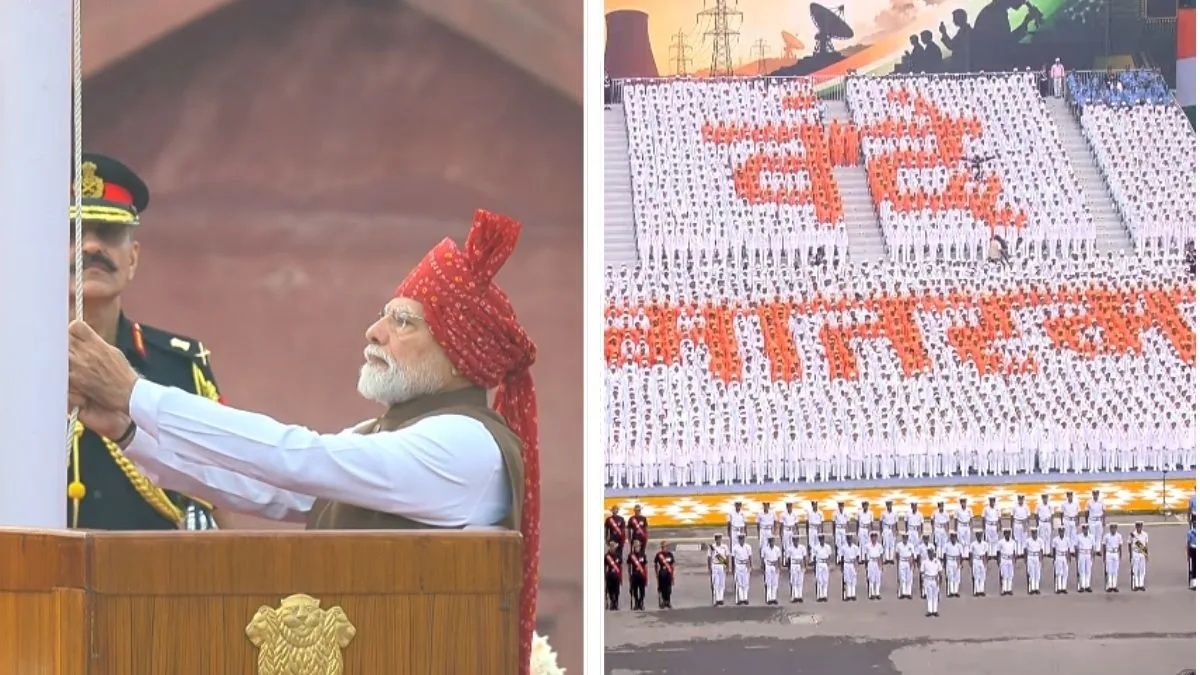
Addressing the nation from Delhi's Red Fort on India's 80th Independence Day, Prime Minister Narendra Modi unveiled a transformative vision for the country's future, declaring that becoming a developed nation by 2047 represents India's defining national ambition. The announcement carries profound significance for a nation of 1.4 billion people, positioning development not as an aspiration but as a concrete pledge that Modi believes will reshape global perceptions of India's role and capabilities in the coming decades.
Modi's framing of this goal as 'Viksit Bharat'—developed India—extends beyond mere economic metrics. The Prime Minister argued that when the world's most populous country commits to developed status, it demonstrates the collective confidence and determination of its people. This rhetorical positioning transforms what might otherwise be viewed as a technical economic objective into a matter of national pride and civilisational assertion, tapping into widespread desire among Indians to see their country reclaim what many view as historical stature.
Central to Modi's Independence Day message was a forceful call for Indians to abandon incremental thinking in favour of transformative ambition. He repeatedly emphasized that modest aspirations no longer align with India's trajectory, insisting that larger dreams generate expanded thinking and broader vision for the nation's trajectory. This psychological dimension of the address targets not only policy makers but also citizens, attempting to cultivate a cultural shift toward bolder goal-setting across society.
To ground his vision in contemporary reality, Modi surveyed India's economic transformation over the past dozen years. The Prime Minister highlighted dramatic increases across multiple sectors: defence production has expanded fourfold, Khadi and Gramodyog output has grown fivefold, electronic manufacturing has surged sevenfold, mobile phone production has climbed 33 percent, and digital transactions have doubled. These figures collectively paint a picture of broad-based industrial diversification and technological adoption, suggesting that the infrastructure for sustained development already exists.
Perhaps most significantly, Modi addressed India's transition from vulnerability to strength in global economic hierarchies. The Prime Minister recalled when India was counted among the 'Fragile Five'—a term coined during emerging market volatility to describe economies deemed fragile and susceptible to external shocks. By repositioning India as a major and fast-growing economy, Modi constructs a narrative of restored agency and momentum, suggesting that India overcame periods of stagnation through renewed ambition and focused policy implementation.
For Malaysian and Southeast Asian observers, India's development trajectory carries direct implications. A wealthier, more technologically advanced India would reshape regional trade patterns, investment flows, and strategic balances. The emphasis on domestic manufacturing and electronic production suggests India aims to reduce reliance on imports and establish itself as a regional manufacturing hub, potentially competing with and complementing Southeast Asian economies in global supply chains. The dramatic increase in digital transactions also signals India's rapid fintech integration, an area where Southeast Asian nations must remain competitive.
The ceremonial dimensions of Modi's address reinforced nationalist symbolism alongside policy messaging. The Red Fort witnessed the full rendition of 'Vande Mataram,' India's national song, for the first time on Independence Day since 1947—a moment Modi characterized as historic. This symbolic restoration connected contemporary ambitions to India's freedom struggle, implying that achieving developed status represents the fulfilment of independence's promise rather than a departure from it. The 21-gun salute delivered by the 1721 Field Battery using indigenous 105mm Light Field Guns further emphasized self-reliance and indigenous capability.
However, Modi's address also acknowledged present vulnerabilities affecting citizens across the nation. His expression of concern regarding recent flooding in multiple states and assurance of national support demonstrated awareness that large-scale development goals require social cohesion and management of immediate crises. This balancing act—simultaneously projecting ambitious long-term vision while addressing current hardships—reflects the complex political navigation required when addressing a vast, economically diverse population.
The 2047 deadline carries deliberate symbolic weight, marking India's centennial of independence. By pegging development achievement to this milestone, Modi creates a temporal framework that spans roughly two decades—a period sufficiently distant to accommodate systemic change yet proximate enough to influence current policy and investment decisions. For investors and policymakers throughout the region, this timeline signals India's intention to pursue sustained growth-oriented policies without major ideological reversals.
The emphasis on indigenous capability, demonstrated through domestic defence production increases and use of Indian-made military hardware, suggests that India's development vision incorporates strengthened self-sufficiency. This approach diverges from earlier models of development that emphasized foreign capital and technology transfer, instead positioning indigenous innovation and manufacturing as central pillars. For Southeast Asian nations balancing relationships with major powers, India's push toward self-reliance offers both competitive challenges and potential collaboration opportunities in technology and manufacturing partnerships.
Modi's articulation of developed status as a collective aspiration rather than an elite project attempts to build broad-based legitimacy for the long-term policies required to achieve such transformation. By appealing to citizens to dream bigger and work collaboratively, the Prime Minister frames development as a participatory national endeavour rather than something imposed from above. This populist framing becomes crucial given that such ambitious goals inevitably require sustained investment in education, infrastructure, and manufacturing sectors, each involving complex trade-offs that require public acceptance.
The speech's combined emphasis on historical grievances overcome (the Fragile Five reference), present achievements (sectoral production increases), and future aspiration (2047 developed status) constructs a coherent narrative arc suggesting India possesses the institutional capacity and popular will to execute sustained development policy. For regional observers assessing India's trajectory, this messaging indicates that development ambitions will likely drive Indian foreign and economic policy throughout the coming decade, potentially increasing India's competition for regional influence and investment flows.

