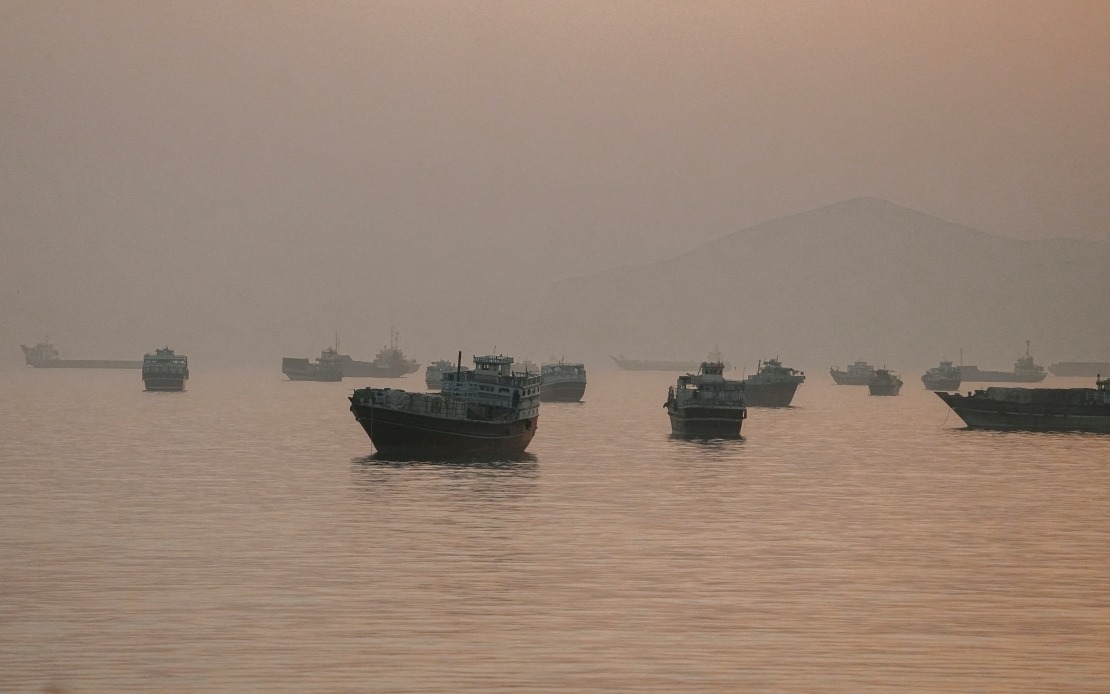
India's maritime regulator has taken decisive action to protect its seafaring workforce by imposing restrictions on the use of Indian crew members aboard vessels navigating through the Strait of Hormuz, one of the world's most strategically important shipping corridors. The Directorate General of Shipping issued the directive on Wednesday evening, instructing shipowners, vessel managers and maritime recruitment agencies to cease deploying Indian sailors on routes transiting this contested waterway. The measure underscores growing alarm within New Delhi about the deteriorating security situation in the Persian Gulf and the mounting human toll on mariners caught between geopolitical crossfire.
The backdrop to this decision is a sharp escalation in maritime incidents within the region over the preceding days. Indian mariners have become casualties in this hostile environment, with two seafarers killed and several others wounded in separate attacks on commercial shipping. These casualties represent not merely statistics but a tangible crisis for families across India who depend on maritime employment for their livelihoods. The frequency and intensity of vessel attacks have transformed the Strait of Hormuz from a challenging but manageable operational zone into what maritime authorities now classify as a conflict-affected area with unacceptable risk profiles.
The renewed confrontation between the United States and Iran has created an unpredictable security landscape that extends far beyond traditional naval engagement. Commercial vessels, which carry international cargo and multinational crews, have increasingly become targets or collateral damage in this escalating tension. The Strait of Hormuz handles approximately one-third of global maritime petroleum trade, making it economically vital but simultaneously drawing it deeper into geopolitical disputes. For shipping companies and maritime nations, this represents a fundamental dilemma between commercial imperatives and crew safety obligations.
India's action reflects the particular vulnerability of developing nation seafarers who constitute a substantial portion of global maritime labour. Indian sailors are among the world's most sought-after maritime professionals, with approximately 1.5 million Indian seafarers employed globally at any given time. Many depend on placements in high-risk areas to secure employment contracts that provide income for extended periods. The government's intervention effectively removes this option, forcing a recalibration of employment strategies for Indian recruitment firms and shipping lines that rely on Indian crew.
For Malaysian shipping interests and Southeast Asian maritime operators, India's directive carries significant implications. Many regional shipping companies and those operating through Malaysian ports utilise Indian crew members extensively. The restriction may accelerate demand for seafarers from other nations, potentially driving up operational costs and complicating crew rotation schedules. It also establishes a precedent that governments may increasingly implement unilateral protective measures rather than seeking collective maritime security solutions through international frameworks.
The Strait of Hormuz has experienced multiple incidents involving unmanned vessels, explosions near commercial shipping, and direct attacks on tankers in recent months. The unpredictability of these incidents makes it impossible for maritime operators to implement reliable security protocols. Standard evasive routing becomes impossible given the strait's geographical constraints—it remains the sole maritime passage connecting the Persian Gulf to international waters. Insurance premiums for transiting vessels have surged, and some maritime companies have simply rerouted around Africa's Cape of Good Hope despite the substantially longer journey time and fuel consumption.
India's approach differs from international maritime community responses, which have largely emphasised increased naval escort operations and improved maritime awareness systems. By restricting crew deployment rather than advocating for enhanced security measures, India prioritises immediate crew safety over broader commercial or geopolitical considerations. This represents a national interest calculus that other maritime nations may eventually replicate, potentially creating a cascade effect that fundamentally disrupts global shipping labour patterns.
The Indian government's decision also reflects domestic political pressures. Maritime worker unions and families have mobilised around crew safety concerns, making the restriction a politically necessary measure even if it carries economic costs. The optics of Indian citizens being killed aboard foreign-flagged vessels while employed by foreign shipping companies creates domestic criticism that New Delhi cannot easily dismiss. The directive thus serves multiple constituencies: seafarers seeking safer employment, families concerned for relatives' welfare, and government officials responding to constituent demands.
Sector analysts suggest the restriction may prove temporary, contingent on regional de-escalation or implementation of more robust international security mechanisms. Shipping companies and maritime recruitment firms are likely to lobby the Indian government for exemptions or modifications as commercial pressures mount. The restriction's durability will depend on whether regional tensions ease and whether alternative protective measures gain credibility with Indian authorities concerned about crew welfare.
For Malaysia and other Southeast Asian nations with significant maritime interests, this episode highlights how regional conflicts can generate unexpected disruptions in global shipping networks. The broader lesson extends beyond immediate operational concerns to encompass the vulnerability of maritime supply chains to geopolitical volatility. Southeast Asian ports, including those in Malaysia, may experience shifts in vessel traffic patterns and crew composition as companies adapt to these new restrictions and recalibrate their regional shipping strategies in response to evolving security assessments across the Indian Ocean and Arabian Sea corridors.

