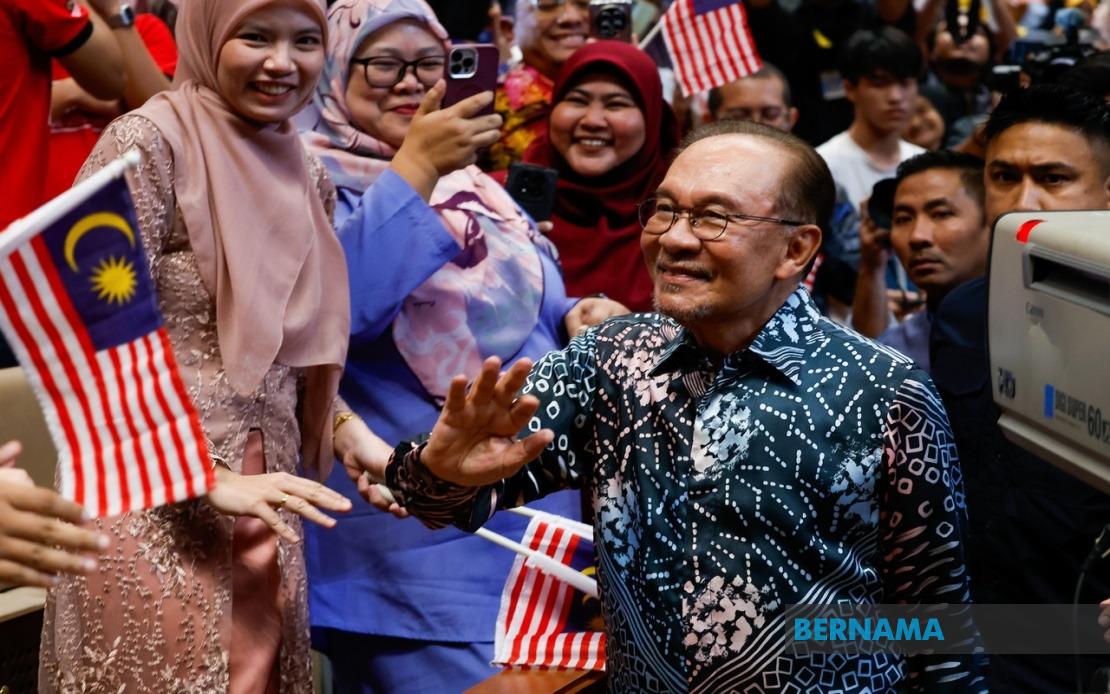
Prime Minister Datuk Seri Anwar Ibrahim has delivered a powerful message during Malaysia's National Day celebrations, emphasising that the essence of independence extends far beyond political sovereignty or institutional frameworks. Speaking at the Putrajaya International Convention Centre on August 30, Anwar articulated a vision where independence fundamentally represents a mindset—a conscious commitment by each citizen to think, act, and lead with autonomy and dignity. This conceptual shift moves the discussion away from abstract notions of nationhood toward tangible, personal responsibility that each Malaysian must shoulder in their daily lives.
At the heart of Anwar's address lies a critical observation: that maintaining an independent spirit remains the most formidable challenge facing modern Malaysia. Rather than celebrating independence as a historical achievement frozen in time, the Prime Minister reframed it as an ongoing endeavour requiring constant nurturing and vigilance. He stressed that reconstruction of the nation—particularly from institutional and social difficulties—hinges not on policy documents or legislative reform alone, but on the foundational commitment of citizens to embody independence within their own consciousness. This framing resonates with deeper concerns about national cohesion and collective purpose during a period of political and economic transition.
Crucially, Anwar placed particular emphasis on the inclusive nature of this collective responsibility. He rejected narrow interpretations of unity based on ethnic, geographic, or administrative boundaries. Instead, drawing on the wisdom of Malaysia's founding generation, he invoked a principle of intergenerational and cross-community solidarity. The Prime Minister's insistence that "every single generation" and "every citizen" must participate underscores that national strength cannot be outsourced to political elites or specific demographic groups. This message carries particular significance in contemporary Malaysia, where demographic tensions and regional disparities continue to challenge social cohesion.
Anwar's emphasis on Malays and Bumiputera communities serving as a foundational core, while simultaneously calling for all communities to unite and contribute equally, attempts to navigate Malaysia's constitutional and social realities. This balancing act—acknowledging constitutional provisions whilst ensuring inclusive participation—reflects the delicate political equilibrium required in a multiethnic democracy. The Prime Minister's framework suggests that constitutional provisions and communal cooperation are not mutually exclusive but rather complementary elements of a functional, prosperous nation-state.
The context of this address matters significantly for Malaysian readers and regional observers. Delivered during a period when Malaysia faces economic pressures, inflation concerns, and questions about institutional effectiveness, Anwar's emphasis on spiritual and philosophical renewal suggests a recognition that material prosperity alone cannot sustain national unity. This perspective aligns with emerging regional trends across Southeast Asia, where leaders increasingly acknowledge that sustainable development requires social cohesion and shared national purpose beyond GDP metrics.
Anwar's call for citizens to actively defend their rights and uphold justice carries implications extending beyond rhetorical flourish. In a nation grappling with concerns about judicial independence, corporate accountability, and transparent governance, this language signals expectations that ordinary Malaysians should become custodians of systemic integrity. Rather than relying exclusively on institutional mechanisms, the Prime Minister implicitly encourages a culture of civic vigilance and personal ethical responsibility.
The presence of Deputy Prime Minister Datuk Seri Dr Ahmad Zahid Hamidi, Communications Minister Datuk Seri Fahmi Fadzil, and Chief Secretary to the Government Tan Sri Shamsul Azri Abu Bakar at the ceremony underscored the government's commitment to this message as official policy direction. Their participation signified that independence of spirit and national unity have become central themes in the administration's governance narrative, particularly relevant as Malaysia navigates complex challenges including regional competition, economic restructuring, and demographic shifts.
For Malaysian business leaders and professionals, this message carries practical implications. The emphasis on independent thinking and ethical commitment suggests a governance philosophy that values innovation, accountability, and principled decision-making at all levels of society. These values align with international expectations regarding corporate governance and institutional development, potentially facilitating Malaysia's integration into global value chains and international investment frameworks that increasingly prioritise stakeholder responsibility and ethical practices.
Regionally, Anwar's articulation of independence as a continuous, inclusive endeavour reflects broader Southeast Asian debates about national resilience and competitive positioning. As the region encounters geopolitical pressures and technological disruption, nations prioritising civic engagement, cross-community cooperation, and independent thought may develop more adaptive institutions capable of responding to emerging challenges. Malaysia's emphasis on these principles positions it within a broader regional conversation about sustainable development models that balance traditional values with contemporary imperatives.
The Prime Minister's address ultimately presents independence not as a concluded historical chapter but as an ongoing social contract requiring each generation's recommitment. This perspective reframes national development beyond infrastructure and economic metrics toward questions of collective identity, institutional legitimacy, and shared purpose. For Malaysians reflecting on their nation's trajectory, this message suggests that future progress depends equally on systemic reform and individual commitment to principles of justice, unity, and independent thought that transcend sectional interests or demographic categories.

