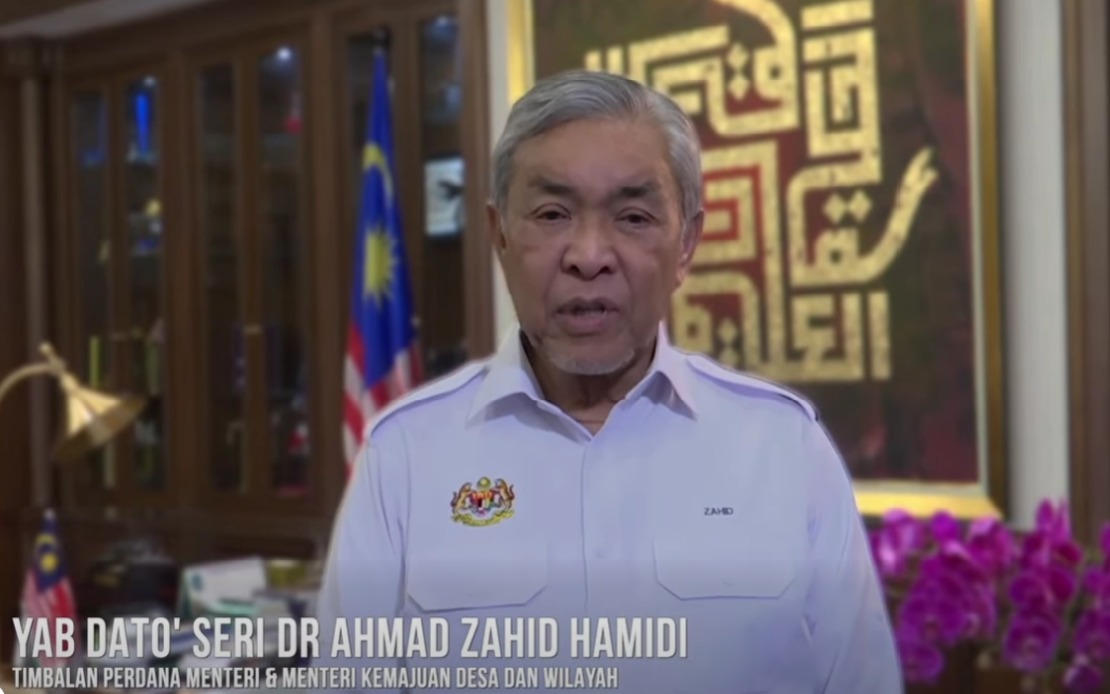
As Malaysia marked 69 years of independence on August 31, Deputy Prime Minister Datuk Seri Dr Ahmad Zahid Hamidi reframed what Merdeka should mean today—moving beyond the historical achievement of freedom from colonial rule to focus on ensuring prosperity and opportunity reach every Malaysian household. Speaking through a National Day video message, Ahmad Zahid argued that the struggle facing contemporary policymakers differs fundamentally from the independence movement. Rather than fighting for political sovereignty, government leaders must now ensure that independence translates into measurable improvements in people's daily circumstances, from employment prospects to access to basic infrastructure.
At the heart of Ahmad Zahid's message lies a concern deeply relevant to Malaysia's economic trajectory. The Deputy Prime Minister emphasised that equipping young people with vocational and technical skills represents a cornerstone of modern independence. This framing addresses a persistent challenge across Southeast Asia: the mismatch between available jobs and workforce capabilities. By positioning TVET skills as central to independence, Ahmad Zahid signals government recognition that Malaysia's future competitiveness hinges on developing workers capable of securing high-value employment in an increasingly automated global economy. For young Malaysians facing uncertain job markets and wage stagnation, this represents an acknowledgement that constitutional freedom alone does not guarantee economic security.
The Deputy Prime Minister's emphasis on rural and regional development carries particular significance for Malaysia's broader development agenda. As Rural and Regional Development Minister, Ahmad Zahid noted that national progress cannot be measured solely by urban advancement or metropolitan infrastructure achievements. Instead, true independence requires that development initiatives extend beyond city boundaries to reach villages, remote areas and underserved communities. This perspective addresses a longstanding criticism of Malaysian development patterns—that economic gains concentrate in urban centres while rural regions lag in infrastructure, services and opportunities. By articulating this vision during National Day celebrations, Ahmad Zahid positioned inclusive development as a defining feature of meaningful independence rather than merely a welfare consideration.
His observations about the transformative power of basic infrastructure—roads connecting isolated villages, electricity reaching remote homes, schools nurturing ambitions in modest communities—reflect accumulated lessons about development effectiveness. These examples resonate particularly across Southeast Asia, where many nations grapple with bridging urban-rural divides. Ahmad Zahid's argument suggests that independence finds its true expression not in national monuments or GDP statistics but in concrete improvements that ordinary Malaysians experience in their immediate environments. A road that connects a village to markets represents independence because it opens economic possibilities. Electricity reaching a home enables independence because it facilitates access to information, education and livelihood opportunities. This grounded approach offers an implicit critique of development models that prioritise headline figures over lived experience.
The economic inclusion angle Ahmad Zahid emphasised also extended to entrepreneurship and small business development. Independence, in his formulation, requires creating pathways for small entrepreneurs to expand their enterprises and enabling families to improve their material conditions through economic participation. This focus acknowledges that wage employment alone cannot absorb Malaysia's workforce, particularly given demographic pressures and job market uncertainties. Small and medium enterprises represent significant employment generators and wealth creators across Southeast Asia, yet often face barriers to growth including access to credit, market information and support services. By identifying this as central to independence's meaning, Ahmad Zahid signalled recognition that inclusive economic growth requires deliberate policies supporting entrepreneurial development beyond the formal corporate sector.
Ahmad Zahid's highlighting of Malaysia's halal industry development added an important dimension linking national pride to economic opportunity. He portrayed the halal sector not merely as a religious or cultural achievement but as an economic engine creating livelihoods and opening international markets for Malaysian entrepreneurs and producers. This framing situates Malaysia's distinctive competitive advantages—its Muslim-majority population, religious credibility, and established halal certification frameworks—as tools for economic opportunity creation. For Malaysia and other Muslim-majority Southeast Asian nations, the halal economy represents a significant growth frontier, with global demand expanding substantially. By connecting halal industry development to independence's meaning, Ahmad Zahid linked cultural identity to economic pragmatism.
Simultaneously, Deputy Prime Minister Datuk Seri Fadillah Yusof offered a complementary perspective emphasising the psychological and social dimensions of independence. Speaking through his own National Day statement, Fadillah urged Malaysians to liberate themselves from internal divisions, hatred, prejudice and extremism that threaten national cohesion. His framing positioned independence as requiring constant psychological and social renewal—continuous recommitment to the principles of unity and mutual respect that undergird multiethnic, multireligious societies. For Malaysians navigating deepening polarisation across religious, political and cultural lines, Fadillah's message carried particular resonance, suggesting that independence remains incomplete when citizens remain psychologically or socially divided.
Fadillah's invocation of the Rukun Negara and the Federal Constitution anchored his vision of independence in Malaysia's foundational social contract. By calling for renewed commitment to these documents and their underlying principles, Fadillah articulated a vision of independence as actively preserved and defended through daily choices rather than passively inherited. His emphasis that Malaysians from different religious, cultural and linguistic backgrounds share a common homeland and future required active commitment to sustaining that shared project. In the Malaysian context, where periodic controversies around constitutional protections, minority rights and religious authority generate heated debate, this reaffirmation of constitutional foundations represented a significant statement linking independence to constitutional commitment.
The Malaysia MADANI framework both officials referenced throughout their messages provided an overarching philosophy connecting these independence concepts. MADANI, conceptualised as advancing prosperity for all sections of society rather than merely pursuing aggregate economic growth, offered a template for measuring independence's success. By definition, this framework acknowledges that development benefits distributed inequitably across social classes, ethnic groups or geographic regions represents incomplete independence. Both Ahmad Zahid and Fadillah positioned MADANI principles as expressing what independence should mean in contemporary Malaysia—advancement that enhances well-being broadly rather than concentrating wealth and opportunity among privileged segments.
The generational lens both officials adopted also proved significant. Ahmad Zahid's focus on equipping young people with skills consciously addressed Malaysia's youth population, numerous enough to influence the nation's trajectory across coming decades. Fadillah's emphasis on what Malaysia will leave future generations reframed independence as an intergenerational trust rather than merely a historical event. Both formulations recognised implicitly that independence's meaning evolves and that each generation must recommit to its principles while adapting them to contemporary challenges. For younger Malaysians potentially sceptical about independence celebrations or focused on immediate economic concerns, this reframing attempted to demonstrate why Merdeka remains relevant to their lives and futures.
The emphasis both officials placed on responsibility alongside freedom represented a notable theme threading through their messages. Ahmad Zahid described it as government responsibility to protect citizens during disasters and facilitate recovery and rebuilding. Fadillah called on Malaysians to fulfil their responsibilities as citizens with integrity while safeguarding national harmony. This framing countered potential connotations of independence purely as freedom from external constraints, instead positioning independence as encompassing mutual obligations between citizens and government. In Malaysian political discourse, this proved significant—it suggested that independence generates not merely rights but responsibilities, challenging citizens to consider how they actively contribute to national well-being rather than passively enjoying inherited freedoms.
For Southeast Asian observers, the Malaysian Deputy Prime Ministers' formulation of independence's contemporary meaning offers a lens through which other regional nations grapple with similar challenges. As ASEAN members navigate economic integration, social diversification and globalisation's pressures, questions about what national independence means in practice become increasingly complex. Should independence prioritise national economic competitiveness, social inclusion, cultural preservation or political autonomy—or must successful nations somehow reconcile these frequently competing demands? Malaysia's National Day messaging, by emphasizing that independence must manifest in people's improved circumstances, broad opportunity access and sustained social harmony, reflected a perspective increasingly common across the region: that formal political independence becomes meaningful only when it translates into tangible benefits for ordinary citizens and when it encompasses genuine inclusion across all population segments.

