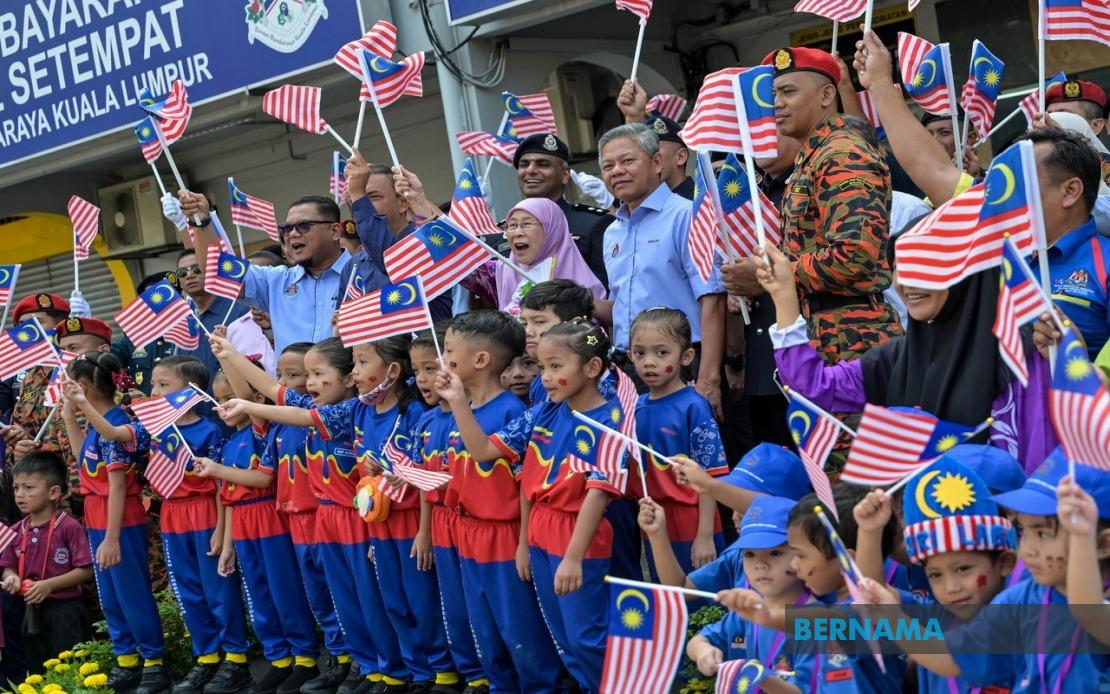
In remarks delivered at a National Day observance in Kuala Lumpur, Datuk Seri Dr Wan Azizah Wan Ismail, the Prime Minister's wife, has repositioned Malaysia's independence narrative away from ceremonial gestures toward a framework rooted in collective custodianship. Speaking at the Semarak Merdeka Programme, Dr Wan Azizah underscored that genuine appreciation of independence extends far beyond the customary unfurling of the Jalur Gemilang or the echoing of patriotic slogans. Rather, she contended, the nation's hard-won sovereignty embodies the accumulated struggles, sacrifices and vision of preceding generations who fought to establish a unified, self-governing state.
This reframing carries particular resonance in contemporary Malaysia, where social cohesion and inter-communal harmony remain perennially contested terrains. By anchoring independence to concepts of shared duty and historical consciousness, Dr Wan Azizah positioned the observance as an occasion for introspection rather than mere pageantry. The emphasis on collective responsibility acknowledges that sustaining a multi-ethnic, multi-faith democracy demands ongoing commitment from citizens across all strata of society—a message especially pertinent as Malaysia navigates persistent economic and social challenges.
The 2024 National Day theme, "Malaysia Madani: Jiwa Merdeka," which Dr Wan Azizah explicitly referenced, signals governmental intent to link independence celebrations to the broader "Madani" agenda encompassing improved living standards, expanded opportunities and strengthened national unity. This thematic alignment suggests policymakers are attempting to translate abstract notions of freedom into tangible improvements in citizens' daily lives, addressing longstanding concerns about inequality and exclusion that have periodically strained social fabric.
Dr Wan Azizah, who represents Bandar Tun Razak in Parliament, grounded her remarks in concrete demographic realities. The constituency she represents houses approximately 191,000 residents comprising 60 per cent Malays, 24 per cent Chinese and eight per cent Indians, according to data derived from the Malaysian Population and Housing Census. This composition exemplifies the pluralistic character that has defined Malaysian society since independence, yet such diversity also demands constant nurturing of inter-group understanding and institutional fairness.
Beyond symbolic messaging, the event incorporated distributing social assistance to vulnerable households, underscoring that independence's true measure resides in whether citizens can access dignified living conditions. Dr Wan Azizah visited residents of the Seri Pulau Pinang and Desa Tun Razak People's Housing Projects to deliver benefits administered through the Social Security Organisation and the Federal Territories Islamic Religious Council.
One beneficiary, K. Moganavalli, a 39-year-old widow who lost her husband Edwin Anthony Dass on August 2nd, received a one-time funeral grant of RM3,000 coupled with a monthly survivor's pension of RM1,118.33 from PERKESO. With three dependent children and no prior employment history beyond homemaking, Moganavalli's circumstances illustrate how economic shocks disproportionately affect households lacking diversified income streams—a structural vulnerability affecting countless Malaysian families, particularly in urban low-cost housing enclaves.
Another recipient, Khalijah Binti Nazir, aged 64, had abandoned formal employment to provide full-time care for two children, one of whom experiences hearing impairment. She draws RM800 monthly through Baitulmal assistance supplemented by RM300 monthly via the Boost eWallet platform and RM150 under the Sumbangan Asas Rahmah scheme, with her son receiving an additional RM100 monthly through the same programme. While such targeted interventions address immediate material deprivation, they simultaneously expose systemic constraints limiting economic mobility for caregivers—predominantly women—forced to exit labour markets.
The juxtaposition of ceremonial commemoration with direct assistance delivery reflects evolving understandings of what independence entails in practice. Rather than celebrating sovereignty in isolation, contemporary observances increasingly incorporate demonstrating state capacity to support disadvantaged populations. This approach acknowledges that formal independence proves hollow absent substantive mechanisms ensuring citizens access foundational security and opportunity.
Dr Wan Azizah's articulation of independence as shared responsibility resonates with ongoing discussions across Southeast Asia regarding what post-colonial statehood demands. Many regional nations grapple with reconciling nationalist narratives inherited from anti-colonial struggles with contemporary challenges requiring transcommunal cooperation and inclusive development strategies. Malaysia's particular challenge involves maintaining cohesion whilst addressing persistent structural inequalities that trace genealogies to colonial-era policies yet persist despite decades of ostensibly colour-blind federal programmes.
For Malaysian readers contemplating what independence signifies in the 2024 context, the Prime Minister's wife's remarks suggest a pivot from treating Merdeka as historical milestone toward recognizing it as ongoing enterprise. Preservation of the peace, unity and harmony that Dr Wan Azizah emphasised demands active engagement from citizens—honouring foundational sacrifices whilst simultaneously constructing inclusive institutions and equitable distributions of resources that demonstrate independence's material benefits across all constituencies.
The Prime Minister's political secretary, Datuk Azman Abidin, attended the observance, lending official imprimatur to messaging emphasising independence as normative framework conditioning daily governance. Such attendance signals that discussion of independence's deeper philosophical content has graduated from ceremonial rhetoric to substantive policy consideration, at least rhetorically, within upper echelons of executive authority.

