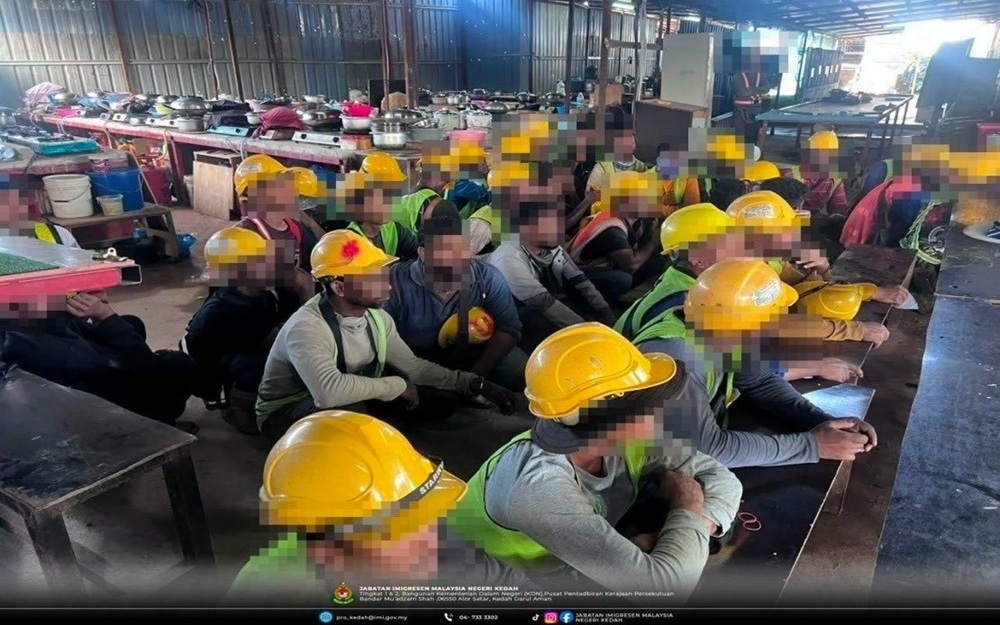
The Kedah Immigration Department has intensified its crackdown on illegal workers, apprehending 81 undocumented migrants during an enforcement operation at a construction facility in Alor Setar. The coordinated raid, part of the ongoing Ops Sapu initiative, reflects growing concerns about the prevalence of unauthorised foreign labour operating within Malaysia's building sector and the broader economy.
Construction sites across northern Malaysia have become focal points for immigration authorities concerned about workplace compliance and the exploitation of vulnerable migrant populations. The operation in Alor Setar demonstrates that enforcement agencies are widening their net beyond traditional hotspots, recognising that illegal employment extends across both urban and semi-urban development projects. This particular sweep highlights how construction firms continue to employ workers without proper documentation despite repeated warnings and penalty structures designed to deter such practices.
Ops Sapu represents a systematic approach to immigration enforcement that prioritises high-risk sectors where undocumented workers concentrate. The construction industry remains particularly susceptible to hiring violations, given its reliance on manual labour, transient workforce patterns, and the competitive pressure on contractors to minimise employment costs. By targeting these facilities directly, authorities aim to disrupt supply chains that facilitate illegal employment and create immediate consequences for both workers and employers involved in contravening immigration regulations.
The scale of this single operation—capturing more than 80 individuals in one location—underscores a significant problem within Malaysia's labour market. Construction companies face genuine logistical challenges in verifying worker documentation, though intentional violations also persist among unscrupulous employers who view fines as merely operational expenses. The pattern of large-scale arrests suggests that enforcement strategies must evolve beyond individual raids to address systemic weaknesses in workplace verification procedures and employer accountability mechanisms.
For Malaysian readers and businesses, these enforcement actions carry several implications. Companies operating in regulated sectors face heightened compliance obligations and substantial financial and reputational risks should they employ undocumented workers. The Kedah operation sends a clear signal that immigration authorities are not limiting scrutiny to major metropolitan areas, meaning firms in all regions must maintain rigorous documentation standards. Additionally, construction projects may experience disruptions if significant portions of their workforce face removal, potentially affecting timelines and project budgets.
The detection of 81 individuals at a single site also raises questions about broader workplace culture and supervision. Successful enforcement depends not only on regulatory bodies' capacity to conduct raids but also on employers' willingness to maintain compliant hiring practices and on workers understanding their legal entitlements and recourse options. When large groups operate without documentation, it often indicates either deliberate employer tolerance or insufficient internal controls, both of which create vulnerability to enforcement action and potentially expose workers to exploitation and unsafe conditions.
Regional trends suggest that construction-sector arrests remain consistent across Southeast Asia, where rapid development drives demand for affordable labour and undocumented migration flows persist. Malaysia's experience parallels challenges faced by Thailand, Vietnam, and Indonesia, where authorities similarly conduct periodic sweeps yet continue discovering significant numbers of illegal workers. This pattern indicates that enforcement operations, while necessary and visible, address symptoms rather than root causes—which include wage differentials between origin and destination countries, inadequate border controls, and employer demand for cost-minimising labour arrangements.
The implications extend beyond individual workers and companies to Malaysia's broader labour policy framework. Policymakers increasingly recognise that sustainable solutions require complementary strategies: streamlining the legal migrant employment process, enhancing workplace inspection regimes, strengthening penalties for repeat offenders, and improving protection mechanisms for migrant workers themselves. Without addressing underlying economic incentives that make illegal employment attractive, enforcement operations risk becoming perpetual exercises with limited long-term impact on the prevalence of undocumented labour.
For construction sector stakeholders, the Alor Setar operation underscores the importance of investment in compliance infrastructure and training. Companies that implement robust document verification systems, maintain current records, and conduct regular internal audits position themselves defensively against enforcement actions while also reducing their exposure to accusations of labour rights violations. Industry associations and employer groups increasingly recognise that collective commitment to legitimate employment practices strengthens the sector's reputation and shields law-abiding companies from association with exploitative practices.
The arrested individuals themselves face an uncertain immediate situation. While authorities process documentation and deportation procedures, workers often remain in detention facilities pending removal. International labour organisations continue advocating for enhanced protections during this process, including access to legal representation and fair compensation for wages owed. These enforcement actions therefore involve not only regulatory compliance questions but also humanitarian considerations regarding how receiving countries manage migrant workers found in vulnerable positions.
Looking forward, sustained enforcement momentum requires adequate resourcing of immigration departments across all states, not only major federal territories. Kedah's operation demonstrates that provincial capacity exists, yet consistency and frequency of enforcement across regions varies substantially. Building a more comprehensive approach would strengthen Malaysia's overall immigration control while potentially creating conditions where compliant employers face fairer competitive environments not undercut by firms relying on undocumented labour.
The Ops Sapu initiative represents Malaysian authorities' recognition that illegal employment constitutes a persistent challenge requiring continuous, visible enforcement action. However, the scale of arrests at individual sites suggests that complementary policy measures addressing demand-side incentives and supply-side vulnerabilities remain essential components of any comprehensive strategy to reduce undocumented work in construction and other sectors.

