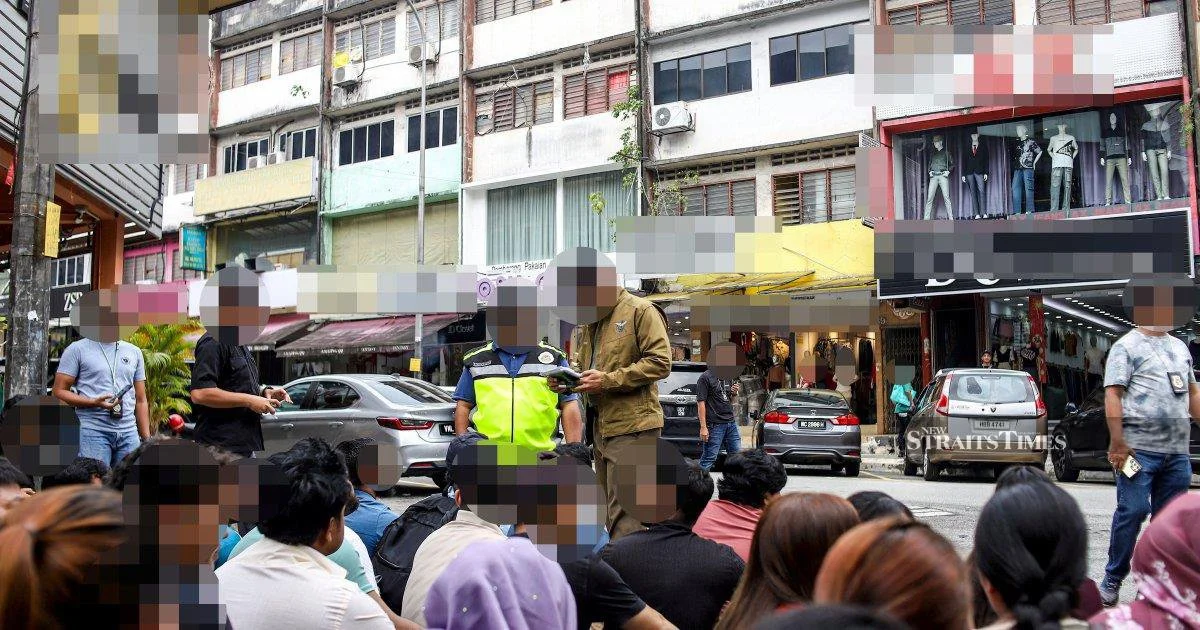
Kuala Lumpur's immigration enforcement division executed a substantial operation across the wholesale clothing precinct of Jalan Kenanga, resulting in the arrest of 111 undocumented migrants. The coordinated raid, conducted by immigration officers, targeted the sprawling network of textile and apparel retailers that have long served as a major employment hub in the capital's commercial landscape.
The Jalan Kenanga trading corridor, situated in one of Kuala Lumpur's oldest mercantile neighbourhoods, has historically attracted migrant workers seeking employment in its warehouses and retail outlets. The district's prominence as a wholesale destination for fabric, garments, and related merchandise has created substantial demand for labour, though regulatory oversight has remained challenging given the high volume of transactions and workforce turnover characteristic of the sector.
Operations of this scale reflect the Immigration Department's intensified focus on irregular migration within Malaysia's urban employment centres. The apprehension of such a large cohort in a single location underscores both the concentration of undocumented workers in specific commercial zones and the resource allocation strategies employed by enforcement agencies to maximise compliance outcomes. Jalan Kenanga's visibility as a trading district made it a logical target for systematic workplace verification procedures.
The clothing and textile sector has long grappled with labour compliance issues across Southeast Asia, where international competition and thin profit margins frequently incentivise businesses to cut costs through informal hiring arrangements. Malaysia's garment wholesale industry, in particular, has faced recurring scrutiny from labour advocates and enforcement bodies investigating working conditions and documentation standards among its predominantly migrant workforce.
From a broader enforcement perspective, the operation illustrates the ongoing challenge facing Malaysian authorities in managing irregular migration amid sustained demand for low-cost labour across multiple economic sectors. Wholesale retail, manufacturing support services, and related supply-chain activities continue to absorb significant numbers of undocumented workers, creating persistent gaps between official labour policies and ground-level hiring practices.
The arrest of 111 individuals represents a substantial single-operation yield, though such raids, when examined across the calendar year, typically represent only a fraction of the estimated undocumented population present in Malaysian urban areas. Each enforcement action generates administrative processing costs for the immigration system, including detention, documentation review, and repatriation coordination with workers' countries of origin.
For businesses operating legitimately in the Jalan Kenanga district, such operations create both compliance pressure and competitive tensions. Enterprises maintaining proper employment documentation bear higher labour costs relative to competitors who tolerate irregular workers, creating economic incentives for enforcement-based levelling of the playing field. However, sustained operations may also disrupt legitimate commerce through temporary disruptions and heightened regulatory scrutiny of the entire precinct.
The implications for undocumented migrants themselves remain severe, with apprehension typically triggering detention periods, legal proceedings, and eventual removal from Malaysia. The vulnerability of these workers—often separated from their families, possessing minimal financial resources, and lacking legal recourse to labour protections—renders migration enforcement operations particularly consequential from a human rights perspective. Many individuals caught in such sweeps have minimal understanding of Malaysian immigration law or their formal rights during detention.
Malaysia's reliance on migrant labour across multiple sectors continues despite official policies discouraging employment of undocumented workers. The underlying structural demand for affordable labour, combined with insufficient regulatory capacity to monitor all employment relationships systematically, creates conditions enabling continued irregular migration. The Jalan Kenanga raid, while significant operationally, addresses symptoms rather than addressing the fundamental economic incentives driving both worker migration and employer demand.
The timing and location of such enforcement operations also warrant consideration. Focused operations on visible commercial precincts generate measurable arrest statistics and demonstrate departmental operational activity to senior management and the public. Whether this enforcement strategy effectively deters irregular employment or merely displaces workers to less visible locations remains debated among migration researchers and policy analysts examining long-term effectiveness.
Looking ahead, the captured individuals will progress through the immigration system's standard procedures. Documentation verification will attempt to establish nationality and origin country, facilitating coordination with diplomatic missions for repatriation processing. Processing timelines typically extend several weeks, during which detainees remain in immigration custody facilities while paperwork proceeds through various bureaucratic channels.
For Jalan Kenanga's business community and the broader wholesale sector, the operation reinforces the ongoing risk environment surrounding undocumented labour. While enforcement intensity fluctuates seasonally and in response to resource availability, the underlying expectation that immigration authorities will continue periodic workplace verification operations remains constant. Businesses must navigate the economic tensions between labour cost pressures and regulatory compliance obligations within this uncertain enforcement environment.

