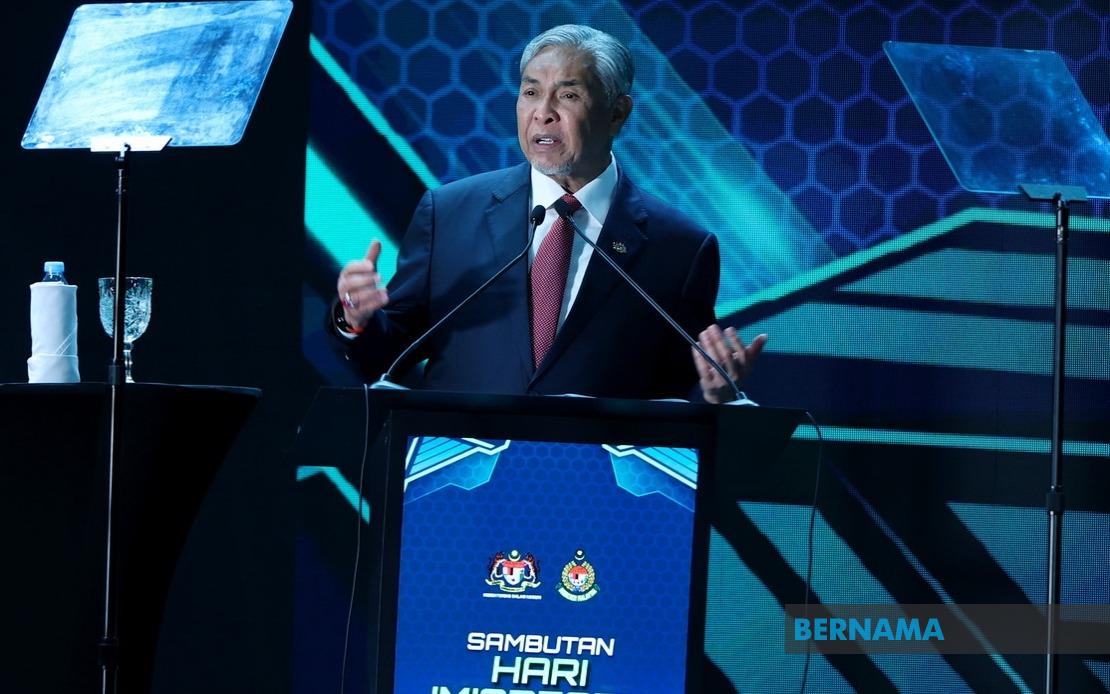
At the 2026 Immigration Day celebration in Cyberjaya on Monday, Deputy Prime Minister Datuk Seri Dr Ahmad Zahid Hamidi threw his weight behind a significant push to overhaul conditions for frontline immigration personnel. The event, themed 'Charting a New Face of Immigration', became the platform for senior government figures to acknowledge persistent challenges within a department that stands as one of the nation's most vital institutions. Zahid's intervention signals mounting pressure within cabinet to address long-standing grievances affecting officer welfare and career development across the Immigration Department.
Home Minister Datuk Seri Saifuddin Nasution Ismail had initiated the call for comprehensive improvements to the Immigration Officer Service Scheme during his opening remarks at the same ceremony. Rather than allowing the proposal to languish within bureaucratic channels, Zahid publicly voiced his backing, effectively elevating it to the level of priority attention from top-tier government officials. This dual-pronged approach from two senior ministers underscores recognition that the current service framework has become inadequate for retaining talent and maintaining institutional effectiveness within an organisation facing mounting operational demands.
The proposed enhancements centre on two critical dimensions: restructuring strategic posts within the department's hierarchy and broadening career advancement pathways for officers. These measures directly address persistent complaints about limited mobility and unclear progression opportunities that have historically plagued immigration personnel. By expanding career trajectories, the government aims to create tangible incentives for experienced officers to remain within the service rather than pursuing opportunities in the private sector or other government agencies offering more attractive terms. The restructuring of strategic positions would simultaneously allow the department to align its leadership pipeline with evolving operational needs and emerging security challenges at Malaysia's borders and airports.
Zahid specifically directed his remarks toward two senior officials tasked with evaluating the proposal: Chief Secretary to the Government Tan Sri Shamsul Azri Abu Bakar and Public Service director-general Tan Sri Wan Ahmad Dahlan Abdul Aziz. By naming them publicly and requesting their consideration, Zahid effectively placed the matter on the administrative agenda with heightened urgency. This administrative mechanism is crucial in Malaysia's government structure, where public sector reforms typically require sign-off from the central administration apparatus before implementation. The move suggests the proposal will likely receive serious technical and budgetary examination rather than remaining a rhetorical gesture.
The economic argument underpinning the reform initiative carries particular weight within government circles. Zahid highlighted that the Immigration Department ranks as the country's third-largest revenue-generating agency, a designation that distinguishes it among public sector bodies. This revenue generation capacity flows from immigration-related fees, visa processing charges, and enforcement operations that fund broader departmental operations. By emphasising this financial contribution, Zahid framed improved service conditions not as expense but as strategic investment in maintaining the efficiency of a self-sustaining revenue operation. This framing makes the proposal more palatable to treasury officials and other cost-conscious policymakers who might otherwise view expanded benefits as budgetary burden.
Beyond administrative restructuring, Zahid articulated a philosophical dimension to the reform agenda, addressing immigration officers as custodians of national sovereignty and security. His remarks at the ceremony positioned immigration personnel as foundational actors in Malaysia's national security architecture, tasked with making split-second decisions that carry enormous consequences. He invoked imagery of courage, wisdom, and guardianship, encouraging officers to internalise their role as protectors of the nation's territorial and administrative integrity. This rhetoric serves multiple purposes: it acknowledges the psychological and professional demands placed on border officers, validates their status as security professionals rather than mere administrative personnel, and establishes moral grounding for institutional investment in their wellbeing and development.
Zahid's call for officers to execute their duties with integrity while avoiding controversy reflects ongoing concerns about reputational risks and operational misconduct within the immigration system. Malaysia's immigration apparatus has faced periodic scrutiny regarding corruption allegations, abuse of discretionary powers, and inconsistent application of regulations at various entry and exit points. By explicitly linking personal integrity to institutional credibility, Zahid attempted to reinforce expectations of professional conduct while framing such standards as essential to national sovereignty rather than mere bureaucratic compliance. This dual emphasis—on improved conditions while demanding heightened conduct standards—reflects government recognition that reform must encompass both structural changes and cultural evolution within the department.
The timing of this public endorsement carries significance within Malaysia's political calendar and policy-making cycles. With the announcement emerging during a national celebration of the immigration function, the government ensured media coverage and institutional visibility for its commitment to reform. This public commitment also raises stakeholder expectations, making it politically costlier for officials to subsequently deprioritise the matter within their portfolios. Immigration officers and their representative bodies can now reference this ministerial-level backing when pursuing negotiations over specific terms and implementation timelines. The public nature of the endorsement therefore functions as an accountability mechanism, anchoring reform rhetoric to official statements that would be difficult to quietly abandon without reputational consequences.
For Malaysian policymakers and administrative officials, this initiative reflects broader concerns about public sector competitiveness in retaining skilled personnel amid economic pressures and demographic shifts. The immigration sector faces particular recruitment and retention challenges given the demanding nature of border work, irregular schedules, and exposure to various occupational hazards. Neighbouring countries and international organisations actively recruit Malaysian immigration professionals, creating brain drain risk that threatens institutional continuity and operational knowledge. By addressing service conditions proactively, the government aims to reverse this trend and strengthen institutional resilience through stable personnel retention and career satisfaction.
The regional context adds further dimension to this domestic reform effort. Southeast Asia faces increasingly complex migration patterns, transnational security threats, and digital transformation of border management systems. Malaysian immigration officers increasingly require sophisticated training in areas ranging from document authentication technology to human trafficking identification and cross-border intelligence sharing. Improved service conditions and clearer career pathways attract officers capable of mastering these evolving competencies, enabling Malaysia to maintain immigration administration standards comparable with regional peers. Without competitive service terms, Malaysia risks falling behind neighbouring countries in border management sophistication and security effectiveness.
Implementation of the proposed improvements will require coordination across multiple government agencies and departments beyond the Immigration sector itself. The Public Service Commission must evaluate whether the restructured service scheme aligns with broader civil service classifications and salary structures. The Ministry of Finance must approve budgetary implications of expanded career pathways and enhanced remuneration packages. The Prime Minister's Office must assess whether the immigration reforms set precedents requiring similar treatment for other frontline security agencies. These bureaucratic layers and competing institutional interests mean that while Zahid's public backing substantially improves the proposal's prospects, actual implementation may require months of technical work and inter-agency negotiation before concrete changes materialise.

