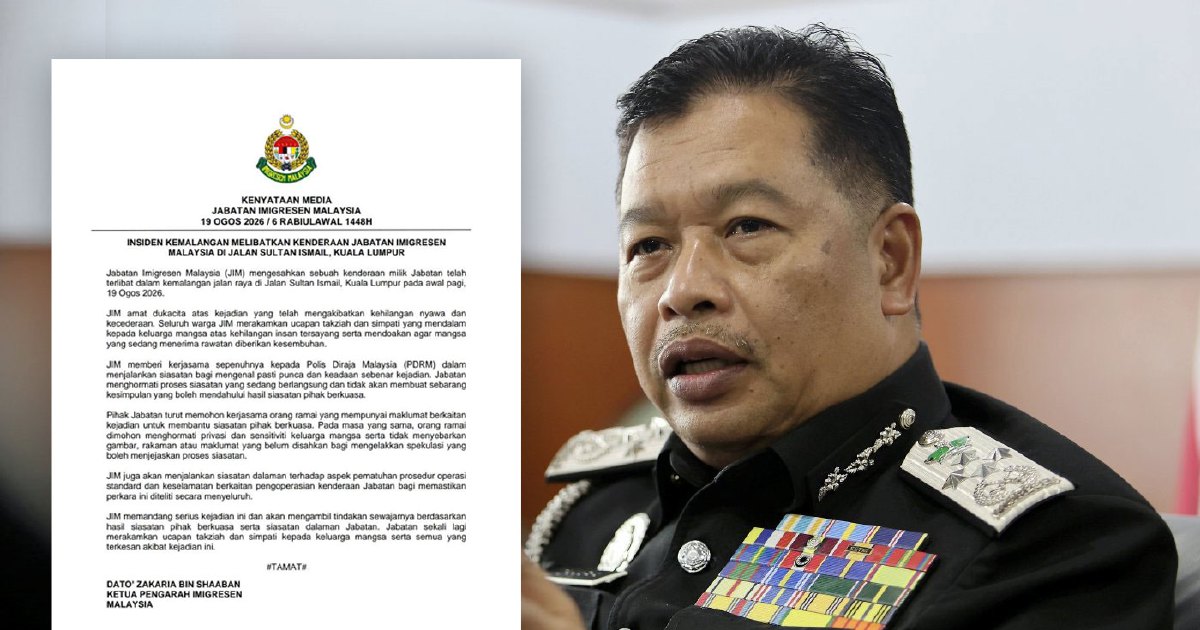
Malaysia's Immigration Department is launching a formal internal inquiry following a fatal vehicle accident that occurred on Jalan Sultan Ismail in Kuala Lumpur early today, pledging to examine whether all standard operating procedures and safety protocols were properly observed at the time of the incident.
The collision, which involved a department-owned vehicle, has prompted officials to conduct a comprehensive review of compliance mechanisms within the agency. This move reflects growing scrutiny of government vehicle safety practices and raises questions about whether existing guidelines adequately protect both officers and members of the public who share Malaysian roads.
Internal investigations of this nature typically examine multiple dimensions of operational safety, including driver qualifications and training standards, vehicle maintenance records, and adherence to established safety protocols. The Immigration Department's decision to scrutinise these areas suggests acknowledgment that thorough examination of existing procedures may reveal gaps or inconsistencies in how safety is managed across its operational fleet.
Jalan Sultan Ismail, a major thoroughfare in the heart of Kuala Lumpur's business district, witnesses substantial traffic volumes during both business hours and early morning periods. The location of this accident on a main arterial route underscores the public safety implications, particularly given that such accidents can influence traffic flow and road safety across the wider metropolitan area.
For Malaysian agencies managing large vehicle fleets, fatal accidents involving government vehicles often trigger broader discussions about accountability and institutional responsibility. The Immigration Department's proactive approach in announcing an internal investigation positions the agency within a framework of transparency, though critics often note that internal reviews conducted by government departments themselves may face limitations in perceived independence and rigour.
This incident occurs against a backdrop of ongoing concerns about road safety across Malaysia, where vehicle accidents claim thousands of lives annually. Government fleet vehicles, given their prevalence on Malaysian roads and the diversity of drivers operating them, occupy a notable place in national road safety statistics. When such vehicles are involved in fatal collisions, it inevitably draws attention to training standards and risk management practices across the public sector.
The specifics of what occurred during the early morning hours on Jalan Sultan Ismail remain under investigation, but the department's willingness to examine its operational procedures suggests a commitment to identifying potential systemic issues rather than attributing the incident solely to individual driver error. This approach aligns with modern safety management philosophy, which emphasises that accidents rarely result from single causes but rather from combinations of procedural, environmental, and human factors.
Stakeholders including road safety advocates, transport authorities, and the Malaysian public will be watching to see how thoroughly the Immigration Department conducts this inquiry and what recommendations emerge. The credibility of internal investigations often depends on whether findings lead to meaningful changes in practice, training, or vehicle management policies.
The Immigration Department manages one of Malaysia's most visible public-facing services, with officers operating across the country at borders and checkpoints. The operational demands placed on immigration personnel, coupled with the necessity of maintaining reliable vehicle fleets, create particular challenges in balancing efficiency with safety compliance. Any findings from this investigation may have relevance beyond the Immigration Department itself, potentially informing best practices across other government agencies managing comparable fleets.
The family and colleagues of those affected by this fatal accident face difficult circumstances, and the department's investigation may provide some clarity regarding circumstances and contributing factors. From a broader institutional perspective, the inquiry represents an opportunity to reinforce the importance of safety culture within government operations and to demonstrate that public sector agencies take responsibility for the consequences of operational activities.
As Malaysia continues to grapple with persistent road safety challenges, incidents involving government vehicles carry additional significance. They serve as benchmarks for how well-resourced public institutions manage their operational risks and how seriously they treat the safety of both their personnel and other road users. The Immigration Department's investigation will be scrutinised not merely for its findings but for the rigour and transparency with which it is conducted and implemented.

