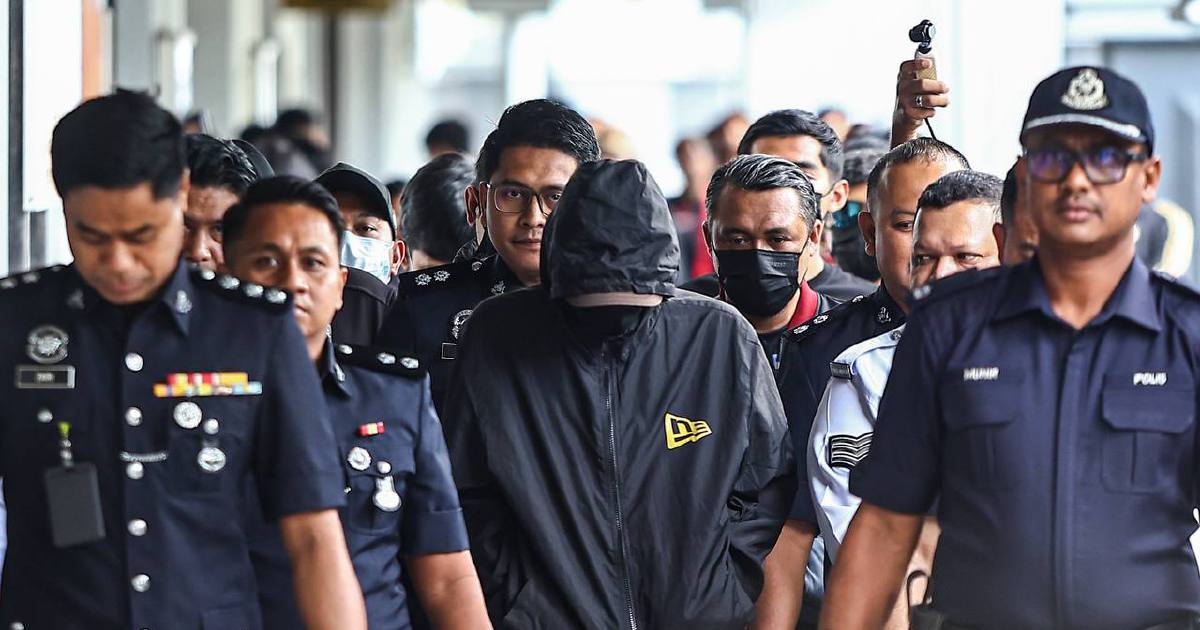
A driver employed by Malaysia's Immigration Department made his first court appearance today to face five charges arising from a catastrophic traffic collision that claimed three lives at the Maju Junction intersection along Jalan Sultan Ismail in Kuala Lumpur. The accused elected to proceed with trial in the magistrates' court, where three of the charges relate directly to causing death through reckless or dangerous driving. The incident, which occurred yesterday, has drawn immediate public attention given the involvement of a government vehicle and the loss of an entire family unit.
The formal charges underscore the severity of the collision and the authorities' assessment that the driver's actions constituted dangerous or reckless conduct. Beyond the three fatal collision charges, the driver faces two additional counts whose specific nature suggests investigating officers identified multiple breaches of traffic law or safety protocols. The decision to pursue prosecution signals that preliminary investigations determined sufficient evidence exists to establish culpability, moving the case from preliminary enquiry directly into the trial phase.
The Maju Junction intersection has emerged as a focal point of concern regarding traffic safety in central Kuala Lumpur. This major junction, situated on one of the city's principal arterial routes, experiences substantial daily vehicular traffic from commuters, commercial vehicles, and through-traffic heading toward the capital's various business districts and residential zones. The incident raises questions about intersection design, traffic signal coordination, and whether visibility or geometric factors contributed to the collision's severity.
Immigration Department operations routinely involve large vehicles serving enforcement, transport, and logistics functions across the country. When government vehicles are involved in fatal incidents, particular scrutiny attaches to questions of vehicle maintenance standards, driver training protocols, and whether institutional procedures adequately ensure public safety. The case may prompt broader examination of vehicle fleet management within the department and whether existing maintenance and safety inspection regimes are sufficiently rigorous.
The involvement of three family members creates a profound human dimension extending beyond statistics. Such incidents frequently generate sustained community concern about road safety generally and the conditions that permit high-impact collisions in busy urban areas. Public discourse around the tragedy may extend to debates regarding speed limits in congested zones, enforcement mechanisms, and whether existing traffic management adequately protects vulnerable road users.
As the case proceeds through magistrate's court, investigative details are likely to emerge through evidence presentation and witness testimony. Critical factors in such prosecutions typically include vehicle speed at impact, visibility conditions, signals and signage status, witness accounts of driver conduct immediately preceding collision, and forensic evidence reconstructing the sequence of events. The court will require proof establishing that the driver's conduct fell below acceptable standards to a degree rendering the death charges substantiated.
The magistrates' court jurisdiction over such serious charges reflects Malaysia's legal framework permitting magistrates to try capital offences with accused consent. This pathway can expedite proceedings compared to committal to higher courts, though the complexity and gravity of a fatality case may yet result in committal recommendation should the magistrate determine the matter requires superior court handling.
Public safety implications merit consideration beyond the immediate case. Fatal traffic incidents in major city centres frequently prompt infrastructure reviews, including traffic signal timing optimization, lane marking improvements, and accident blackspot remediation programmes. Urban planning authorities may reassess whether current intersection geometry and traffic calming measures adequately serve safety objectives while maintaining traffic flow requirements.
The three-person fatality toll ranks among Malaysia's serious single-incident road tragedies and recalls previous major collisions that prompted policy discussions regarding enforcement intensity, vehicle standards, and driver qualification requirements. Road fatality reduction remains a significant challenge in Malaysia, with annual casualty figures that consistently draw attention from public health and safety advocates advocating for comprehensive intervention strategies.
For families and communities connected to the victims, the judicial proceedings represent a lengthy process of seeking accountability and understanding circumstances contributing to their loss. The court proceedings will gradually build the evidentiary foundation for determining the degree of driver culpability and appropriate legal consequences, though the emotional impact extends far beyond what judicial determination alone can address.
As trial dates are scheduled, the court will establish a timeline for evidence presentation, including witness statements, expert testimony regarding vehicle mechanics and accident reconstruction, and argument regarding applicable legal standards for dangerous or reckless driving establishment. The prosecution bears burden of proving guilt beyond reasonable doubt on each charge, a threshold that will determine ultimate outcomes.

