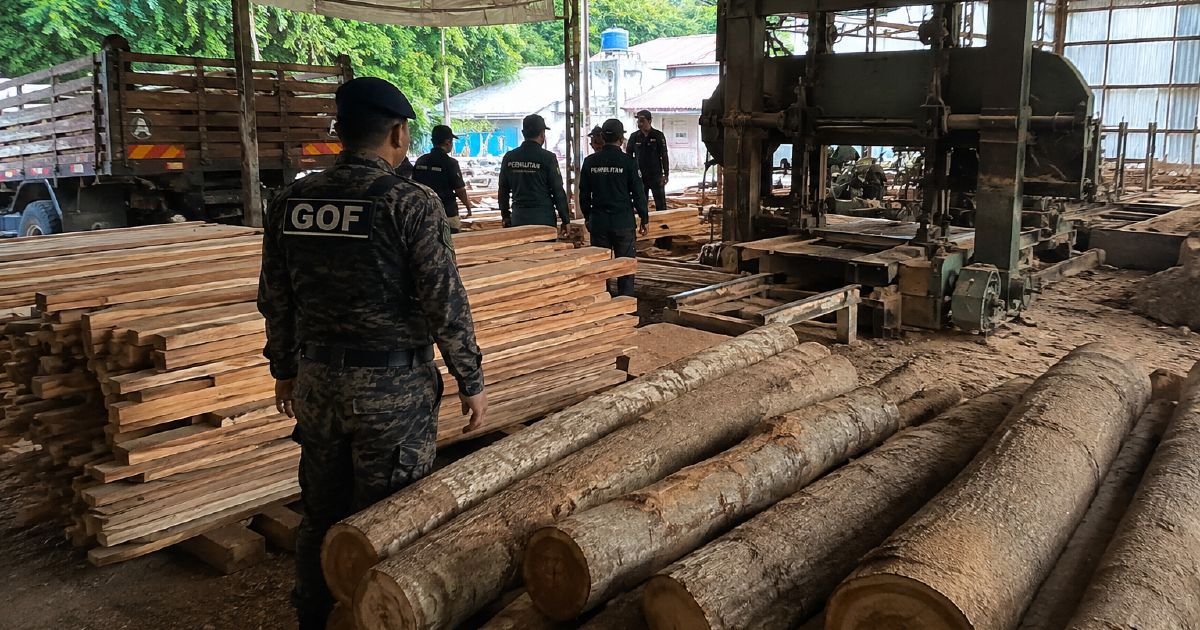
Malaysia's ongoing crackdown on illegal logging claimed another significant victory this week when the General Operations Force descended on a sawmill operation in Kuala Berang, Terengganu, securing a substantial haul of confiscated materials and equipment. The raid, executed in Kuala Terengganu, resulted in the seizure of timber stocks and industrial machinery collectively valued at RM640,510, along with the arrest of a 20-year-old operator linked to the facility.
The operation represents part of broader enforcement efforts targeting the illegal timber trade, a persistent challenge across Malaysia's eastern seaboard where Terengganu has become a focal point for both regulatory authorities and conservation advocates. The region's geography—bordered by extensive forestland and accessible waterways—has historically made it vulnerable to unauthorized logging activities and unregulated processing operations that circumvent proper licensing and environmental safeguards.
Equipment confiscation represents a significant blow to clandestine timber operations, as sawmill machinery constitutes the primary fixed asset in illicit processing facilities. Industrial saws, sorting equipment, and material handling systems collectively represent substantial capital investment, and their removal renders the operation economically unviable. This strategy has proven more effective than timber seizures alone, as replacements require both financial resources and time that attract regulatory scrutiny.
The detained individual's age—at the threshold of legal adulthood—raises questions about labor recruitment patterns within the informal logging economy. Young operators frequently serve as front-line workers in extraction and processing chains, positioned by operators to serve as expendable assets when enforcement encounters occur. This demographic pattern suggests organized networks orchestrating operations beyond individual sawmill operators, a nuance often overlooked in standard enforcement reporting.
Terengganu's forestry compliance record has drawn sustained attention from federal authorities, particularly following increased monitoring protocols implemented across Peninsular Malaysia. The state's forest reserves, while subject to state management under Malaysia's federal structure, fall under scrutiny from national agencies when evidence emerges of cross-boundary timber trafficking or systematic regulatory violations that create interstate commerce complications.
The monetary valuation assigned to seized materials—RM640,510—carries implications for enforcement resource allocation within the GOF. Such figures justify elevated operational budgets and personnel deployment, though Malaysian enforcement agencies have periodically faced budgetary constraints that limit inspection frequency and follow-up investigations into supply chain networks that likely extend beyond individual sawmill facilities.
Illegal timber operations interconnect with broader Malaysian environmental and economic challenges. Unregulated extraction undermines legitimately licensed timber operations that bear compliance costs, distorting market pricing while fragmenting forest ecosystems. For Southeast Asian readers, this dynamic reflects regional patterns where borderland areas and jurisdictional ambiguities create enforcement vulnerabilities, a phenomenon affecting forestry management across Thailand, Indonesia, and Myanmar.
The GOF's capacity to identify and raid clandestine facilities depends substantially on intelligence gathering, community reporting, and inter-agency coordination. The successful execution of this Kuala Berang operation suggests functional information networks, whether through official reporting channels or anonymous tip-offs, though the prevalence of such seizures indicates ongoing operational gaps requiring expanded monitoring infrastructure.
Investigative momentum following such raids typically extends toward identification of timber purchasers and supply chain recipients. Whether seized materials were destined for domestic processing, export markets, or unregulated construction applications remains operationally significant for determining organizational scope and establishing potential conspiracy charges that carry steeper penalties than possession violations.
For Malaysian consumers and manufacturers, illicit timber supplies artificially suppress market pricing, creating competitive disadvantages for compliant businesses and distorting investment signals throughout the timber value chain. Local furniture manufacturers, construction enterprises, and wood-processing industries operating under proper licensing bear elevated costs relative to competitors utilizing black-market materials, a structural inefficiency that Malaysian economic policy occasionally overlooks.
The broader significance of this seizure extends to regional deforestation metrics and carbon accounting frameworks increasingly relevant to international trade negotiations. Malaysia's forest coverage commitments under regional agreements and bilateral environmental pledges depend on sustained enforcement demonstrating genuine compliance with stated protection targets rather than mere administrative documentation.

