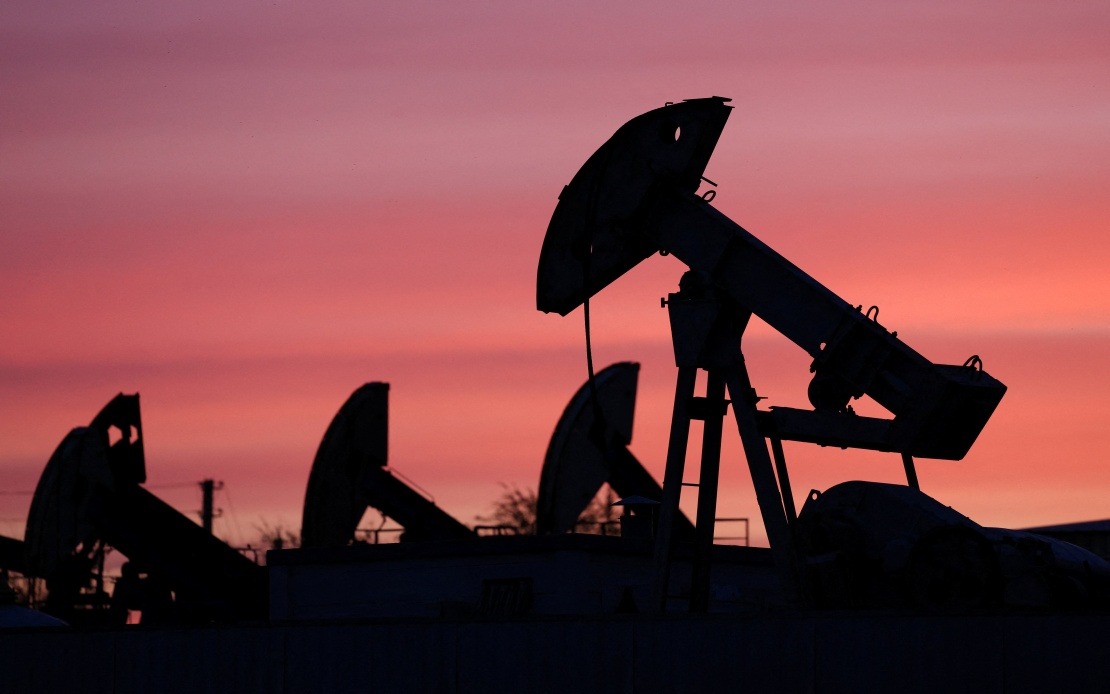
The International Energy Agency released revised projections on Friday that paint a more optimistic picture of global oil markets in 2026, with both demand and supply forecasts moving upward from previous estimates. Rather than contracting as sharply as anticipated merely weeks earlier, the IEA now expects global oil demand to decline by just 1.05 million barrels per day next year, bringing total consumption to 103.463 million barrels per day. This represents a meaningful improvement from the agency's prior assessment, which had projected demand would fall by 1.118 million barrels per day—a downward revision that suggests the oil market may prove more resilient than feared.
The shift in the IEA's outlook, while modest in absolute terms, carries significance for energy markets and the broader geopolitical calculus surrounding crude oil supplies. The organisation reduced its forecast for this year's demand decline to 1.047 million barrels per day, which translates to 71,000 barrels per day less contraction than the previous month's estimate. This pattern of successive upward revisions indicates that demand destruction—the feared outcome of sustained high prices or economic slowdown—may be occurring more gradually than initially projected. For countries like Malaysia, which possesses petroleum reserves and depends partly on global energy prices, such adjustments signal potential stability in a crucial economic sector.
On the supply side, the IEA simultaneously increased its expectations for global oil production in 2026. The agency now forecasts that production declines will amount to 0.22 million barrels per day less than previously thought, resulting in total production reaching 102.6 million barrels per day. This represents a significant upward revision to its prior forecast, which had anticipated production falling by 3.87 million barrels per day and settling at only 102.37 million barrels per day. The narrowing gap between anticipated supply declines and demand erosion suggests market participants expect a relatively balanced crude oil environment over the next two years, though with persistent structural tensions beneath the surface.
These revised forecasts warrant scrutiny given their implications for the complex relationship between producer nations, consumer economies, and energy security strategies across Asia-Pacific. The IEA's repeated upward revisions to demand—even as forecasters simultaneously reduce expectations for demand decline—reflect genuine uncertainty about how global economies will consume energy amid price volatility, technological disruption, and the gradual transition toward cleaner fuel sources. The agency appears to be moderating its expectations for demand destruction, suggesting that despite elevated prices, substitution away from oil has proven slower than some feared.
From a Southeast Asian perspective, these adjustments matter considerably. The region encompasses both oil-producing nations such as Malaysia and Brunei, along with energy-importing economies heavily dependent on affordable crude for power generation, transportation, and petrochemical feedstocks. A more balanced oil market with less pronounced demand destruction could support prices at levels that benefit producers while remaining manageable for importers. Conversely, if the IEA's optimism proves misplaced and demand falls more steeply than now forecast, oil prices could weaken, harming producer revenues but benefiting consumer nations.
The narrowing margin between projected supply and demand in 2026—with consumption at 103.463 million barrels per day against production of 102.6 million barrels per day—implies the market will rely on inventory draws to meet demand. This slight deficit requires clarification regarding strategic reserves and spare capacity, as it suggests the oil market will not be well-supplied with commercial inventories rebuilding substantially. The IEA's projection thus contains an implicit assumption about how markets will manage this gap, whether through price signals that moderate demand further or through supply-side adjustments that prove larger than currently expected.
These forecasts also underscore the ongoing uncertainty surrounding major supply disruptions, geopolitical risks, and OPEC+ production decisions. The IEA's baseline assumptions presumably incorporate current policy settings and recent agreements among producing nations, yet oil markets remain vulnerable to unexpected events that could dramatically alter supply trajectories. For Malaysian policymakers monitoring energy independence and fiscal revenues from petroleum, such forecasts provide only a provisional roadmap rather than certain guidance.
The timing of these revisions, arriving in early July, suggests the IEA responded to recent market data and economic indicators that proved less dire than previous assumptions. Demand may have surprised to the upside in early months of the year, or economic growth forecasts for consuming nations may have been revised upward since the previous report released a month prior. Without access to the detailed methodology, observers can only note that the agency found reason to trim expected demand declines and shrink the anticipated production drop.
For energy traders, policy planners, and corporate strategists across Malaysia and neighbouring economies, the IEA's latest assessment suggests a period of relative stability in crude oil supplies and pricing may persist through 2026, assuming no major disruptions materialise. However, the repeated pattern of revisions—initially forecasting sharper declines, then moderating those expectations—itself signals the substantial uncertainties inherent in long-range energy forecasting. Market participants would be wise to view these projections as central estimates surrounded by significant ranges of plausible outcomes rather than definitive predictions.

