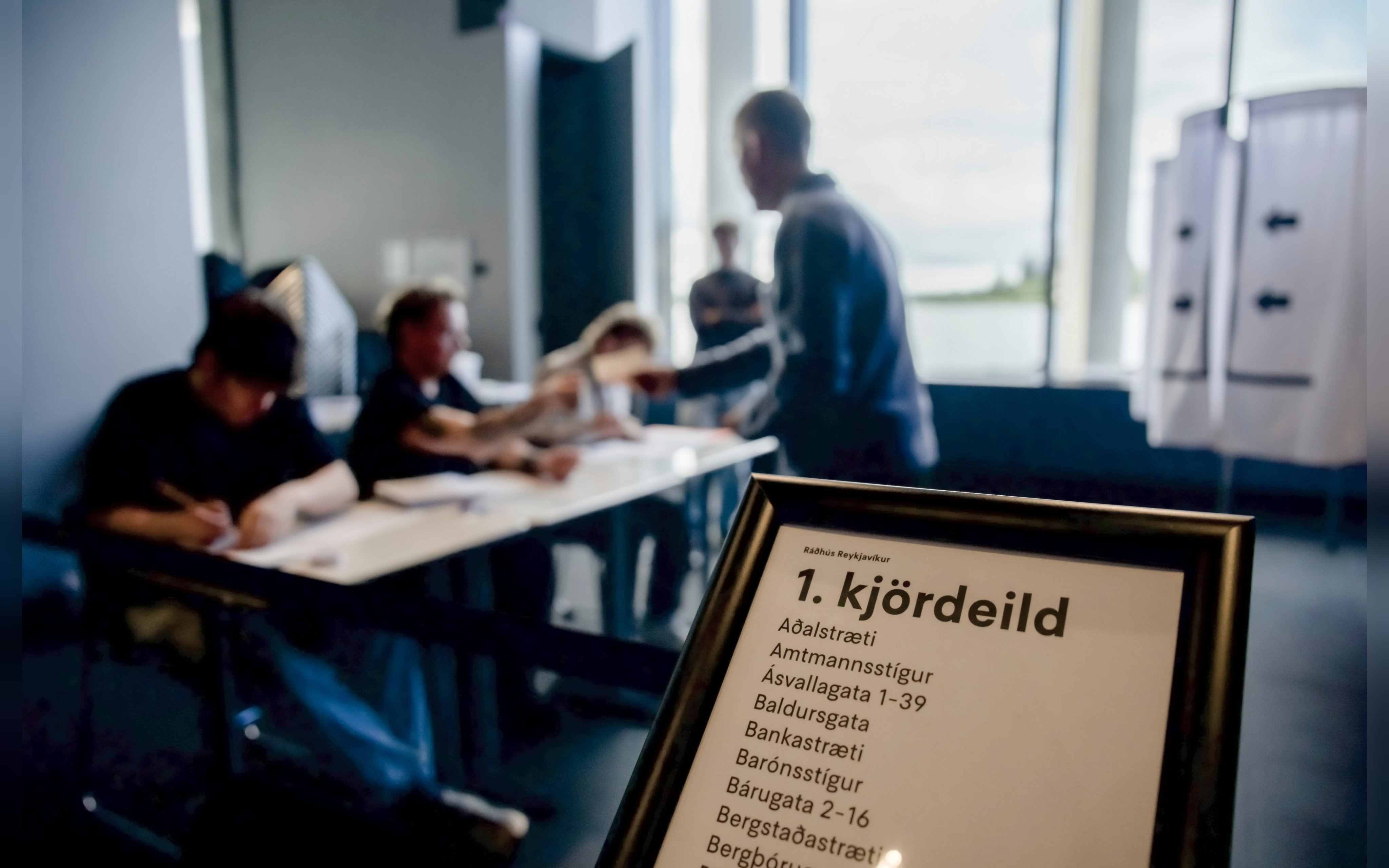
Iceland has closed the door on European Union membership talks, at least for now, after voters narrowly rejected a government proposal to restart accession negotiations. The referendum, concluded on Saturday with results announced Sunday, saw 52.8 per cent of participants vote against reopening membership discussions, while 47.2 per cent supported the initiative. The slim margin underscores deep divisions within Icelandic society about the country's relationship with the broader European bloc, a tension that has simmered for over a decade.
The referendum emerged from political shifts in Iceland's governance landscape. The Social Democrats, a pro-EU party, swept to power during the 2024 general election with a mandate to reconsider the country's EU ambitions. Upon taking office, party leaders committed to putting the membership question directly to voters through a referendum, reflecting both democratic principles and the contentious nature of European integration within Iceland. The government scheduled the popular vote after geopolitical developments, including regional security concerns and evolving economic considerations, thrust the EU question back into public consciousness and political debate.
Iceland's relationship with EU membership has been complicated and cyclical. The North Atlantic nation formally submitted its application to join in 2009, responding to the severe economic consequences of the global financial crisis that devastated its banking sector and triggered widespread social upheaval. However, accession negotiations, which commenced following the application, stalled when political power shifted toward eurosceptic parties. A government led by those sceptical of EU integration took office in 2013 and subsequently suspended the accession talks that had been underway, effectively putting membership aspirations on hold for the subsequent decade.
Fishing remains the central battleground in Iceland's EU debate, representing both an economic lifeline and a symbol of national sovereignty. The fishing industry underpins the Icelandic economy, providing employment, export revenue, and cultural identity to a nation of roughly 375,000 people. EU membership would require Iceland to cede considerable control over its marine resources and fishing quotas to Brussels-based regulatory frameworks, a prospect that mobilises opposition across social and political divisions. For many Icelanders, the fishing question transcends economic calculation—it embodies concerns about surrendering autonomous decision-making over resources that define the nation's independence and prosperity.
Beyond fishing, the sovereignty argument has resonated powerfully among EU membership opponents. Critics contend that joining the bloc would subordinate Iceland's legislative authority to European institutions, requiring harmonisation of laws, policies, and regulations across domains from environmental protection to labour standards. In a small, geographically isolated nation with distinct cultural and historical traditions, such integration triggers anxieties about homogenisation and loss of self-determination. This sovereignty framing has proved politically durable, transcending individual political cycles and consistently mobilising voters against membership proposals.
The referendum result reflects the persistent ambivalence characterising Icelandic attitudes toward European integration. While the pro-EU government invested political capital in the membership campaign, framing EU accession as beneficial for economic dynamism, security cooperation, and regional influence, these arguments failed to overcome accumulated scepticism. The narrow margin suggests that Iceland remains deeply split on the question, with meaningful constituencies on both sides. This polarisation complicates any future government attempts to revisit the issue, as the referendum has clarified that no strong consensus exists for membership.
For regional observers, Iceland's referendum carries broader implications for Nordic and European geopolitics. As security concerns mount across Northern Europe, particularly regarding Russia and Arctic developments, some analysts had anticipated that strategic considerations might tip Icelandic opinion toward EU membership. The rejection, however, demonstrates that even heightened regional tensions may prove insufficient to overcome cultural, economic, and nationalist objections to integration. Iceland's NATO membership already provides security guarantees and alliance coordination, reducing the strategic imperative for simultaneous EU accession from a defence perspective.
The outcome also reflects generational and educational divides evident in voting patterns across developed democracies. Younger, urban, and university-educated Icelanders tilted toward EU membership, viewing integration as modernising and economically rational. Conversely, older voters, rural populations, and those dependent on traditional industries favoured rejection, emphasising sovereignty, cultural preservation, and fishing rights. These cleavages suggest that Iceland's EU question will likely resurface periodically as demographics shift and geopolitical circumstances evolve, ensuring that the membership debate remains embedded in long-term political dynamics.
Looking forward, the referendum outcome provides clarity on current public sentiment while leaving Iceland's ultimate European trajectory uncertain. The pro-EU government maintains the option of revisiting the question, but political capital constraints following this defeat suggest caution. Opposition parties can point to the referendum result as democratic validation of their sceptical stance. Meanwhile, the close vote preserves the possibility that subsequent governments, facing changed circumstances or shifting public opinion, might again propose membership negotiations. For now, Iceland remains outside the EU framework but engaged with Europe through NATO, the European Economic Area, and bilateral arrangements—a middle-ground position reflecting the nation's geographical, economic, and political distinctiveness within the broader European landscape.

