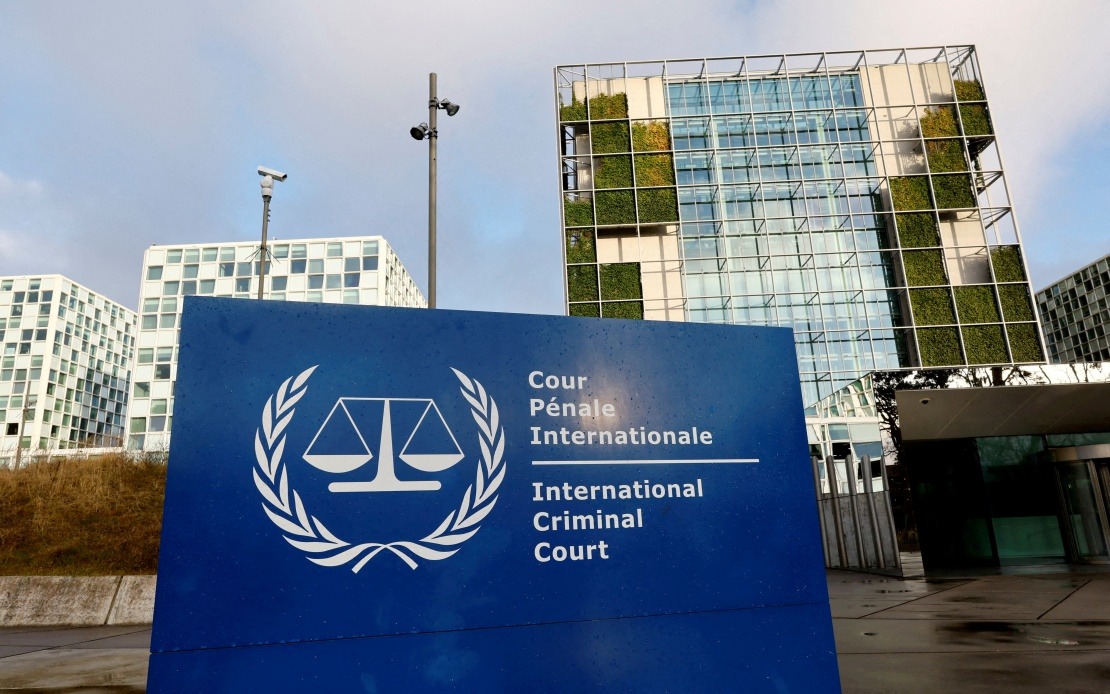
The International Criminal Court has issued a forceful rebuke of newly imposed United States sanctions, characterising the measures as an unprecedented assault on the institution's judicial autonomy and independence. The sanctions, announced this week, specifically target ICC President Tomoko Akane of Japan and Abdoulaye Seye, a senior trial lawyer within the Office of the Prosecutor based at The Hague. The court's official response underscores growing tensions between Washington and the multilateral justice institution over the scope and direction of its investigations.
The designation of these two officials marks an escalation in American pressure against the ICC, which has faced repeated criticism from the United States for its investigative work. According to the court's statement, the new sanctions bring the total number of ICC personnel subject to American restrictions to a substantial figure spanning multiple levels of the institution. Nine of the court's eighteen judges now operate under US sanctions, alongside both deputy prosecutors, a former prosecutor, and additional court staff members. This breadth of coverage demonstrates the systematic nature of American restrictions rather than isolated measures targeting specific individuals.
The ICC's formal response emphasises that sanctions targeting judges, prosecutors, and supporting personnel for executing their prescribed institutional mandate represents a fundamental assault on international legal architecture. The court argues that such coercive measures, when applied to officials carrying out duties mandated by the Rome Statute and the court's member states, undermine the foundational principles upon which the international legal order depends. This framing positions the dispute not merely as a bilateral disagreement between Washington and The Hague, but as a challenge to the legitimacy of multilateral judicial institutions more broadly.
For readers across Southeast Asia and the broader Indo-Pacific region, this confrontation carries significant implications. Many nations in this area are parties to the Rome Statute or maintain diplomatic relationships with the ICC. The sanctions represent a demonstration of how powerful countries may attempt to constrain international institutions' operations when investigations touch on their interests or those of their allies. Malaysia and other ASEAN members maintain their own positions regarding international criminal accountability mechanisms, and the US-ICC friction signals the increasing politicisation of justice institutions that smaller nations rely upon for recourse.
The court has drawn particular attention to how these sanctions affect vulnerable populations seeking justice through international channels. The ICC emphasises that coercive measures and threats targeting its personnel fundamentally compromise the ability of victims—particularly those from conflict zones—to pursue accountability after exhausting domestic remedies. This argument reframes the sanctions debate from institutional governance to victim access, highlighting how geopolitical disputes can have concrete consequences for individuals pursuing justice for serious crimes including genocide, crimes against humanity, and war crimes.
The ICC's statement reflects broader frustrations within the institution regarding what it perceives as interference in its mandate. By designating officials for carrying out investigations and prosecutions authorised by its founding statute and member states, the United States effectively signals that American foreign policy interests supersede the court's independent functioning. This creates a precedent concerning other powerful nations' potential responses to ICC actions they deem disadvantageous, potentially triggering a broader erosion of institutional autonomy across international organisations.
The court has explicitly welcomed support from member states, civil society organisations, and other entities committed to international justice and rule of law principles. This appeal to international solidarity serves multiple purposes: it reinforces the court's legitimacy among its constituency, signals that principled opposition to US sanctions exists among significant global actors, and creates diplomatic space for countries reconsidering their relationship with Washington based on these measures. The support dynamic may prove particularly important in regions where nations balance relationships with both the United States and the ICC.
The Rome Statute framework, which established the ICC in 1998, represents a significant achievement of post-Cold War international cooperation. The court's invocation of this foundational instrument underscores its argument that it operates within a legitimate, consensual legal framework rather than as an arbitrary institution. The sanctions dispute thus represents not merely a disagreement over specific cases or investigations, but a fundamental conflict regarding the proper functioning of institutions created through multilateral agreement and how powerful states should respond when those institutions act contrary to their preferences.
This episode illuminates the fragility of international justice mechanisms when confronted with great power opposition. The ICC lacks enforcement capacities independent of cooperation from member states and relies significantly on voluntary participation and support. By systematically sanctioning ICC personnel, Washington attempts to raise the costs of institutional action while demonstrating its capacity to inflict consequences on individuals working within the system. For smaller nations including those in Southeast Asia, this dynamic raises questions about whether international institutions can genuinely function independently or whether they remain ultimately subordinate to powerful states' strategic interests.

