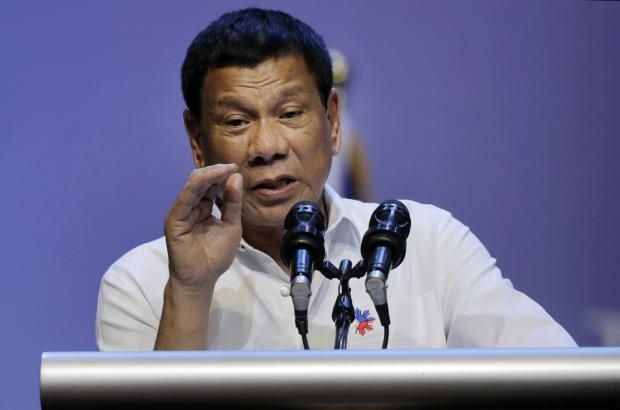
The International Criminal Court's Trial Chamber III has granted the prosecution authority to freeze an unspecified amount of money that was confiscated from former Philippine President Rodrigo Duterte when he entered the tribunal's custody, according to rulings issued in late May and June. The decision underscores the court's willingness to preserve potential assets for reparations to victims should Duterte be convicted of crimes against humanity charges related to murder. However, in a significant constraint on investigative powers, the chamber simultaneously rejected the prosecution's efforts to obtain Duterte's personal keys, which were allegedly in his possession during his trip to Hong Kong before his arrest and transfer to The Hague last March.
The financial dimension of these rulings carries substantial implications for the broader legal proceedings against the 77-year-old former leader. Under Article 75 of the ICC Statute, convicted individuals can be ordered to pay reparations to victims, and the trial chamber emphasized that the confiscated funds must remain available and protected against devaluation to fulfil this obligation should the verdict go against Duterte. The Registry, the ICC's administrative body, has been tasked with implementing protective measures to ensure the money's value does not erode over time. This financial safeguard reflects international criminal law's evolution toward prioritizing victim compensation as a core component of justice, particularly in cases involving allegations of systematic violence affecting vulnerable populations.
Duterte's detention and the subsequent proceedings represent an unprecedented development in Philippine legal history. The former president was arrested upon arrival at Ninoy Aquino International Airport in Manila in March of the previous year, following an ICC investigation into the killings associated with his brutal anti-drug campaign, which claimed hundreds of thousands of lives according to human rights organizations. His extradition and transfer to the Netherlands marked a dramatic reversal from his years wielding unchecked executive authority in Manila, where he wielded considerable political dominance and faced limited domestic accountability mechanisms.
The chamber's approval to grant the prosecution access to inspect undisclosed items recovered from Duterte represents a partial victory for investigators seeking to build their case. Prosecutors successfully argued that certain seized items were likely instrumental in perpetrating the alleged crimes, meeting the court's threshold for "reasonable grounds to believe" that inspection would yield necessary investigative evidence. The decision demonstrates the tribunal's recognition that physical possessions can corroborate testimony and reconstruct the mechanics of alleged criminal conduct. Yet the chamber simultaneously criticized the prosecution for submitting this request at an advanced stage of proceedings without adequate justification, suggesting the court expects more disciplined case management.
The rejection of the keys request, however, signals that even an international court pursuing serious crimes must respect individual rights protections. Duterte's defence team argued that allowing access to keys seized during his family's Hong Kong travels would constitute an unjustifiable intrusion into his privacy rights. The trial chamber concurred, determining that obtaining the keys was neither necessary nor proportionate to investigative objectives. This reasoning reflects a principle embedded in international law that investigative powers, regardless of the gravity of allegations, must be constrained by proportionality—a principle increasingly important as courts worldwide grapple with balancing security and accountability against fundamental freedoms.
For Malaysian observers, this case offers instructive lessons about the potential consequences of international scrutiny into alleged mass violence. The ICC's investigation and prosecution of Duterte, despite his former position as a sovereign leader, demonstrates that immunity from domestic prosecution may not shield individuals from international jurisdiction. The tribunal's establishment of jurisdiction over the Philippine killings shows that international mechanisms can intervene when national systems fail or are unwilling to investigate mass casualties. This precedent carries relevance across Southeast Asia, where several countries face allegations of extrajudicial violence and inadequate domestic accountability mechanisms.
The proceedings also highlight the technical complexities of international criminal litigation. Determining what property is probative, what constitutes proportionate intrusion, and how to preserve assets for future reparations involves multifaceted legal reasoning that extends far beyond traditional criminal procedure. The ICC must simultaneously serve investigative, prosecutorial, victims' advocacy, and defence protection functions—a balancing act that generates tensions evident in rulings that approve some requests while rejecting others. These decisions emerge after careful deliberation by specialized chambers of judges trained in international humanitarian law.
The frozen funds issue assumes particular significance given the estimated scale of the drug war's toll. If the prosecution's allegations prove substantiated and Duterte is convicted, reparations awarded from seized assets could benefit thousands of families who lost relatives during the campaign. Such awards would establish precedent in international criminal justice for compensating victims of extrajudicial violence through criminal proceedings, rather than relying solely on civil litigation or political settlements. The Registry's responsibility to prevent asset devaluation thus carries practical importance for potential victims awaiting justice outcomes.
Looking ahead, the Trial Chamber's measured approach—granting some prosecutorial requests while constraining others—suggests the court intends to proceed methodically through the trial phase. The prosecution will continue assembling evidence from accessible sources, while Duterte's defence team will litigate specific investigative boundaries. The case's progression will likely generate additional rulings clarifying the scope of permissible investigative conduct in international proceedings. For the broader region, this case exemplifies how international courts increasingly address mass violence allegations that domestic systems have neglected, potentially setting standards that pressure national governments to strengthen their own accountability mechanisms to avoid similar international intervention.

