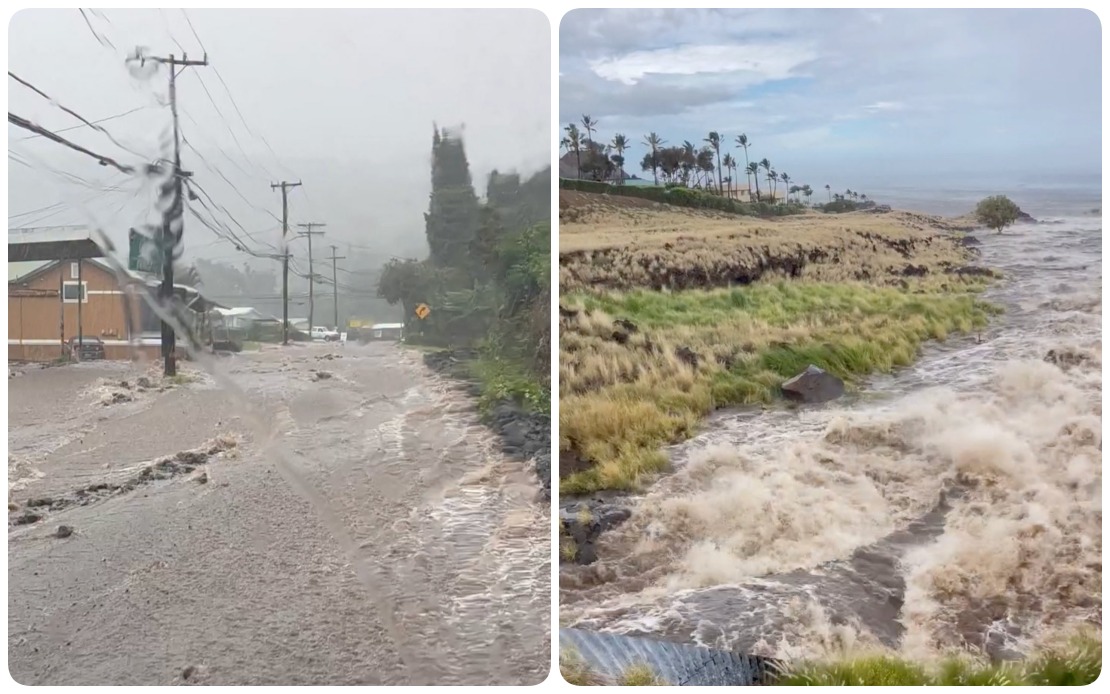
Hurricane Lala pounded Hawaii's islands with severe weather on August 15, battering the state with destructive winds and heavy precipitation that disrupted communities and left tens of thousands in darkness. The storm's path brought it just south of Hawaii Island, where conditions proved particularly severe, though deteriorating weather extended across Maui County, Oahu and Kauai as the system progressed. Governor Josh Green reported that wind speeds were at their peak on Hawaii Island, with some localities already accumulating more than 13 inches of rainfall by the time the storm's core arrived, signalling the potential for significant flood damage in vulnerable areas.
The scale of power disruptions across the Hawaiian archipelago underscored the hurricane's destructive reach. Hawaiian Electric reported that 88,000 customers had lost electricity by 7 p.m. local time, with the vast majority concentrated on Hawaii Island, where 63,270 outages occurred. Maui County experienced approximately 15,260 power losses, whilst Oahu sustained roughly 9,500 outages. These figures reflected the uneven distribution of the storm's impact, with the Big Island bearing the brunt of the system's intensity as it traversed the region's tropical waters.
Beyond electrical infrastructure, Hurricane Lala triggered cascading infrastructure failures across multiple islands. The Hawaii Emergency Management Agency documented a litany of storm-related hazards, including flooding, uprooted trees, downed power lines and hazardous wind conditions throughout Hawaii Island and surrounding communities. The state's Department of Transportation released aerial footage capturing overflowing waterways and inundated roadways, visual evidence of the precipitation's volume overwhelming drainage systems. Multiple thoroughfares required closure to prevent public endangerment, whilst authorities issued urgent directives instructing residents to remain sheltered indoors or relocate to designated safety facilities.
On Hawaii Island specifically, the disruption manifested in localised street-level impacts that compounded broader infrastructure damage. Police reported that rising floodwaters forced the closure of Kahikopele Street in the Mountain View area, whilst neighbouring Pauahi Street also experienced inundation affecting access and drainage. Along Mamalahoa Highway, fallen trees and large debris created navigation hazards and blockages, prompting safety warnings from authorities attempting to manage traffic and prevent accidents. Downed power lines necessitated the additional closure of Plumeria Street, creating a patchwork of inaccessible routes that fragmented communities and hindered emergency response efforts.
Wind velocity emerged as a particularly destructive component of Hurricane Lala's assault on the islands. Hawaiian Electric recorded wind gusts approaching 90 miles per hour across portions of Hawaii Island, velocities sufficient to fell mature trees and damage structures. The consequences of these extreme winds manifested dramatically on the Hamakua coast, where fallen trees brought down multiple utility poles and damaged transmission infrastructure spanning a 42-mile stretch. This extensive damage to the backbone of the electrical distribution network suggested that restoration efforts would require substantial time and resources, particularly given the geographic challenges of accessing and repairing equipment across such a dispersed area.
Utility officials conveyed sobering assessments regarding power restoration timelines. Hawaiian Electric acknowledged that customers already affected by outages on Hawaii Island and Maui would likely remain without electricity throughout the night, as hazardous weather conditions persisted and prevented repair crews from safely accessing damaged equipment. The combination of dangerous winds, heavy rainfall and reduced visibility created operational constraints that prioritized worker safety over rapid restoration. This cautious approach, whilst prudent from an occupational safety perspective, left vulnerable populations without air conditioning, refrigeration and medical equipment in a tropical climate where darkness and heat present legitimate health concerns.
The hurricane's arrival tested Hawaii's emergency management infrastructure and disaster response protocols. The state's coordinated communications across multiple agencies—the governor's office, emergency management, police departments and utilities—demonstrated established frameworks for managing natural disasters in island communities with limited geographic escape routes. However, the widespread nature of damage across multiple islands simultaneously strained resources and personnel, requiring mutual aid coordination between county-level services and state-level emergency response teams. Recovery operations would extend well beyond the initial impact period, encompassing debris removal, infrastructure repair and assessment of agricultural and environmental damage.
For Malaysian and Southeast Asian observers, Hurricane Lala underscores the vulnerability of island communities to tropical cyclonic systems and the cascading infrastructure failures that accompany major storms. Malaysia's own exposure to monsoon-driven rainfall and occasional typhoons creates pertinent parallels regarding flood preparedness, power grid resilience and inter-agency coordination during extreme weather events. The Hawaiian experience, with its advanced infrastructure and well-resourced utility companies, nonetheless demonstrated the challenges in maintaining service continuity during severe tropical weather, offering lessons relevant to regional disaster management planning.
The broader implications of Hurricane Lala's impact extend to considerations of climate resilience and infrastructure hardening in vulnerable regions. As tropical cyclone patterns potentially shift in response to changing ocean temperatures, island communities throughout the Pacific and Indian Ocean regions face intensifying pressures to enhance structural capacity, improve forecasting accuracy and establish more robust supply chain redundancies. Hawaii's response mechanisms, whilst functional, revealed stress points that warrant attention—particularly the extended restoration timelines for distributed infrastructure networks spanning large geographic areas with challenging terrain.

