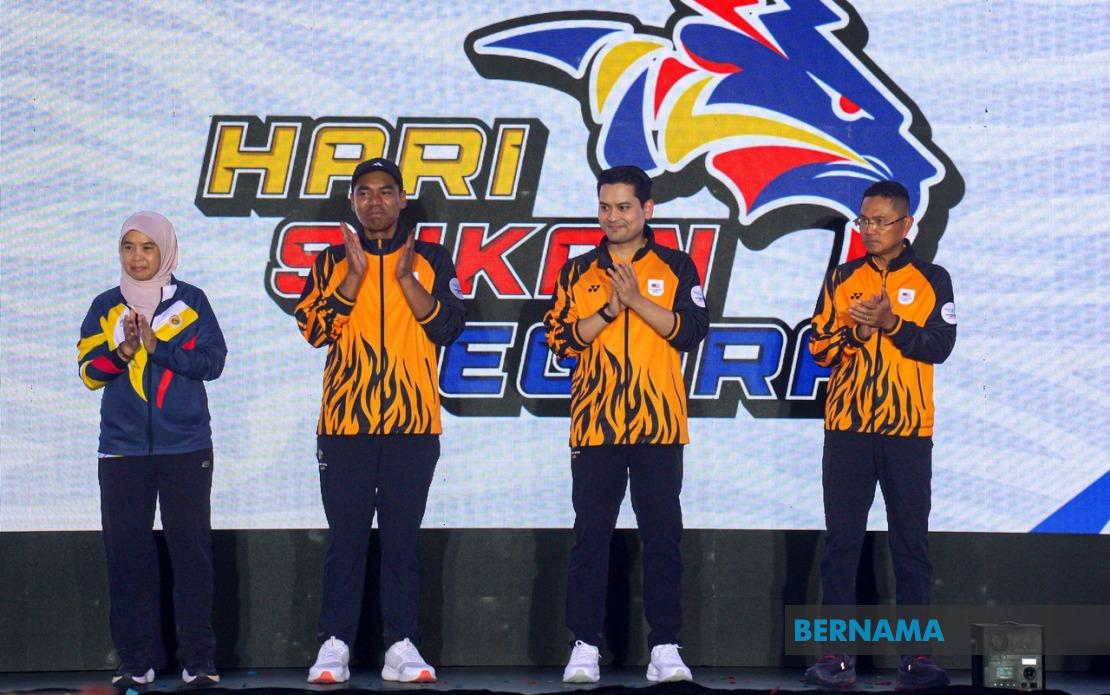
Malaysia's National Sports Day (HSN) 2026 will unfold across three days next October, with organisers aiming to draw participation from more than 5.3 million Malaysians in a nationwide push to deepen engagement with sports and recreational pursuits. The celebration, set for October 9 to 11, represents a strategic effort by the Youth and Sports Ministry to blend cutting-edge technology with grassroots athletic participation, signalling a fundamental shift in how the country approaches public health and fitness engagement.
Youth and Sports Minister Dr Mohammed Taufiq Johari unveiled the initiative at a pre-launch ceremony in Putrajaya, introducing a revamped visual identity and positioning the event around the theme of digital technology and artificial intelligence integration into sports development. This thematic direction reflects broader global trends toward digitally-enabled fitness programmes and data-driven athletic training, while simultaneously signalling Malaysia's commitment to keeping sports infrastructure current with rapid technological change. The ministry's emphasis on merging these elements speaks to recognition that younger demographics, in particular, increasingly expect digital components in their sporting experiences.
A notably distinctive feature of this year's pre-launch involved extensive deployment of virtual reality technology, offering a tangible preview of the integrated approach the ministry intends to pursue. By showcasing VR capabilities at the promotional event, organisers demonstrated commitment to moving beyond conventional sports festival formats. According to Dr Mohammed Taufiq, this technological integration serves a dual purpose: modernising how Malaysia promotes athletic participation whilst simultaneously appealing to digitally-native populations who might otherwise remain disengaged from traditional sports initiatives.
The minister articulated a particularly nuanced vision for technology's role in sports development. Rather than viewing digital pursuits as alternatives to physical activity, the ministry frames e-sports and gaming as potential gateways toward broader fitness engagement. This perspective acknowledges the reality that video gaming communities represent substantial demographic segments, particularly among youth, and positions sports promotion as inclusive rather than prescriptive. By demonstrating pathways from digital engagement to physical activity, the ministry attempts to bridge cultural divides that have occasionally positioned gaming and traditional sports as opposing interests.
The celebration carries heightened significance for Malaysia's sporting calendar given the nation's forthcoming responsibilities as host of the 2027 Southeast Asian Games. HSN 2026 functions simultaneously as a public participation event and a publicity mechanism designed to cultivate enthusiasm for the regional competition. Prime Minister Datuk Seri Anwar Ibrahim will officiate the national-level launch at the National Stadium in Bukit Jalil on October 10, underscoring the event's status as a priority for Malaysia's political leadership and reflecting broader government investment in sports as a development tool.
Coordination between HSN 2026 planning and the Malaysia SEA Games Organising Committee (MASOC) indicates strategic alignment in promotional efforts. The ministry intends to integrate SEA Games roadshow activities into HSN programming, leveraging the larger festival's reach to generate momentum and public awareness for the 2027 Games. This interconnected approach maximises the promotional benefit of both events whilst distributing organisational resources more efficiently than separate campaigns would allow. For Southeast Asia more broadly, Malaysia's willingness to invest substantially in pre-Games public engagement demonstrates recognition that successful sporting events require sustained community enthusiasm extending well beyond competition dates.
The festival programme encompasses multiple segmented activities designed to appeal across demographic and interest boundaries. The MADANI Fun Run and MADANI Fun Walk provide accessible entry points for casual participants, whilst the Active Malaysia and Sports Industry segments target specific audience clusters. Integration of Rakan Muda Lifestyle elements suggests deliberate outreach toward younger participants, reflecting demographic realities in a nation where youth populations represent substantial portions of potential sporting constituencies.
Organisation at district, state and national levels indicates a sophisticated cascading structure intended to translate national participation targets into achievable local goals. This tiered approach distributes organisational responsibility whilst encouraging regional competition and pride, factors historically important in motivating grassroots sporting participation across Malaysian communities. Districts and states gain direct investment in events occurring within their jurisdictions, theoretically increasing local stakeholder buy-in and resource allocation.
The 5.3 million participant target represents ambitious scaling when considered against typical sporting event attendance across Malaysia. Achieving this figure would necessitate genuine penetration into working-class communities, rural areas and demographics traditionally less engaged in organised sports participation. The threshold suggests ministry confidence that technology integration and thematic positioning around digital innovation will prove sufficiently novel to overcome conventional barriers to participation.
From a regional perspective, Malaysia's positioning of HSN 2026 as a technology-forward sporting celebration reflects aspirations toward becoming a regional sports and innovation hub. Other Southeast Asian nations will observe how Malaysia executes this integrated approach, potentially influencing their own sporting event strategies. The success or challenges encountered by the ministry in delivering on its technological vision may establish precedents for how regional sporting governance adapts to digital transformation.

