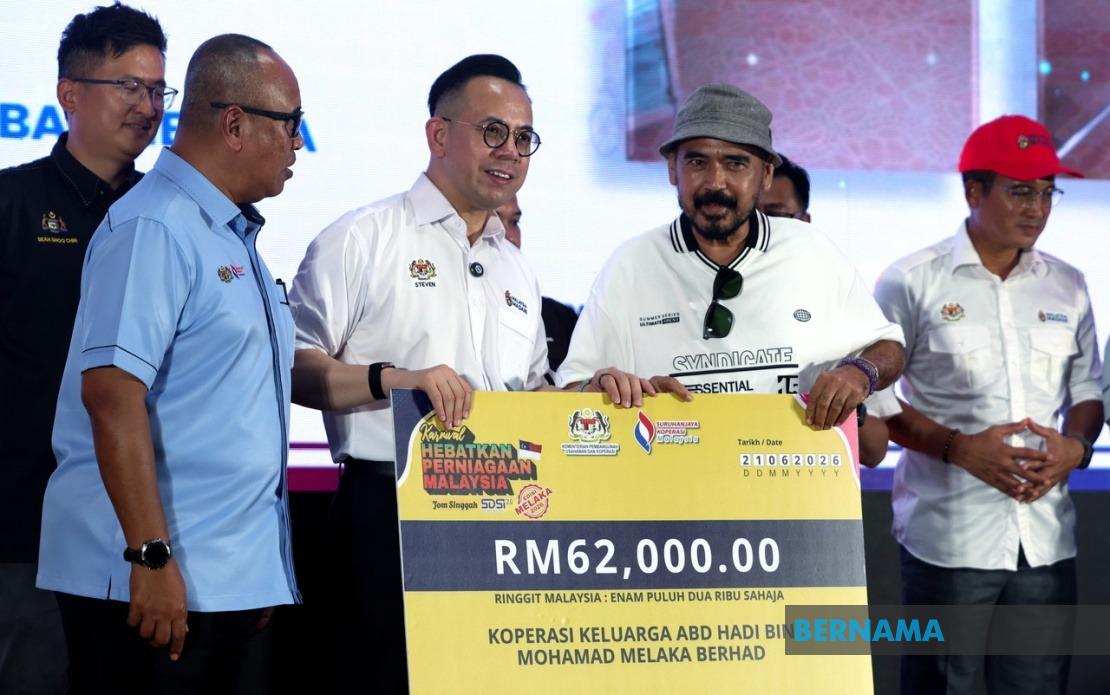
The Empowering Malaysian Businesses Carnival 2026 (Karnival Hebatkan Perniagaan Malaysia 2026), which concluded its Melaka leg recently, has delivered substantial economic outcomes for Malaysia's entrepreneurial ecosystem. Held from June 19 to 21, the initiative generated a combined business matching value and financing potential of RM8.45 million while drawing 70,000 attendees across three days. The strong performance underscores growing appetite among Malaysian business owners and aspiring entrepreneurs to access capital, forge commercial partnerships, and scale their operations through structured engagement platforms.
The Ministry of Entrepreneur Development and Cooperatives (KUSKOP) reported that the event successfully facilitated meaningful business connections across its various sessions. Through 72 structured business matching sessions, the carnival catalysed potential business transactions worth RM6.4 million between entrepreneurs and prospective partners or investors. This figure reflects genuine commercial interest rather than speculative inquiry, as these sessions involved 25 entrepreneurs working to expand their networks and secure viable partnerships that could translate into concrete ventures.
Financing accessibility remained a critical focus, with 55 micro, small and medium enterprises (MSMEs) participating in dedicated financial interaction sessions. These discussions yielded provisional financing commitments totalling RM2.05 million, addressing a longstanding challenge facing Malaysian small businesses. Access to affordable capital remains a persistent obstacle for enterprises below the SME threshold, and sessions such as these create rare opportunities for financial institutions and enterprises to connect outside traditional banking channels.
Direct product sales at the carnival venue totalled RM532,802.77, indicating that participating entrepreneurs converted visitor foot traffic into immediate revenue. This metric matters because it demonstrates not only the quality of entrepreneurs and products showcased but also the purchasing power and commercial intent present among attendees. For participating vendors, the carnival provided both immediate sales opportunities and visibility within a curated marketplace of potential corporate and wholesale buyers.
The HPM Carnival series forms part of KUSKOP Minister Steven Sim Chee Keong's broader Hebatkan Perniagaan Malaysia agenda. This initiative aligns with the ABCD strategic framework, which prioritises Accelerating Productivity, reducing Bureaucracy, improving Capital Accessibility, and Developing Market Access for local enterprises. The carnival model represents practical implementation of these principles by concentrating resources, reducing administrative friction, and creating compressed timeframes during which entrepreneurs and investors can interact intensively.
The success in Melaka follows earlier editions in other Malaysian states, establishing the HPM Carnival as a recurring fixture in the entrepreneurial development calendar. The Melaka event represented the third instalment in the 2026 series, suggesting momentum is building as the initiative becomes established. For participating enterprises and observers, each successive carnival provides refinement opportunities as KUSKOP refines the format based on feedback and outcome data.
Looking ahead, the series will move northward, with the next HPM Carnival scheduled for Penang from July 17 to 19 at the Penang Waterfront Convention Centre (PWCC). This geographic expansion reflects national coverage ambitions and ensures that entrepreneurs in different states can access similar platforms without requiring travel to central locations. Penang's selection is strategic given the state's established entrepreneurial base and the relative concentration of small businesses across manufacturing, services, and digital sectors.
The carnival's integrated platform approach addresses multiple enterprise development needs simultaneously. Rather than segregating financing discussions from networking or business matching from product showcasing, the HPM format bundles these elements into coherent three-day experiences. This ecosystem thinking acknowledges that sustainable enterprise growth requires simultaneous attention to capital, networks, market intelligence, and operational capacity—dimensions that compartmentalised interventions often fail to address adequately.
For Malaysian policymakers and business support organisations, the RM8.45 million in generated potential represents more than abstract figures. These represent actual entrepreneurs securing pathways to growth that might otherwise have remained closed, and institutions identifying investment opportunities in underserved segments of the market. The direct sales component is equally significant, as it validates that Malaysia's MSME sector produces marketable goods and services capable of commanding consumer spending, provided adequate platforms exist to showcase them.
The Melaka carnival's outcomes will likely inform subsequent iterations of the HPM series. Data on which sectors dominated, which financing gaps emerged most prominently, and which business matching outcomes proved most durable will shape programme refinement. This evidence-based approach to entrepreneurial support represents evolution beyond generic interventions, moving toward targeted support calibrated to actual market needs and demonstrated entrepreneur capabilities.
The carnival model offers lessons for other Southeast Asian economies grappling with MSME development challenges. By concentrating diverse support mechanisms—financing, networking, market access, skill development—into intensive, time-bounded events, governments can demonstrate commitment to entrepreneurial growth while managing implementation costs. For Malaysian enterprises, the HPM series provides a practical calendar marker for planning business development activities and accessing multiple support modalities within accessible proximity.