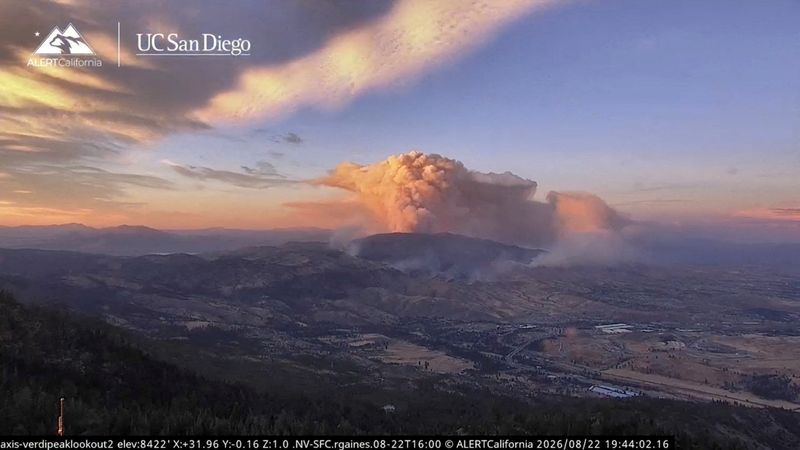
In an era where smartphones and social media generate endless streams of photographs and videos documenting everything from natural disasters to political upheaval, the news industry faces an unprecedented challenge: distinguishing authentic imagery from sophisticated fabrications. Reuters, the world's largest news agency, has developed a dedicated team of visual verification specialists who examine hundreds of images daily, validating perhaps a dozen for publication. This systematic approach to authenticating visual content has become essential as artificial intelligence increasingly produces convincing but entirely fictional or misleading representations of real-world events.
The rise of generative AI has fundamentally altered the media landscape. While early deepfakes and synthetic images contained obvious flaws—distorted fingers, garbled text in backgrounds, unnatural lighting—current systems produce output nearly indistinguishable from genuine photographs and videos. Bad actors exploit this technology deliberately, either creating entirely false depictions of events or distorting real occurrences beyond recognition. When Venezuelan President Nicolás Maduro was reportedly captured in January, social media users circulated AI-generated images showing him in handcuffs, a completely fabricated scenario depicting a false version of an actual geopolitical event. Similarly, the 2026 U.S. midterm elections have already seen the emergence of misleading AI-generated political advertisements, signaling how deeply this technology will penetrate democratic discourse globally.
Yet Reuters cannot rely solely on its own 2,600 journalists stationed across roughly 200 locations worldwide. The Earth's vastness and news's unpredictable nature mean that major stories frequently break in remote or unexpected locations where traditional news organizations have no presence. Eyewitness photographs and videos have become indispensable to modern journalism. This reliance on public-sourced content reflects Reuters' foundational Trust Principles, established during World War Two and updated continuously to ensure unbiased, reliable reporting. Verified imagery from ordinary people has been crucial in documenting major international stories—from evidence of U.S. military strikes on civilian targets to documentation of controversial law enforcement incidents—providing crucial accountability when institutional sources remain opaque.
Beyond AI-generated content, Reuters journalists confront another persistent problem: deliberate misrepresentation of genuine material. Social media users frequently recirculate old videos or photographs while falsely claiming they show recent events at different locations. A video of a genuine protest from months or years past might be relabeled as capturing current unrest elsewhere, deliberately sowing confusion and amplifying misinformation. This practice, requiring no technological sophistication, nonetheless reaches millions and shapes public perception of unfolding events. The combination of innocent mistakes, deliberate deception, and AI-enabled fabrication creates a chaotic information environment where verification becomes increasingly critical.
The Reuters visual verification team employs a rigorous, multi-layered methodology to authenticate content. The process begins with tracing the original source, identifying the person who captured the image, confirming their identity, and conducting interviews about their firsthand experience. Digital metadata embedded within files often contains crucial information about when and where content was recorded and what device captured it, providing technical verification that supplements human testimony. When metadata is present and consistent with other evidence, it significantly strengthens confidence in authenticity.
Journalists then cross-reference visual content against external datasets unavailable to most social media users. Satellite imagery reveals landscape features and changes over time; weather reports establish atmospheric conditions that should appear in photographs from specific dates; street-view services and archive imagery document how locations appeared historically. Shadow direction and length indicate the time of day photographs were taken, useful for confirming temporal accuracy. Official reports, news coverage, and corroborating eyewitness accounts from multiple angles provide additional context. This detective work resembles assembling an intricate puzzle where each piece must align perfectly before publication can proceed with confidence.
Technological tools supplement human judgment. Reuters employs several AI-detection systems specifically trained to identify traces of artificial generation or alteration invisible to human eyes. These tools scan for statistical anomalies, suspicious patterns in pixel data, or digital artifacts characteristic of synthetic images. However, this technology remains imperfect. As AI generation capabilities advance, detection systems must continuously evolve, creating an arms race between creators of fake content and those seeking to identify it. Verification journalists acknowledge that sometimes these tools yield ambiguous results, requiring experienced human judgment to resolve uncertainty.
For Malaysian and Southeast Asian readers, this methodology carries particular significance. The region has experienced substantial misinformation campaigns targeting elections, ethnic relations, and public health initiatives. Nations like Malaysia, with diverse populations and sensitive political dynamics, remain vulnerable to coordinated disinformation efforts exploiting social media's rapid spread. Understanding how professional news organizations authenticate content provides valuable context for evaluating information encountered online. As deepfake technology becomes more accessible and affordable, individuals and smaller media outlets in developing economies may lack resources for sophisticated verification, widening the gap between global media organizations and local news producers.
The implications extend beyond journalism itself. Governments increasingly deploy visual misinformation for political purposes, while commercial interests manipulate imagery for market advantage. As artificial intelligence literacy remains limited among general audiences, the ability to distinguish authentic documentation from sophisticated fabrication becomes a critical public good. Reuters' verification practices represent one institutional response to information degradation, but the scale of daily content production vastly exceeds any single organization's capacity to verify comprehensively.
The challenge intensifies because verification requires time and expertise that social media's viral dynamics work against. A false image can reach millions before verification teams complete their analysis. Meanwhile, corrections and debunking often fail to reach audiences who encountered the original misleading content. This temporal mismatch means that even with rigorous verification processes, misinformation frequently succeeds in shaping initial public perception before being definitively contradicted.
Richard Prince, senior editor for visual verification at Reuters, and colleagues acknowledge they make judgment calls that grow harder daily. As both artificial intelligence and deliberate misinformation tactics become more sophisticated, maintaining standards for authenticity demands constant innovation in verification methods. The work demonstrates that while technology enables deception at scale, human expertise, systematic methodology, and institutional commitment to accuracy remain essential for maintaining credible information ecosystems in democratic societies.

