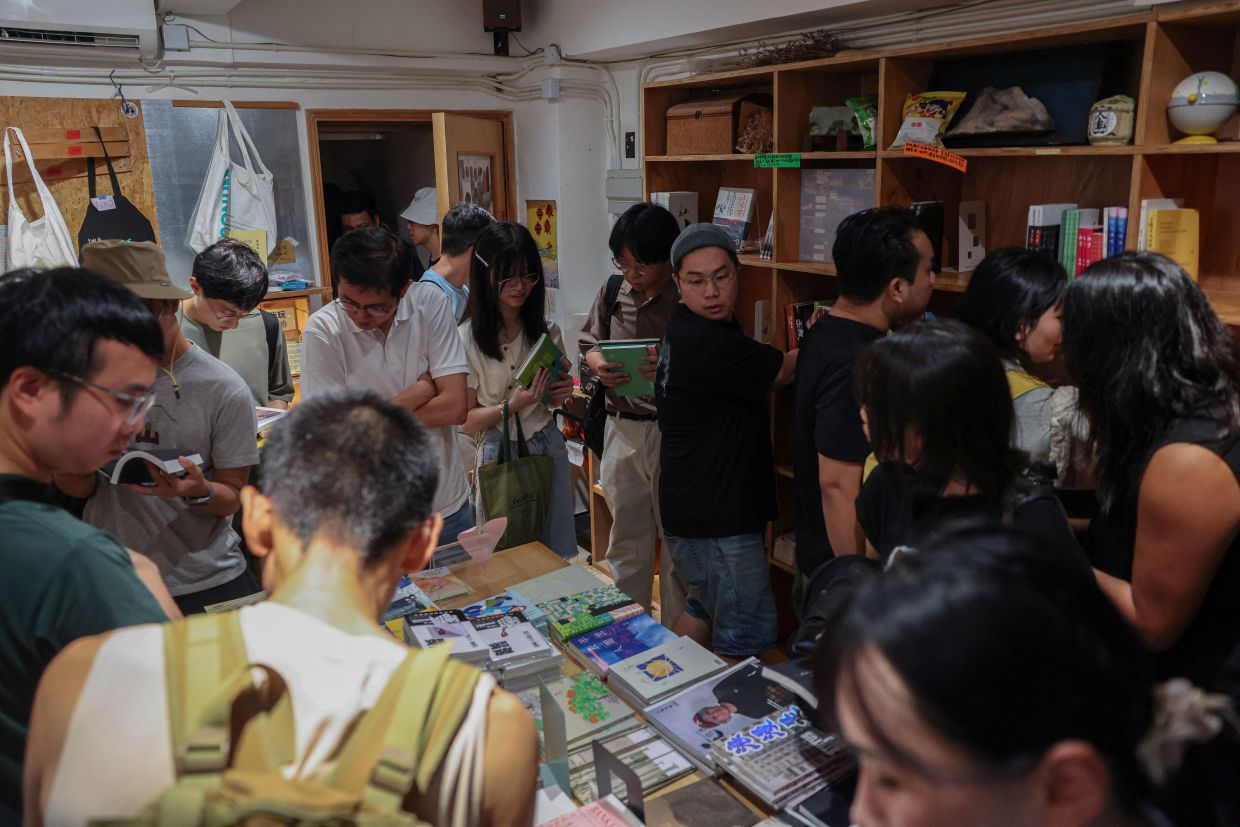
The closure of Hong Kong's independent bookstores marks a turning point in the city's transformation, as four shops faced police action within four months, citing alleged sedition violations under sweeping national security legislation. What once distinguished Hong Kong as a bastion of intellectual freedom within the Chinese-speaking world has now become emblematic of Beijing's tightening grip on civil liberties in the former British colony. The shuttering of these establishments carries profound implications not only for Hong Kong's residents but also for mainland Chinese seeking access to ideas their own government deems unacceptable, and by extension, for the broader regional debate about freedom of expression in East Asia.
For mainland Chinese readers like Fleming Cheng, Hong Kong's bookstores represented something extraordinary: physical access to works on Chinese politics and history that existed only as encrypted downloads back home. Before discovering Greenfield Book Store, Cheng had resorted to using virtual private networks to glimpse book covers online, a precarious method that offered glimpses but not the tactile, unhurried experience of reading. When he finally stood in a Hong Kong bookstore, he encountered volumes offering perspectives fundamentally at odds with Beijing's official historical narratives—critiques of the Chinese government and sympathetic accounts of reform advocates who had supported the Tiananmen Square protesters nearly four decades earlier. These moments of intellectual discovery, seemingly ordinary in democratic societies, carried profound significance for readers accustomed to heavily censored information environments.
The trajectory of Hong Kong's independent bookstores reveals a steady erosion of the freedoms that once made the territory exceptional. In 2015, the dramatic disappearance of Lam Wing-kee and four colleagues from Causeway Bay Books, a shop specialising in politically sensitive titles, served as an early warning signal. Lam's subsequent revelation that Chinese authorities had detained him exposed the vulnerability of booksellers operating in Hong Kong, despite the territory's theoretical autonomy. Following this incident, displays of gossipy political exposés about Chinese leadership visibly diminished from Hong Kong's shelves, suggesting that even before formal legal mechanisms tightened, a chilling effect had already begun. The 2020 National Security Law, imposed by Beijing directly without consulting Hong Kong's legislature, accelerated this process dramatically, leading to the arrest of prominent activists, the dissolution of civil society organisations, and the removal of politically sensitive titles from public libraries.
The specific targeting of bookstores under the 2024 sedition provisions represents an intensification of this campaign. Book Punch faced police action in March, Hunter Bookstore in June, followed by Greenfield and Have A Nice Stay in July, with authorities alleging the sale of seditious publications. Yet the government has deliberately refrained from publishing a definitive list of prohibited books, leaving booksellers to navigate an intentionally opaque legal landscape. This ambiguity serves a strategic purpose: by refusing to clarify which specific titles constitute violations, authorities create an environment of maximum uncertainty, forcing business owners into self-censorship to avoid legal jeopardy. Secretary for Security Chris Tang's analogy comparing food safety standards to national security provisions attempts to normalise the restrictions, yet the comparison fails fundamentally—there exist clear nutritional and toxicological standards, whereas the boundaries of "seditious intention" remain deliberately vague.
The closure of Greenfield Book Store at the end of its lease and the immediate shutdown of Have A Nice Stay demonstrate the concrete consequences of this legal ambiguity. Have A Nice Stay, established by former journalists who understood the power of information, cited "elusive red lines" as justification for ceasing operations, even before its booksellers faced arrest. The proprietors recognised that the goalposts had shifted beyond predictability, that no amount of careful curation could guarantee immunity from prosecution. This preemptive capitulation reflects a rational business calculation in an environment where the rules are subject to retroactive reinterpretation. Many remaining booksellers report dramatically increased caution regarding inventory decisions, with landlords themselves becoming vectors of enforcement pressure after facing harassment from authorities. The ecosystem that sustained independent publishing has fractured at multiple levels simultaneously.
Mainland Chinese readers express the cultural and intellectual loss accompanying these closures with particular poignancy. Fleming Cheng articulated a concern extending beyond Hong Kong's borders: if the territory becomes indistinguishable from the mainland's information environment, the entire region loses a crucial node of uncensored discourse. Iris Wang, a university student from neighbouring Guangdong, valued Hunter Bookstore not merely for its inventory but for what it represented—a space that encouraged critical thinking rather than passive consumption. Other mainland visitors appreciated the bookstores for seemingly apolitical reasons: the curation of niche titles, the contemplative atmosphere, the sense of refuge that transcended their specific subject matter. These personal testimonies illuminate how independent bookstores functioned as more than commercial enterprises; they provided psychological and intellectual sanctuary for readers from more restricted environments.
Hong Kong residents themselves mourn the loss of these institutions as emblems of what their city has become. Brian Leung, a longtime patron, described the bookstores as repositories of distinct character, each offering a unique identity within the fabric of civil society. When police actions targeted the shops he frequented, he experienced it not as law enforcement against sedition but as the confiscation of something essential to Hong Kong's identity. His observation that bookstores have never actually "incited" him—that readers possess sufficient critical capacity to form their own judgments—highlights the patronising assumption underlying the crackdown, namely that exposure to diverse viewpoints constitutes an inherent threat requiring state management. This perspective challenges the government's framing of national security restrictions as reasonable protective measures.
Taiwan has increasingly filled the void created by Hong Kong's contraction, developing into the premier hub for uncensored Chinese-language publishing. Between 2020 and 2024, Taiwanese publishers released six times as many titles about Hong Kong compared to the preceding five-year period, according to Tunghai University sociology professor Cheng Tsu-Bang. This surge reflects deliberate editorial decisions to document and preserve narratives about Hong Kong's pro-democracy movement and political trajectory. Taiwanese publishers have positioned themselves as custodians of stories and analyses that China and Hong Kong authorities suppress, creating a cross-strait information bridge. However, this arrangement faces its own vulnerabilities; reports emerged in July that logistics firms stopped accepting shipments of books to Hong Kong bookstores under police investigation, and demanded comprehensive inventories before delivering to other locations. These developments suggest that Chinese authorities view Taiwan-published materials with particular concern, potentially indicating future restrictions on cross-strait publishing flows.
One Hong Kong author now based in Taiwan, writing under anonymity to avoid retaliation, articulated the historical significance of these institutions. The independent bookstores functioned as bridges connecting diaspora writers to their homeland, preserving accounts of Hong Kong's pro-democracy movement when official channels suppressed them. This author compared the collapse of Hong Kong's civil society to a boulder accelerating downhill, obliterating everything in its trajectory. The bookstores, in this metaphor, represented small zones of refuge where people could still breathe and attempt to safeguard remnants of a vanishing world. The author's conclusion—that Hong Kong faced the direct, cruel notification that its temporary reprieve from mainland constraints was expiring—captures the psychological rupture accompanying these developments.
The implications for the Southeast Asian region extend beyond Hong Kong's borders, as the territory's experience demonstrates how comprehensive national security frameworks can dismantle institutional pluralism. Malaysia, with its own history of contentious debates around publishing freedom and national security provisions, observes closely as Hong Kong illustrates the trajectory of unchecked restrictions. The bookstore closures exemplify how vague sedition laws, combined with enforcement discretion and landlord pressure, can eliminate spaces for intellectual dissent without requiring explicit government censorship. For Malaysian readers and publishers navigating their own complex relationship with press freedom, the Hong Kong precedent offers cautionary lessons about how security legislation can metastasize to constrain civilian domains far beyond its original stated scope.
The loss of Hong Kong's independent bookstores represents a symbolic inflection point in the city's political evolution, marking the transition from a territory with distinctive freedoms to one increasingly aligned with mainland governance norms. For mainland Chinese readers who valued these spaces as windows to alternative perspectives, the closures eliminate a crucial access point to uncensored ideas. For Hong Kong residents, the shuttering of beloved institutions signifies the further narrowing of civic space and the erosion of what had differentiated their city. For Taiwan, the surge in publishing about Hong Kong reflects both opportunity and vulnerability, as cross-strait information flows face potential disruption. The broader regional implication concerns whether other East Asian democracies and semi-autonomous territories will defend spaces for intellectual pluralism or permit security frameworks to gradually colonise civil society.

