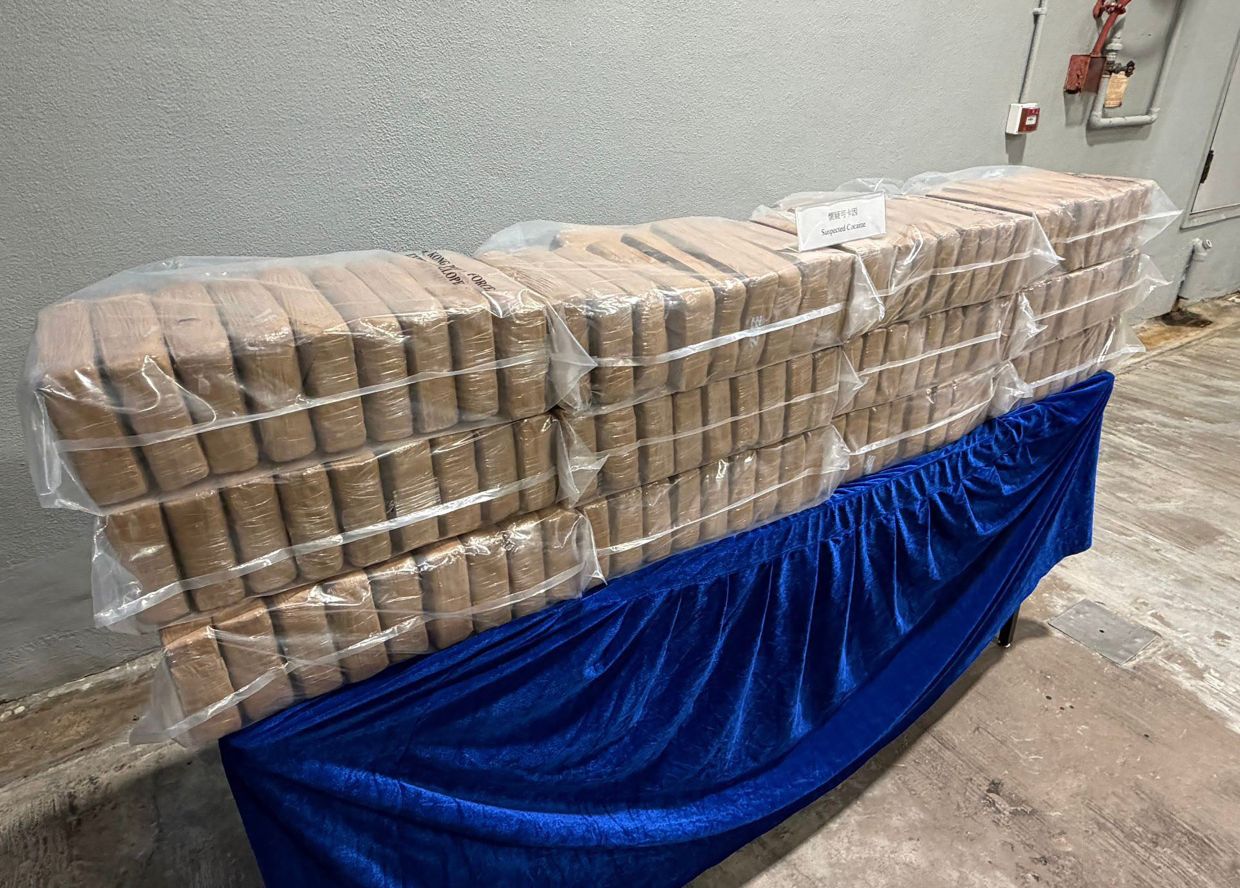
Hong Kong's narcotics officers have dismantled what appears to be a sophisticated drug trafficking operation after discovering 361 kilograms of cocaine hidden aboard two yachts in the span of just four days, marking the most significant cocaine seizure in the territory over the past twelve months. The latest discovery came on Sunday when police raided a six-metre vessel moored near Aberdeen Typhoon Shelter, uncovering approximately 120 kilograms of cocaine bricks stored on board. This followed an earlier operation on Friday at the same anchorage, which had yielded 241 kilograms of the narcotic, bringing the combined total to a street value estimated at HK$270 million—a staggering sum that underscores the scale of illicit narcotics flowing through Hong Kong's waters.
The timing and proximity of the two discoveries have proven critical to investigators' understanding of the trafficking network's structure. Police believe the cocaine shipments were part of a single consignment destined for distribution, with the syndicate employing multiple vessels as storage and transshipment points to evade detection. The identical packaging and weight specifications of both hauls provided crucial evidence linking the seizures to the same criminal operation, suggesting a level of coordination and planning typical of established trafficking organisations operating in the region. This methodical approach—using separate vessels as floating warehouses—represents a common tactic among international drug syndicates attempting to minimize risk by compartmentalizing their operations.
The investigation has already resulted in the arrest of five individuals, each providing insights into the syndicate's operational structure. A suspected ringleader and two core members were apprehended following the initial Friday raid, while police arrested a 45-year-old local woman on Monday after identifying her as the registered owner of the second yacht. All those detained have offered cover stories to investigators, with some claiming unemployment or subsistence fishing as their source of income—implausible explanations that have done little to slow the police investigation. The woman, currently being held for questioning, represents the only identified legitimate link to one of the vessels, suggesting the syndicate may have exploited her name or status to register the yacht while maintaining operational distance from those directly managing the cargo.
The geographic concentration of both seizures in Aberdeen Typhoon Shelter reveals vulnerabilities in Hong Kong's maritime security framework. The anchorage, traditionally a gathering point for fishing vessels and small boats, has become increasingly attractive to smuggling networks seeking to exploit its heavy vessel traffic and relative anonymity. The close clustering of the two raids indicates that police investigation and intelligence work had identified the area as a trafficking hub, yet the syndicate's continued use of nearby vessels suggests either overconfidence in their operational security or a rapidly structured response to disruption. This pattern reflects broader challenges facing authorities across Southeast Asia, where major maritime crossroads continue to attract organised crime groups seeking to exploit gaps in surveillance and enforcement capacity.
Cocaine trafficking through Hong Kong has accelerated significantly in recent years as cartels and organised crime syndicates have adjusted their supply chain strategies in response to heightened enforcement in traditional transit routes. The territory's position as a global financial hub with extensive maritime connections makes it an increasingly attractive transshipment point for South American cocaine destined for markets across East Asia, including mainland China, Japan, and Taiwan. The HK$270 million street value of this single seizure demonstrates the commercial scale of operations—a figure that dwarfs typical street-level drug busts and reflects the wholesale quantities typical of international trafficking networks.
The sophistication displayed in this operation contrasts sharply with street-level distribution networks, though both ultimately serve markets hungry for narcotics. The use of registered vessels, the careful logistics of concealment, and the apparent delegation of ownership to seemingly unconnected parties all indicate that the syndicate operates with resources and planning capacity well beyond that of casual smugglers. The fact that investigators were able to link the two seizures through packaging analysis and weight consistency suggests that forensic attention to detail remains a crucial investigative tool, though it also underscores how close the second vessel came to being processed through the supply chain before detection.
The broader implications of this bust extend across Hong Kong's security apparatus and regional law enforcement cooperation. The seizure affirms police capacity to identify and disrupt major operations, yet the scale of narcotics transiting through Hong Kong raises uncomfortable questions about the effectiveness of current maritime monitoring protocols. Neighbouring territories including Macau, Taiwan, and Southeast Asian nations increasingly view Hong Kong as a potential staging point for their own cocaine supplies, making cooperation between regional law enforcement agencies essential. Intelligence sharing between Hong Kong police and counterparts in ASEAN countries remains inconsistent, creating opportunities for traffickers to exploit jurisdictional gaps and coordinate movements across borders.
The arrested suspects now face significant criminal liability under Hong Kong's drug trafficking statutes, with sentencing guidelines reflecting the territory's increasingly punitive approach to major narcotics operations. Trafficking in such quantities typically results in lengthy prison sentences, though prosecution will require establishing the individuals' roles within the broader syndicate hierarchy. The suspected kingpin's position as the most senior detained figure makes him a priority for interrogation, as investigators attempt to map the network's supply sources, distribution partners, and financial architecture. Understanding these connections could yield intelligence valuable not only to Hong Kong authorities but to international drug enforcement agencies monitoring cocaine flows through Southeast Asia.
This bust represents both a significant tactical victory for law enforcement and a sobering reminder of the enormous quantities of cocaine continually attempting entry into Asian markets. The operation demonstrates that police intelligence capabilities remain effective, yet the mere seizure of 361 kilograms suggests that substantially larger volumes are successfully penetrating Asia's supply networks. For Malaysian authorities and law enforcement across the region, the Hong Kong seizure serves as a warning that cocaine trafficking operations are intensifying their efforts to establish reliable supply routes through maritime Southeast Asia. Cooperation frameworks that enhance real-time information sharing and coordinated enforcement operations will prove essential as international organised crime groups expand their geographic footprint seeking to supply growing Asian demand for narcotic substances.

