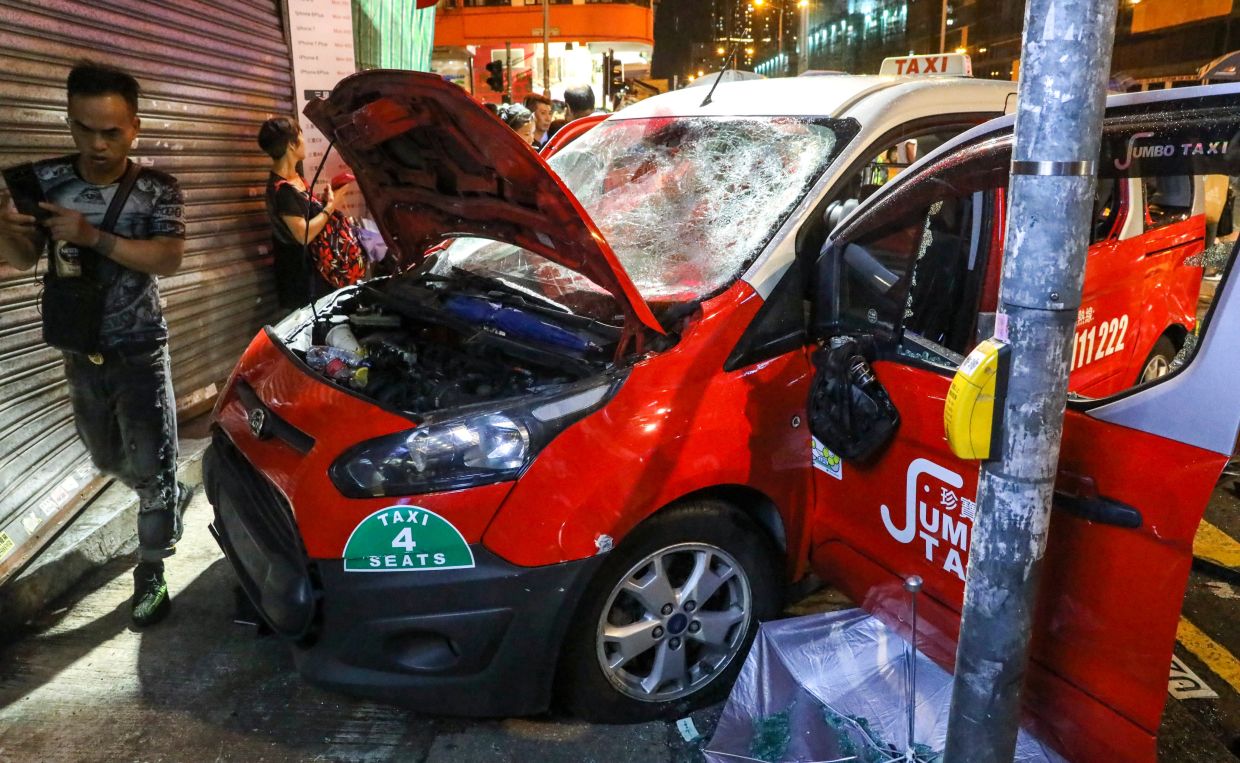
Park Hoi-lam's legal team has urged Hong Kong courts to hold taxi driver Henry Cheng Kwok-chuen responsible for at least HK$8.4 million in compensation following a collision that left her seriously injured during demonstrations in Sham Shui Po on October 6, 2019. The case highlights the lingering human toll of Hong Kong's turbulent political period and raises complex questions about liability and culpability when violence and chaos pervade public spaces.
The plaintiff's counsel, Susanna Leong, presented arguments that the circumstances of the accident themselves constitute clear evidence of negligence and an inadequate standard of care. She emphasised that Cheng made no attempt to sound his horn or apply brakes before his vehicle struck Park and another woman on Yen Chow Street. Leong further stressed that the subsequent violent response directed toward the driver by nearby protesters remained entirely separate from the fundamental question of how and why the collision occurred in the first place.
The defence has categorically denied liability and constructed a starkly different narrative around events that afternoon. Cheng's legal representatives maintained that the driver himself functioned as an innocent victim of the disorder, subjected to what they characterised as a "vicious attack" involving metal rods and hard objects while attempting to carry out his ordinary duties. Their submission suggested that seeking financial recompense from someone they view as a fellow casualty of the widespread violence does not constitute appropriate justice, regardless of the severity of Park's injuries.
Park, testifying in a personal injury lawsuit that commenced in 2022, outlined the sequence of events that placed her in harm's way that October afternoon. She and friends had been travelling toward Tsim Sha Tsui by bus when road closures forced them to disembark in Sham Shui Po. After discovering that railway operations had also been interrupted, the group determined to walk toward Mong Kok. However, Park proceeded faster than her companions and became separated from them. At the moment of impact, she was an isolated bystander in what she described as an initially peaceful gathering.
The impact was catastrophic. Park recalled hearing commotion near the taxi and attempting to flee, only to be struck by the vehicle travelling at considerable speed. She observed no passengers alongside the driver. The collision resulted in severe trauma to her lower limbs, requiring seven surgical interventions over the subsequent ninety days. Hospital discharge came on January 18, 2020, though ongoing outpatient therapy remained necessary during her recovery period.
More than four years later, the physical consequences persist. Park, now working as a clerk at a kindergarten in Tuen Mun, continues experiencing knee pain that restricts her mobility. Extended walking beyond approximately one hour necessitates rest periods. Her occupational limitations prove particularly constraining in a role serving young children. She cannot manage heavy objects effectively and finds herself unable to provide the physical comfort—such as holding distressed toddlers—that her position ordinarily demands. The gap between her previous pharmaceutical work and current employment reflects the substantial disruption to her career trajectory.
Medical evidence suggests permanent impairment lies ahead. Specialists have advised that her condition has plateaued despite two additional operations following her initial hospital discharge and recommended that knee replacement surgery may eventually become unavoidable. A cosmetic surgeon has recommended reconstructive procedures for scarring on her legs, but financial constraints prevent Park from pursuing this option. These limitations collectively reshape what she can accomplish and experience in daily life.
The defence strategy incorporated an intriguing investigative element: private detective surveillance footage purporting to demonstrate that Park maintains normal functionality and ambulation. Videos captured her shopping and dining after work hours, arguments the defence characterised as evidence of an ordinary lifestyle unimpeded by lasting injury. Park's response proved both poignant and revealing. She questioned whether occasional shopping and dining expeditions truly constitute the substance of a meaningful existence, or whether they represent merely the minimal activities that conventionally employed people necessarily perform while their underlying capacity for full participation in life remains compromised.
Defence counsel Ashok Sakhrani pressed Park on her decision to retain a barrister and lawyer when providing a police statement in March 2020, seemingly suggesting this precaution indicated awareness of legal jeopardy or protest involvement. Park rejected this interpretation, insisting she was simply protecting her personal interests. She denied participating in the demonstration or harbouring concerns about potential legal consequences stemming from her actions. The exchange encapsulates the broader tension in the case: the difficulty of untangling individual responsibility and culpability from the chaotic circumstances of that autumn afternoon.
The litigation before Justice Simon Leung Chun-man represents one of many personal injury claims that have emerged from Hong Kong's 2019 protest period, cases that often involve competing claims about victimhood and responsibility. Park's experience—trapped between a stationary demonstration and a driver attempting to navigate through hostile circumstances—epitomises the collateral damage inflicted upon ordinary people caught in larger political upheavals. Whether courts ultimately view taxi drivers encountering violent crowds as victims whose personal trauma absolves them of standard negligence obligations, or whether pedestrians injured through vehicular accidents retain independent claims regardless of ambient social chaos, carries implications for how accountability functions in politically turbulent contexts. The verdict will likely influence similar cases still working through Hong Kong's judicial system and may inform broader discussions about duty of care during civil unrest throughout Southeast Asia.
The trial, scheduled for six days, will conclude whether Park receives the compensation her lawyers contend she requires to address ongoing medical expenses, lost earning capacity, and diminished quality of life, or whether the unique circumstances of 2019's turmoil effectively shield the driver from full financial responsibility for injuries his vehicle inflicted.

