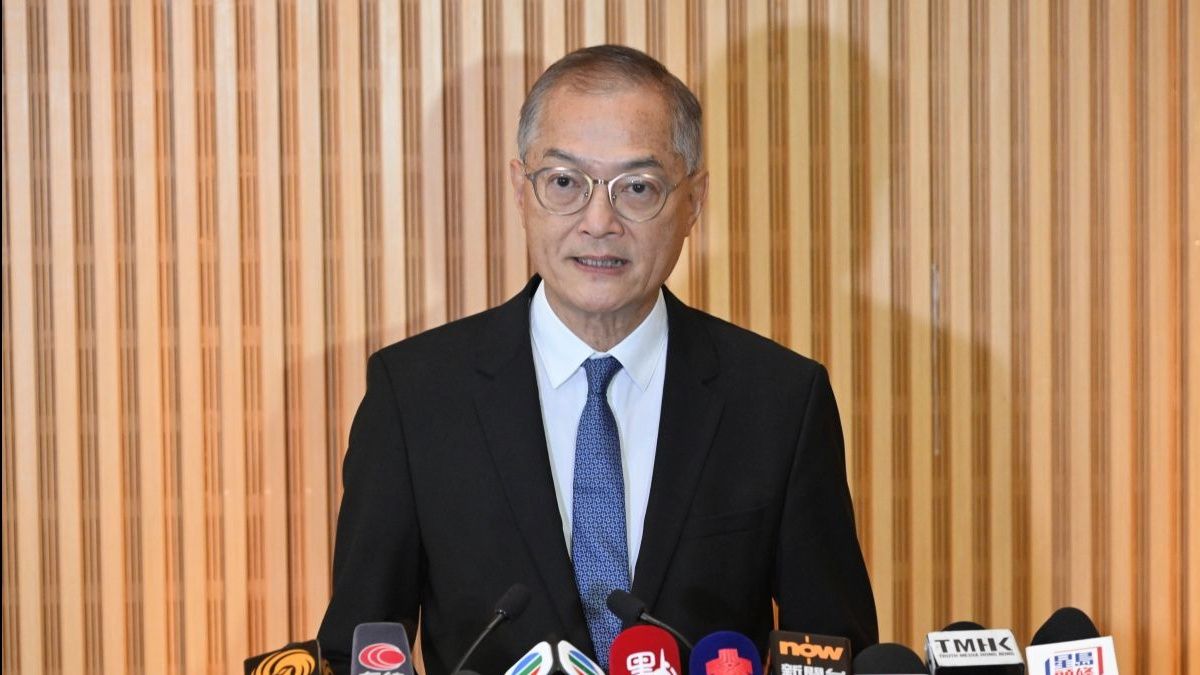
Hong Kong's government has committed to examining whether its oversight mechanisms for fertility clinics require strengthening, following a significant scandal involving delayed disclosure of embryo specimen errors at a local assisted reproduction facility. Health Secretary Lo Chung-mau announced the review in response to revelations from the Council on Human Reproductive Technology regarding HEAL Fertility's handling of critical patient safety incidents, underscoring growing concerns about the adequacy of current regulatory safeguards in the region's reproductive medicine sector.
The controversy centres on two separate embryo sample mix-ups discovered at HEAL Fertility that came to light through independent verification procedures conducted at a laboratory operated by the Chinese University of Hong Kong at Prince of Wales Hospital in Sha Tin. In the first incident, genetic testing revealed that six out of seven embryo biopsy specimens submitted by the clinic failed to match the genetic profiles of their intended parents, while the second case involved two samples that were found to be completely unrelated to the patients whose embryos they purported to be. These errors represent serious threats to reproductive outcomes, as patients could potentially have received embryos that were not biologically theirs.
What transformed this technical failure into a governance crisis was the substantial reporting delay that preceded formal notification to regulatory authorities. HEAL Fertility became aware of both incidents on May 26 and June 4 respectively, yet failed to immediately report them to the Department of Health or the Council on Human Reproductive Technology. The clinic ultimately reported the matter to the council only on June 17, a gap of several weeks that permitted the clinic to operate without informing regulatory bodies responsible for protecting patient safety. This extended silence raises questions about institutional accountability and whether current rules sufficiently incentivise prompt disclosure of adverse events in fertility medicine.
The Department of Health's Office for Regulation of Private Healthcare Facilities subsequently classified the embryo misidentification as a "serious untoward event" that should have been reported within 24 hours under the Code of Practice for Day Medical Centres. By this standard, HEAL Fertility's conduct constituted a clear violation of existing regulatory requirements, prompting authorities to issue a formal notice demanding that the clinic submit a comprehensive investigation report within four weeks explaining the causes of the incidents and detailing remedial measures. The classification indicates that current rules already mandate swift reporting, yet their enforcement appears to have been insufficient to prevent the delay.
Health Secretary Lo acknowledged that the notification lag was "not very ideal," employing diplomatic language that masks deeper concerns about systemic weaknesses in clinical governance. His commitment to reviewing whether stronger reporting mechanisms are necessary suggests recognition that existing frameworks may lack sufficient deterrent force or clarity to compel immediate compliance. The government's measured response indicates it will await findings from multiple concurrent investigations, including separate enquiries by police, the Council on Human Reproductive Technology, and the clinic itself, before implementing procedural improvements.
The police involvement adds another dimension to the scandal, with authorities treating the matter with sufficient gravity to warrant criminal investigation, though no arrests have been made to date. This escalation reflects the seriousness with which reproductive medicine errors are now regarded in Hong Kong, particularly when combined with institutional failures in transparency and timely reporting. The decision to refer the matter to law enforcement demonstrates that regulatory mechanisms alone are deemed inadequate to address potential wrongdoing of this magnitude.
For patients and the broader fertility medicine sector, the clinic's voluntary suspension of fourteen out of seventeen services represents immediate damage control, with only storage-related functions remaining operational. HEAL Fertility has formed an internal taskforce to review procedural safeguards and has offered affected patients the opportunity to undergo genetic testing to verify the identity of stored specimens, though this remedial step cannot undo the breach of trust or the anxiety experienced by those whose embryos were mishandled. The clinic's apology to affected clients acknowledges the severity of the error but underscores the need for systemic changes to prevent recurrence.
The incident carries significant implications for Southeast Asian reproductive medicine more broadly, as Hong Kong's regulatory framework is often regarded as a regional reference point for clinical standards and oversight practices. The revelation that such serious errors could occur despite the existence of the Council on Human Reproductive Technology and established codes of practice suggests that regulatory bodies across the region should examine whether their own oversight mechanisms are sufficiently robust. Malaysia and other countries with developing assisted reproduction sectors may draw cautionary lessons about the importance of independent verification systems, mandatory reporting timelines, and meaningful penalties for non-compliance.
The case also highlights the vulnerability of patients in fertility medicine, where significant power asymmetries exist between clinics and those seeking reproductive assistance. Many individuals pursuing assisted reproduction face emotional and financial pressures that may inhibit their willingness to challenge clinic practices, while the technical complexity of embryology procedures creates information barriers that impede independent verification. Regulatory systems must therefore prioritise transparency and rapid incident disclosure to protect patients who lack the expertise to identify errors independently.
Lo's pledge to await separate investigative reports before determining what procedural improvements are necessary reflects a cautious approach that prioritises evidence-gathering over hasty regulatory interventions. However, this stance may be criticised as insufficiently urgent given the gravity of the errors and the clear reporting violation. The government has already identified that existing 24-hour reporting requirements were breached, suggesting that immediate enforcement action, rather than further study, could send a powerful signal about regulatory expectations.
The fertility clinic scandal ultimately exposes tensions between industry self-regulation and government oversight that extend beyond Hong Kong. As assisted reproduction becomes increasingly routine and commercialised across the region, ensuring that patient safety mechanisms keep pace with technological advancement and clinic expansion represents an ongoing challenge. The incidents at HEAL Fertility demonstrate that infrastructure for detecting errors, such as the independent laboratory verification system, can function effectively, but that reporting discipline among service providers cannot be assumed and must be actively reinforced through regulation and enforcement.
Moving forward, Hong Kong's review of its reporting mechanisms offers an opportunity to establish clearer standards, strengthen compliance monitoring, and implement meaningful consequences for delayed or omitted incident notification. Whether the government utilises this opportunity to institute more robust protective frameworks will influence not only local reproductive medicine practice but also serve as a precedent for regulatory approaches across Southeast Asia, where fertility services are expanding rapidly without always receiving corresponding attention to safety governance and patient protection mechanisms.

