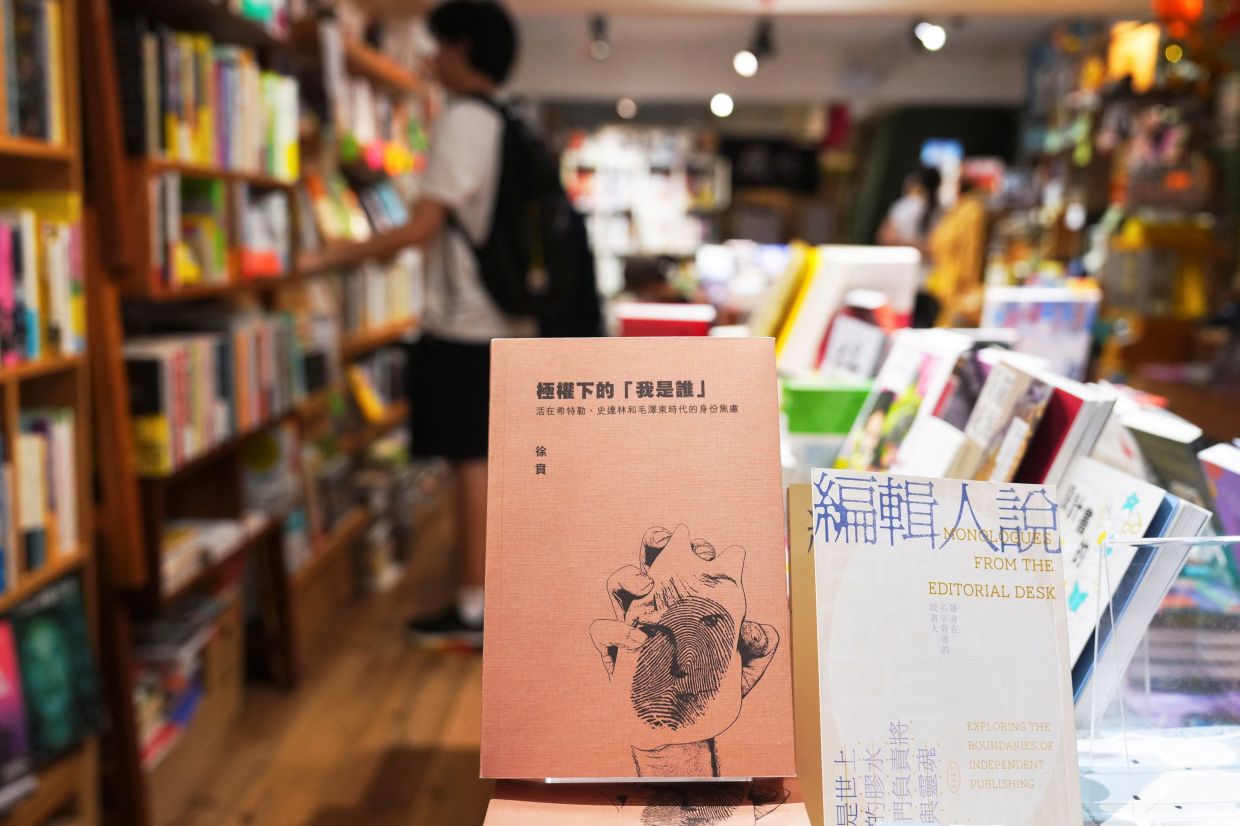
Hong Kong's security apparatus is tightening its grip on the literary marketplace, with the territory's top security official publicly warning booksellers that they bear responsibility for policing the content they sell. Secretary for Security Chris Tang issued the statement shortly after police conducted raids on two independent bookshops, leading to the arrest of five people suspected of selling materials deemed seditious under Hong Kong's increasingly stringent national security regime.
The Wednesday police operations against Have A Nice Stay and Greenfield Book Store represent the third enforcement action targeting independent booksellers in as many months, a pattern that underscores deepening concerns about freedom of expression in the Asian financial hub. Police allege the arrested individuals were displaying and distributing publications they claim were designed to stir up hatred against the Hong Kong government, its judiciary, and law enforcement agencies. The assertion raises fundamental questions about what constitutes permissible political commentary versus seditious material in a city once celebrated for its media freedoms.
Tang's remarks, delivered at the legislative building on Thursday, attempted to frame the restrictions as straightforward legal obligations rather than political censorship. Using a food safety analogy, he compared a bookseller's duty to scrutinise inventory with a grocer's responsibility to ensure products are not poisoned or spoiled. The comparison, however, glosses over a critical distinction: while food contamination involves objective scientific measurement, determining whether a book "endangers national security" remains profoundly subjective and politically contestable. This ambiguity has become the defining characteristic of Hong Kong's security enforcement.
When pressed about whether authorities would publish a definitive list of prohibited titles, Tang rejected the proposal on grounds that such a catalogue would undermine law enforcement efforts targeting works "intended to harm the country." His reasoning inverts traditional legal principles—authorities typically publish proscribed content lists to ensure transparency and allow citizens to understand prohibited conduct. Hong Kong's refusal to do so means booksellers operate in a fog of uncertainty, unable to predict which titles might trigger prosecution. This prosecutorial flexibility converts the security framework into an instrument of pre-emptive self-censorship.
Have A Nice Stay, founded by former journalists, had already announced its closure for August 30 prior to the raid, citing financial hardship and what it described as an "elusive red line" governing acceptable inventory. In a social media statement, the bookshop acknowledged it lacks capacity to examine every volume in its collection and cannot reliably determine which titles authorities might deem problematic. The admission exposes the practical impossibility of Tang's mandate: even professional booksellers cannot consistently predict enforcement decisions in an environment where the boundaries remain deliberately vague.
The raids follow a pattern of escalating action against Hong Kong's independent literary sector. In March, police arrested the owner and staff of Book Punch on suspicion of selling seditious publications, with the investigation reportedly centring on a biography of Jimmy Lai, the pro-democracy media proprietor currently serving a 20-year sentence for national security violations. That operation represented a watershed moment, signalling that biographical or critical works concerning prominent democracy advocates were themselves potentially prosecutable. In June, authorities arrested two additional booksellers, alleging they sold seditious materials and received funding from foreign political organisations—a charge that conflates commerce with espionage.
The territorial dimension of Hong Kong's literary crackdown extends beyond the city itself. Taiwan's government, which views itself as a bulwark for democratic values and free expression, has taken public notice. President Lai Ching-te used a Facebook post to highlight the pressure facing Hong Kong's publishing sector, framing independent bookstores as essential guardians of intellectual freedom. Liang Wen-chieh, deputy minister of Taiwan's Mainland Affairs Council, disclosed that some Taiwanese publishers have voluntarily restricted their catalogues when preparing for participation in Hong Kong book fairs—a form of preventive self-censorship that extends the regulatory reach beyond Hong Kong's borders into allied democracies' commercial decisions.
The strategic implications for Southeast Asia warrant careful consideration. Hong Kong's enforcement pattern demonstrates how national security legislation, once enacted with broad definitions, can systematically eliminate space for dissenting voices and critical thought. Malaysian observers should note that similar mechanisms exist within their own legal framework, including provisions addressing sedition and national security. The Hong Kong precedent illustrates how such legislation, when combined with enforcement discretion and the absence of transparent guidance, can transform publishing and bookselling into high-risk activities.
Furthermore, the Hong Kong situation reflects a broader regional challenge: the tension between governments' security imperatives and the intellectual and commercial demands of open societies. As Beijing's authority extends more directly into Hong Kong's institutions, the space for publishing independent analysis, biography, and political commentary continues contracting. For the broader Southeast Asian region, particularly given Malaysia's own navigating of diverse political viewpoints and numerous communities, Hong Kong's trajectory offers a cautionary example of how security frameworks can calcify into instruments of thought control when oversight mechanisms prove insufficient and legal standards remain deliberately undefined.

