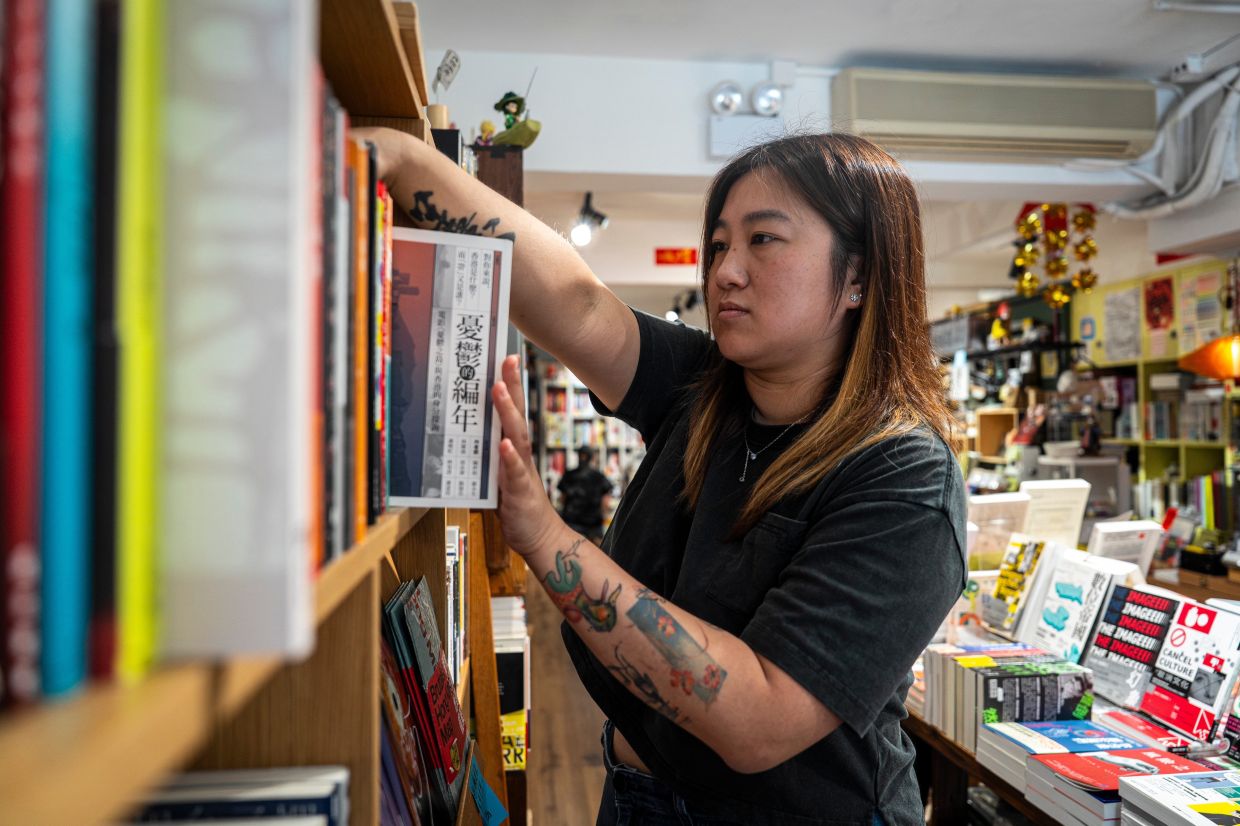
Hong Kong police have arrested two individuals suspected of selling seditious publications and accepting funding from foreign political organisations, action taken under powers granted by the city's stringent national security legislation. The arrests on 24 June emerged through official channels on 25 June, though authorities declined to name those detained. However, multiple local news sources, notably the Ming Pao newspaper, identified one of the detainees as Leticia Wong, the proprietor of Hunter Bookstore in the Sham Shui Po district and a former district councillor known for her continued advocacy of democratic reform.
Wong has maintained her vocal opposition to Beijing's governance and the Hong Kong administration despite the systematic suppression of pro-democracy figures that intensified following the 2019 protest movement. Her arrest, should identification be confirmed, would represent a significant symbolic moment in the progressive narrowing of political space within the territory. The timing carries particular resonance, arriving just seven days before Hong Kong marks the 29th anniversary of its return from British to Chinese sovereignty in 1997. This convergence underscores the growing gap between the promises made at that handover—specifically Beijing's commitment to preserve the city's Western-style democratic institutions and civil liberties under the "one country, two systems" framework—and the reality of governance as citizens experience it today.
The official government statement indicates that the two detainees manage the bookstore in question and face accusations under the 2024 iteration of the national security law, legislation which substantially broadened the definition of sedition and offences against state security. They are additionally suspected of money laundering or handling the proceeds of indictable offences, suggesting authorities are pursuing multiple legal avenues to prosecute the case. The statement specifies that police investigations uncovered displays of seditious materials and sales of publications deemed to contain seditious content, with particular reference to items allegedly inciting hatred toward the Hong Kong government, its judicial system, and law enforcement agencies. The authorities also allege receipt of monetary transfers from overseas political organisations, though the statement provides no detail regarding which specific publications or organisations are involved in these allegations.
Wong's bookstore has occupied a fraught position in Hong Kong's current environment. A pro-Beijing newspaper last year published a report characterising an independent book fair held at the location as harbouring undertones of "soft resistance," a loaded phrase implying covert political opposition. The report specifically referenced plans to stock a biography of Jimmy Lai, the pro-democracy media magnate currently imprisoned following convictions under the national security laws. This publicity appears to have intensified scrutiny of Wong's operations. In an interview with international media last year, Wong disclosed that government authorities had subjected her shop to 92 separate enforcement actions—encompassing inspections, conspicuous surveillance operations, and warning notices—during the 13-month period between July 2022 and June 2025 alone. She also recounted how an anonymous letter, presumably of official origin, prompted an organisation planning to host an event at her premises to withdraw its booking.
The current arrests follow a similar operation in March, when police apprehended the proprietor and staff of another bookstore on comparable charges of selling seditious publications, including the aforementioned biography of Lai. Those individuals were eventually released on bail following detainment, suggesting that authorities are methodically developing a pattern of enforcement against bookstores and vendors perceived as disseminating politically sensitive material. The March incident demonstrated that this enforcement approach extends beyond any single establishment and likely reflects a coordinated strategy targeting the circulation of pro-democracy literature more broadly.
Wong's case attains particular prominence because of her status as a former elected official whose service as a district councillor represents the kind of grassroots democratic participation that has historically characterised Hong Kong's political culture. Her transition from elected representative to suspect in sedition investigations symbolises the comprehensive nature of the clampdown on dissent, which has progressively extended from high-profile political figures and activists to encompass smaller-scale community operators and independent business owners. The arrests also highlight how national security legislation, initially presented by authorities as necessary safeguards for territorial stability, have expanded to encompass commercial activities and the simple act of selling books.
For readers across Southeast Asia, the Hong Kong situation carries significance beyond the immediate territorial context. Hong Kong remains a major regional publishing hub and cultural centre, and the suppression of independent bookselling has implications for the broader landscape of intellectual freedom and information access throughout the region. The treatment of Wong and other booksellers serves as a cautionary precedent for how governments might weaponise national security frameworks to constrain civil society activities that fall far short of violent or destabilising conduct. The fact that authorities are prosecuting individuals for sales of published biographies and the hosting of book fairs illustrates how expansive definitions of sedition, once enshrined in law, create chilling effects that extend well beyond their stated security objectives.
The Hong Kong government has consistently defended both national security laws as essential to preserve order and stability within the territory, insisting simultaneously that freedom of expression remains adequately protected. This official position sits uneasily alongside the documented pattern of enforcement actions against bookstores, publishers, and independent media organisations. The government's assertion rings increasingly hollow to many observers who perceive a systematic dismantling of the pluralistic information environment that once distinguished Hong Kong from mainland China and attracted international respect for its civil liberties standards.
The arrests also merit attention because they represent enforcement under revised national security legislation enacted in 2024, which substantially altered the legal landscape compared to earlier iterations. This timeline suggests that authorities continue to refine and expand the legal tools available to prosecute dissident activity, creating an evolving and unpredictable environment for anyone engaged in publishing, bookstore operations, or cultural discourse touching on political subjects. For the business community more broadly, the targeting of retailers based on their inventory decisions introduces additional regulatory uncertainty and potential legal exposure beyond conventional commercial considerations.
Wong's case will likely become a focal point for international observers monitoring civil liberties in Hong Kong and the broader Asia-Pacific region. Her relatively public profile as a former elected official and her persistence in maintaining independent operations despite documented government pressure have made her a recognisable figure within pro-democracy circles. Any conviction or severe penalty would send unambiguous signals regarding the costs of continued political activism or independent cultural entrepreneurship, potentially deterring others from similar activities. Conversely, if charges are withdrawn or result in acquittal, it might suggest either procedural constraints on prosecutorial overreach or shifting political calculations within the government.
The broader trajectory evident from these arrests indicates that Hong Kong's authorities intend to prosecute aggressively against perceived seditious activity, regardless of whether the target is a prominent political figure or an independent bookshop operator. This comprehensive approach to suppressing dissent through commercial and cultural channels represents a notable escalation beyond earlier patterns of enforcement that primarily targeted organised political movements and prominent activists. The message to business owners, publishers, and cultural operators appears to be that political neutrality, rather than mere legality, is increasingly the price of operating without government interference in the territory.

