The Hong Kong film industry has lost one of its most influential architects with the death of Shi Nan-sun, a visionary producer whose four decades of work fundamentally reshaped how Asian cinema reached international audiences. Shi, 75, died peacefully at Hong Kong Sanatorium & Hospital on Monday evening, succumbing to multiple organ failure triggered by a bacterial infection. Her passing marks the end of an era for Hong Kong cinema—a period when the territory's filmmakers dominated Asian screens and competed globally, a prominence Shi helped engineer through shrewd business acumen and unwavering artistic judgment.
The film world reacted with an outpouring of tributes from major stars whose careers benefited directly from Shi's stewardship. Jackie Chan posted on Weibo that the industry had "lost another legendary figure," crediting her with creating the conditions for classic works that would endure in popular memory. Brigitte Lin, who counted Shi as a close friend spanning over five decades, shared deeply personal reflections about the producer's integrity and selflessness, using the words of novelist Jin Yong to capture Shi's unwavering devotion to those she supported. Actress Carina Lau, alongside her partner Tony Leung Chiu-wai, publicly acknowledged the wisdom Shi imparted about professional conduct, positioning her as a role model for navigating the entertainment world. Other major stars including Donnie Yen and Shu Qi added their own remembrances, underscoring the breadth of Shi's influence across Hong Kong's most celebrated talent.
ShiHealthcare complications had been mounting for years. According to a statement from Film Workshop, the company Shi co-founded, her immune system began deteriorating in 2022, creating cascading health challenges. The past several months witnessed recurring infections that progressively weakened multiple organ systems, gradually limiting her public presence. In May, she attended the funeral of fellow veteran producer Linda Kuk Mei-lai, appearing in public with a walking stick—a visible sign that her condition was worsening. This decline contrasted sharply with her reputation for tireless energy throughout her career, prompting concern among those who knew her well.
Hong Kong's Secretary for Culture, Sports and Tourism Rosanna Law Shuk-pui issued an official statement characterizing Shi as a distinguished contributor whose fingerprints appeared across decades of the territory's cultural output. Law emphasized that Shi had dedicated her life to film and television, leaving behind "precious cinematic memories" that would remain part of Hong Kong's cultural identity. The government recognition acknowledged not merely individual productions but Shi's systematic professionalization of the local film business—her role in transforming what had been a scrappy, entrepreneurial industry into a sophisticated enterprise capable of competing internationally for talent, capital, and distribution.
ShiTsui Hark, the celebrated director and Shi's former spouse, offered perhaps the most intimate account of her final days. Speaking outside the hospital on Monday evening, he described watching her maintain remarkable composure even as her body surrendered to infection. He emphasized that she "held on bravely until the very last moment," surrounded by family and friends, and expressed her gratitude for the care she received. Their relationship—married from 1996 to 2014, then continuing as close collaborators and friends—exemplified a professional partnership that transcended personal circumstances. In 2025, just weeks before her death, they jointly received a lifetime achievement award at the Hong Kong Film Awards, a fitting capstone recognizing their joint contributions to cinema.
Brigitte Lin's recollection of Shi's character, drawing on Jin Yong's phrase about a woman "completely infatuated with her husband," reveals dimensions often absent from industry narratives. Rather than portraying Shi solely as a shrewd businesswoman, Lin highlighted her capacity for deep loyalty and her willingness to subordinate her own ambitions to support Tsui's artistic vision. This duality—the ruthless negotiator and passionate advocate combined in one person—may explain Shi's unusual success in an industry where personal relationships often corrode professional judgment. Lin's own tribute, posted in the early morning hours, reflected a grief made sharper by decades of friendship and a determination to honor Shi by embodying her values of generosity and positive energy.
ShiNan-sun's career trajectory began unconventionally for someone who would become synonymous with film. After studying statistics and computing at the Polytechnic of North London, she entered television before moving into cinema in 1981 as an executive director at Cinema City. Her background in quantitative fields and administration proved unexpectedly valuable in an industry often driven by creative impulse rather than fiscal discipline. She excelled at the operational side—contract negotiations, financing arrangements, international distribution logistics—unglamorous work that nonetheless proved essential for Hong Kong's global expansion. When she co-founded Film Workshop with Tsui Hark in 1984, followed by Distribution Workshop, these entities became the infrastructure through which Hong Kong cinema achieved its international reach during the 1980s and 1990s.
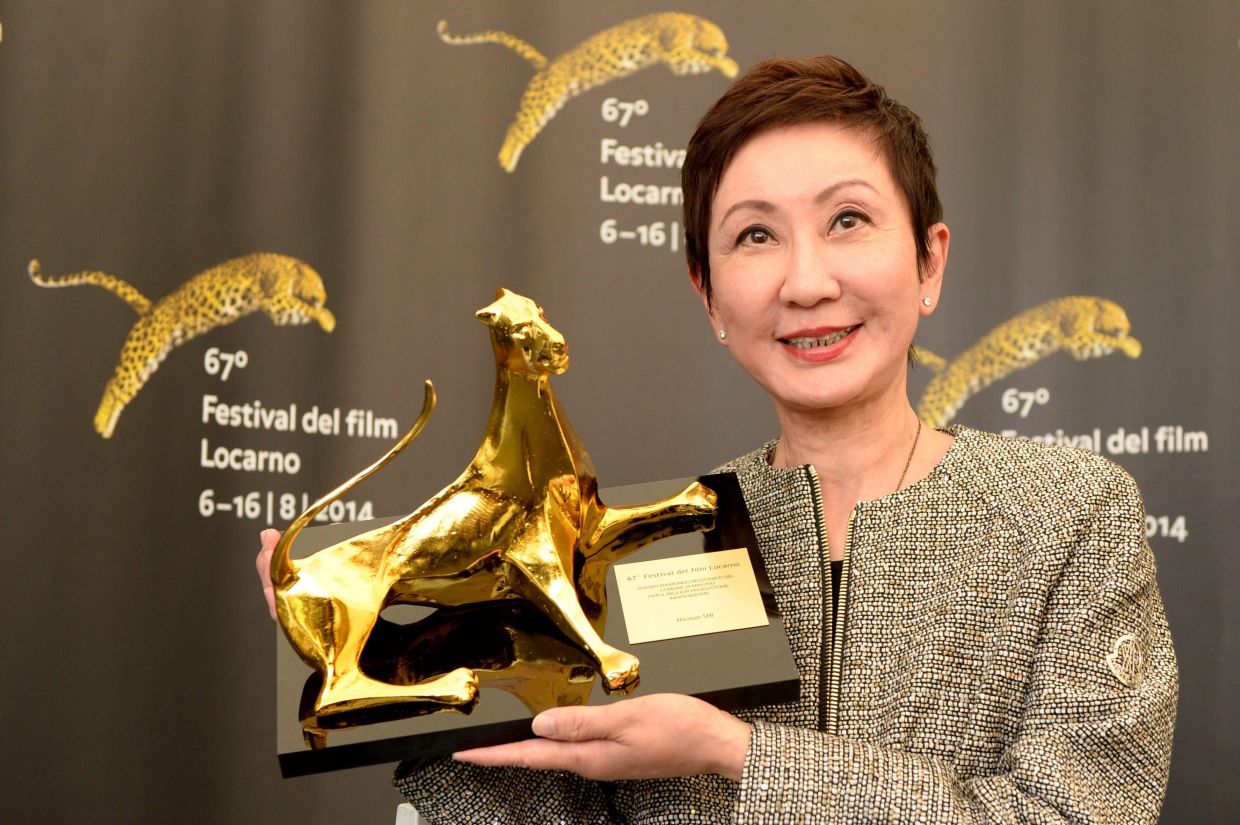
The international recognition Shi accumulated reflected her success in positioning Hong Kong films within global film culture. France honored her with the Ordre des Arts et des Lettres, acknowledging her role in cultural exchange. The Locarno International Film Festival recognized her with its best independent producer award. Major festivals regularly invited her to serve on juries or as festival president, testament to her credibility among international cinema gatekeepers. These honors were not ceremonial; they reflected genuine respect from a global film community that understood how Shi had fundamentally changed the geography of cinema by ensuring that productions from a small Asian territory could compete for prestige and audiences worldwide.
For Malaysian and Southeast Asian readers, Shi's legacy carries particular resonance. The infrastructure she helped build—the distribution networks, the professional standards, the connections between regional filmmakers and international festivals—created pathways that extended beyond Hong Kong to encompass the broader region. Her work demonstrated that Asian cinema need not remain marginal to global film culture; through professional management, strategic positioning, and relentless advocacy, regional productions could achieve international status. As Southeast Asian film industries seek to expand their own global footprint in an era of streaming and fragmented distribution, Shi's model of combining artistic integrity with business sophistication offers enduring lessons about how to build sustainable cinematic ecosystems.
ShiNan-sun's death concludes a chapter in Hong Kong's history as a major cultural exporter. The territory's dominance in regional film—the martial arts epics, the comedies, the dramas that captivated Asian audiences throughout the 1980s and 1990s—depended not only on talented directors and stars but on producers like Shi who understood that great art required excellent administration. She recognized early that Hong Kong's competitive advantage lay in professionalizing practices that competitors in larger markets might take for granted. Her influence extended to how films were financed, contracted, distributed, and positioned internationally—the unglamorous architecture that enabled creative excellence to reach audiences. In this sense, every Hong Kong film that found international success during her era bore her fingerprints, even when her name appeared only in credits.
The tributes from Lin, Chan, Lau, and others reflect a broader reckoning with Shi's irreplaceable role in shaping not just individual careers but an entire industry's trajectory. Unlike directors whose work appears on screen or actors whose performances captivate audiences, producers like Shi work largely invisible to general viewers, their contribution evident only in the existence of films that might never have been made without their judgment and determination. Her death removes from Hong Kong cinema one of the few remaining figures who could recall and navigate the transition from a local industry to a global enterprise, who understood both the artistic imperatives and the commercial realities that sustained that transformation. The lifetime achievement award she received with Tsui Hark just weeks before her death, while deeply meaningful, could only partially acknowledge the scope of her contribution to Hong Kong's cultural standing in the world.

