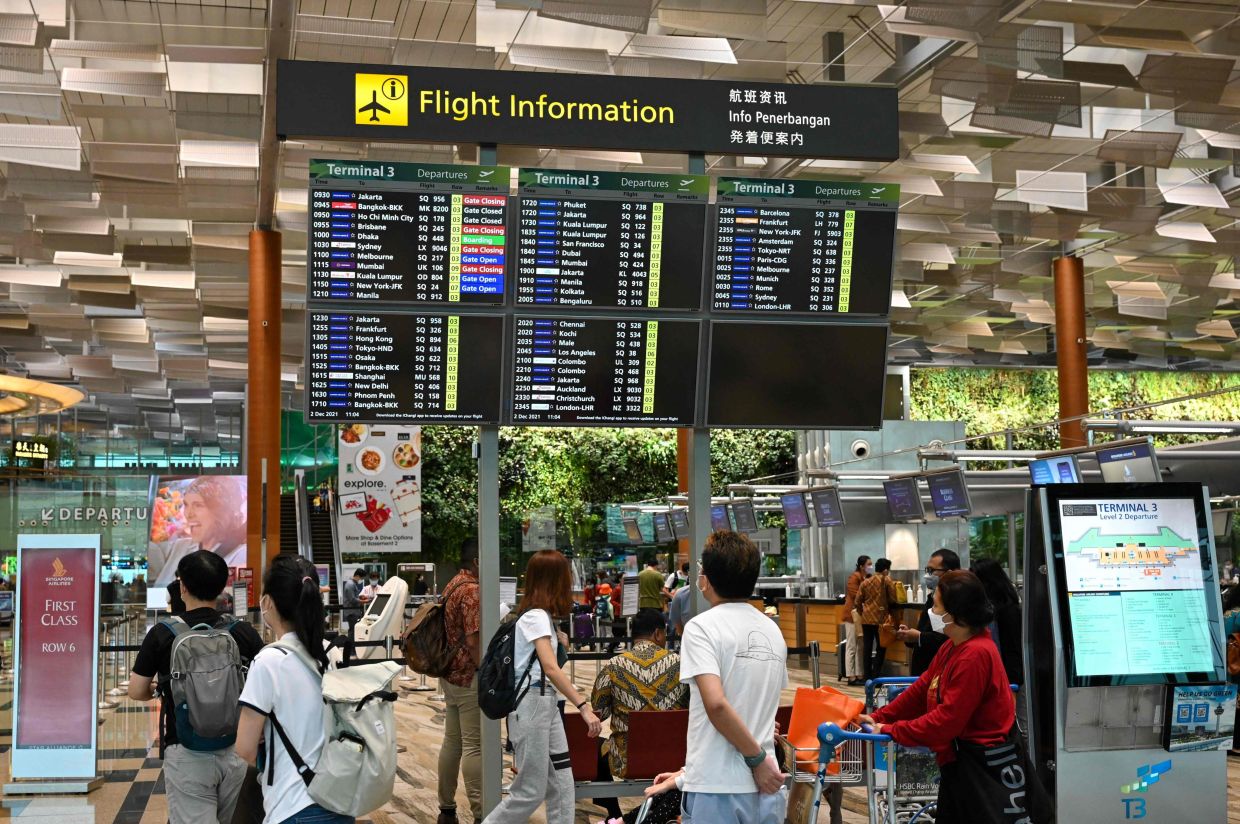
A Singapore court has handed down prison sentences to a Hong Kong mother and her adult son following a chaotic and violent incident at Changi Airport's Terminal 3 in June 2024. Chan Sui-kwan, 65, received a six-month jail term for voluntarily causing hurt to deter a public servant from performing his duties, while her son Chan Wing-kwan, 42, was sentenced to ten days imprisonment for voluntarily causing hurt. The case illustrates how rapidly interpersonal tensions can escalate into criminal conduct, particularly within the high-stress environment of a major international airport where hundreds of thousands of travellers pass through daily.
The confrontation began on the afternoon of June 30, 2024, when Chan Wing-kwan became agitated after apparently misinterpreting the actions of nearby bystanders, believing they were mocking him. In a sudden outburst, he kicked his own mother. The incident might have remained a private family matter had not a 69-year-old bystander intervened with good intentions, approaching the woman to check on her welfare following the kick. Rather than welcoming assistance, Chan Sui-kwan told the man to leave her alone, while her son responded with verbal aggression, explicitly challenging the bystander to physical combat.
The situation deteriorated significantly when the pair relocated to another floor within Terminal 3, where the son once again attacked his mother by kicking her. This second assault prompted the concerned bystander to attempt calling police for help, recognising that the situation required official intervention. However, before the bystander could complete his emergency call, Chan Wing-kwan rushed towards him with clear aggressive intent. What followed was a sustained physical altercation during which the son inflicted multiple blows on the older man, punching him repeatedly. The bystander sustained considerable injuries including a head haematoma—a pooling of blood beneath the skin—along with abrasions to his knees and bruising across his fingers, suggesting he attempted to defend himself during the assault.
Police arrived at the scene and conducted an initial investigation, during which they recorded the passport details of the mother and son before returning their travel documents. This early intervention failed to resolve the situation, and the pair's behaviour did not improve. Later that same afternoon, police officers encountered the two individuals again in the airport's departure hall. At this point, Chan Sui-kwan refused to surrender her passport and created a public disturbance, leading to her arrest. The situation escalated further as officers attempted to place her in custody, with the mother mounting fierce physical resistance against the arresting officers.
During the struggle to restrain her, Chan Sui-kwan bit a police officer on his right forearm, biting through the fabric of his clothing and leaving a one-centimetre mark along with bruising from the impact. This assault on a law enforcement officer added another serious dimension to the charges she would ultimately face. The physical resistance and injury inflicted on the officer formed a key basis for the more severe charge of voluntarily causing hurt to deter a public servant from discharging his duty, distinguishing her culpability from her son's shorter sentence.
The legal proceedings that followed were themselves complicated and extended. Chan Wing-kwan was charged on April 24, and his mother was eventually brought before the court on November 18, 2024—a considerable time after the June incident. Both defendants were scheduled to appear in court on July 22 this year, but failed to attend that hearing, resulting in the issuance of arrest warrants for each of them. They were subsequently convicted on July 29 of this year and received their sentences on Monday, meaning the entire process from incident to final judgment spanned more than twelve months.
For Malaysian and Southeast Asian readers, this case serves as a cautionary reminder of how quickly situations can spiral when individuals are in states of high stress or emotional agitation, particularly in public spaces where third parties may intervene with humanitarian motives. Changi Airport, like Kuala Lumpur International Airport and other major Southeast Asian aviation hubs, operates under intense daily pressure, and the presence of volatile individuals can endanger both other travellers and airport staff. The case also demonstrates the zero-tolerance approach that Singapore's courts maintain toward violence directed at police officers, with the mother's bite on an officer resulting in the more serious charge and substantially longer sentence compared to her son's ten-day term.
The distinction between the sentences imposed on the mother and son reflects judicial recognition of the different gravity of their respective offences. While both engaged in violence, the targeting of a law enforcement officer conducting his duties elevated Chan Sui-kwan's conduct to a more serious category of criminal wrongdoing. Singapore's penal framework treats assaults on police as particularly serious precisely because such conduct undermines public order and the ability of authorities to maintain safety in public venues like airports.
For international travellers from Malaysia and across Asia, the case underscores the importance of maintaining composure when frustrated or upset while in foreign jurisdictions. The consequences of violent conduct—particularly in a destination like Singapore with its strict legal standards—can include substantial prison sentences and criminal records that will have ramifications for future travel and employment. The month-long delay between the incident and the initial charging of Chan Wing-kwan suggests that investigating such matters at a major airport requires time and coordination, yet the ultimate judicial outcome demonstrates that authorities will pursue charges to completion.

