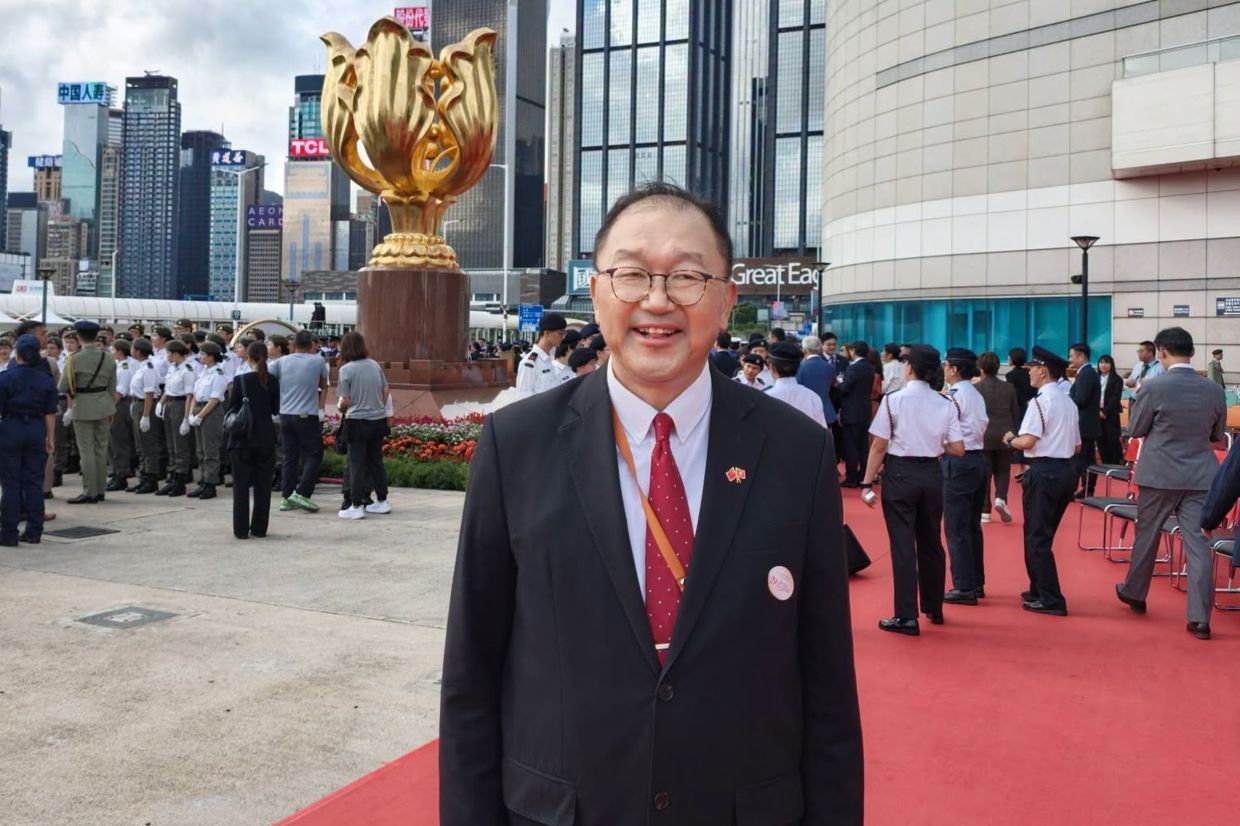
William Wong Kam-fai, a 66-year-old Hong Kong lawmaker and university academic, has become the first member of the Legislative Council to step down following a scandal in more than 26 years. His resignation came just days after his arrest on suspicion of drink-driving and involvement in a hit-and-run incident, marking a watershed moment for Hong Kong's legislature and prompting broader questions about accountability standards for public officials across the region.
Wong announced his departure on Friday through a carefully worded statement expressing regret for the disruption caused to both the legislature and wider society. In his brief remarks, he indicated that his primary concern was preventing further institutional damage, noting that the Legislative Council's smooth operation took precedence over his personal position. He declined to comment in detail, citing the ongoing police investigation, though he pledged to continue serving the community through other channels. The speed of his decision underscored the gravity with which both he and the institution viewed the matter.
The incident that triggered the resignation occurred on Monday evening when Wong lost control of his vehicle near a staff residence on what appears to be a university campus. The collision resulted in his car striking one parked vehicle with sufficient force to push it into a second vehicle, leaving the lawmaker facing multiple potential charges. His arrest followed immediately, setting in motion a chain of events that would culminate in his exit from one of Asia's most significant political bodies.
Legislative Council President Starry Lee Wai-king formally acknowledged Wong's resignation and thanked him for his service, framing his departure as a dignified conclusion to his tenure. However, the political machinery surrounding the decision moved swiftly. Analysts and former officials quickly weighed in, with Lau Siu-kai from the Chinese Association of Hong Kong and Macau Studies think tank characterising the resignation as strategically prudent. According to Lau, maintaining the seat in the face of such serious allegations could have been weaponised as evidence against the principle of patriots governing Hong Kong—a politically sensitive issue in the territory's current governance framework.
The implications of Wong's resignation extend beyond his individual circumstances. As a member not only of the Legislative Council but also of the Chinese People's Political Consultative Conference, China's top political advisory body, his departure signals how swiftly misconduct by high-profile officials triggers consequences across multiple layers of governance. Observers suggest that Wong will likely face pressure to resign from his CPPCC position as well, though such expulsions remain comparatively rare in the system.
Tam Yiu-chung, formerly Hong Kong's sole representative to the National People's Congress Standing Committee, articulated the reasoning underpinning the resignation. He emphasised that legislators operate under heightened ethical standards, and Wong's actions—if the allegations prove substantiated—fell sufficiently below those standards to warrant stepping aside. Tam's analysis reflected a broader consensus among establishment figures that managing reputational damage quickly and decisively served everyone's interests better than protracted legal proceedings with Wong remaining in office.
One factor that may ease the institutional transition is the nature of Wong's constituency. As an Election Committee member rather than a functional constituency representative, his departure does not immediately create a sectoral representation gap in the legislature. This distinction matters because functional constituency seats require advocates reflecting specific economic or professional interests, whereas Election Committee seats carry different accountability frameworks. Nevertheless, his absence removes a voice from deliberations, and questions remain about whether the government will call a by-election to fill the vacancy.
Historical precedent offers limited guidance. The last lawmaker to resign over scandal was Gary Cheng Kai-nam in September 2000, over two decades ago. Cheng's misconduct involved undisclosed business interests, passing confidential government documents to business associates, and extramarital affairs—charges that led to an 18-month prison sentence after conviction on bribery, misconduct in public office, false accounting, and theft charges. That Wong's case follows so long a gap highlights how rare such public accountability has become in Hong Kong's legislature.
The question of whether to hold a by-election remains unresolved. Current constitutional affairs guidance, articulated by former minister Erick Tsang Kwok-wai in 2024, indicates that financial prudence factors into such decisions. Notably, when Stephen Wong Yuen-shan—also an Election Committee constituency member—departed in late 2022 to lead a government think tank, his seat remained vacant for approximately three years without a by-election being called. That precedent suggests the government enjoys considerable discretion in determining whether to trigger an expensive and time-consuming poll.
Meanwhile, the Chinese University of Hong Kong, where Wong holds academic positions alongside his legislative duties, moved swiftly to distance itself from the scandal. A university spokesperson confirmed that Wong has been suspended from administrative duties pending the outcome of the police investigation, underscoring institutional concern about association with the controversy. The suspension affects his roles beyond the legislature, signalling that professional consequences extend across multiple employment relationships.
For Malaysia and the broader Southeast Asian region, Wong's resignation offers instructive parallels regarding political accountability and the mechanisms through which regional systems manage high-profile misconduct. While Hong Kong's governance structures differ substantially from those in Malaysia and neighbouring countries, the underlying tensions—between personal consequences and institutional preservation, between swift action and due process, between appearance and substance—resonate across systems attempting to balance democratic accountability with political stability.
The incident also raises questions about whether drink-driving enforcement and public safety standards for officials should be standardised or strengthened across Asia-Pacific democracies. Wong's case demonstrates that even in mature, institutionalised systems, serious lapses in personal conduct by legislators can generate rapid institutional responses. Whether such responses emerge from principled commitment to ethics or strategic positioning to protect broader political interests remains an open interpretive question that observers across the region will continue to analyse.

