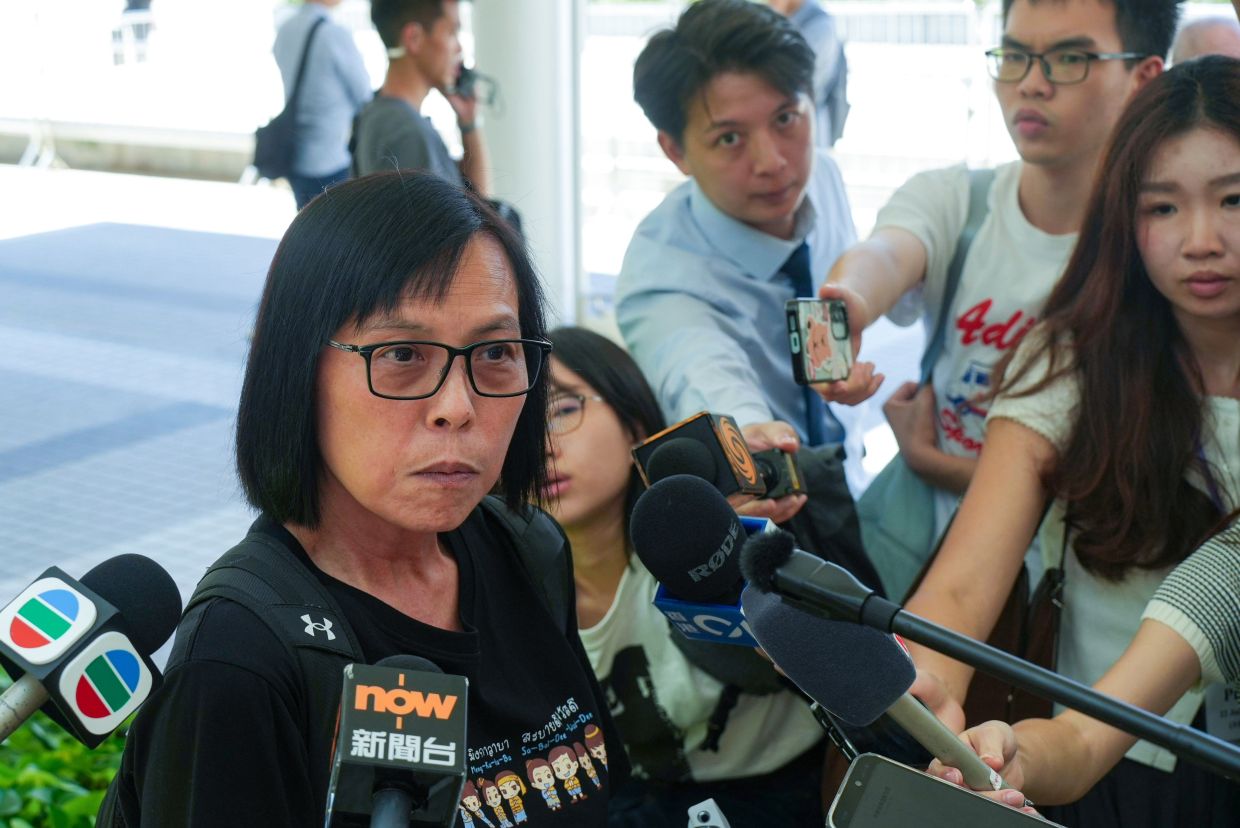
Hong Kong's independent committee investigating last year's Wang Fuk Court fire will not request conversion into a statutory commission of inquiry, a decision that has heightened concerns among survivors and observers about potential gaps in the investigation's scope and oversight mechanisms. The announcement came from Committee chairman Justice David Lok Kai-hong as the probe resumed hearings following a six-week break, signalling that the inquiry will continue operating under its current non-statutory framework despite the gravity of the incident that left multiple residents dead.
The distinction between a statutory and non-statutory inquiry carries significant implications for investigative powers and legal authority. A statutory commission of inquiry typically grants broader investigative capabilities, including the power to compel testimony, subpoena documents, and enforce compliance with court orders. The decision to forgo such powers means the committee will operate within more limited parameters, relying on voluntary cooperation from witnesses and institutions rather than enforceable legal mechanisms. For Hong Kong residents and fire safety advocates, this represents a critical constraint on the investigation's ability to pursue leads comprehensively.
The Wang Fuk Court fire, which occurred in a densely populated residential building in Hong Kong's New Territories, claimed multiple lives and injured dozens more, making it one of the territory's most serious residential fire incidents in recent years. Given the scale of the disaster and the number of affected families, the decision to decline statutory powers has sparked frustration among survivors who argue that weaker investigative authority could leave crucial questions unresolved. Many victims' relatives fear that without formal statutory mechanisms, responsible parties could resist questioning or withhold potentially incriminating documentation.
Statutory inquiries in Hong Kong's legal tradition carry precedent in major public inquiries, where authorities have previously deemed the additional investigative power necessary to uncover systemic failures or institutional accountability. The decision to operate outside this framework suggests either confidence in voluntary cooperation or a preference for a less confrontational investigative approach. However, critics contend that fire disasters often involve complex technical evidence, regulatory compliance failures, and potentially negligent practices that require compulsory examination to fully expose.
The committee's choice reflects broader questions about Hong Kong's approach to major public inquiries and the balance between thorough investigation and institutional sensitivity. Justice Lok's statement that the panel would not pursue statutory status indicates the committee operates under particular constraints or assumptions about the scope of its mandate. For Malaysian readers familiar with similar public inquiries in the region, the distinction underscores how different jurisdictions calibrate investigative authority in response to major incidents.
Fire safety in densely populated urban environments remains a critical issue across Southeast Asia, and the Hong Kong investigation's findings could inform practices elsewhere in the region. Multi-storey residential buildings similar to Wang Fuk Court exist throughout Malaysia, Singapore, and other regional economies, where fire prevention standards and emergency response protocols are similarly scrutinised. The Hong Kong inquiry's methodology and limitations may therefore carry implications beyond the territory itself, particularly regarding how authorities approach investigations into major infrastructure or building safety incidents.
Survivors expressed disappointment at the committee's decision, with several family representatives stating they believe statutory powers would strengthen the investigation's credibility and completeness. The absence of compulsory mechanisms could affect the committee's ability to access technical records from the building's management, fire safety inspections, or maintenance records that might reveal systemic negligence. Additionally, witness cooperation, while theoretically voluntary, may be influenced by institutional pressures or legal exposure fears that statutory powers could help overcome.
The resumption of hearings after the six-week pause comes amid ongoing public debate about building safety standards and fire prevention protocols in Hong Kong's aging housing stock. Multiple residential buildings across the city house thousands of families in environments where fire risk assessments and preventive measures have drawn increasing scrutiny from safety advocates and legislators. The Wang Fuk Court incident catalysed broader conversations about whether existing regulatory frameworks adequately protect residents in older structures where retrofitting fire suppression systems and safety upgrades present technical and financial challenges.
Experts in disaster investigation and institutional accountability have noted that non-statutory inquiries, while sometimes more efficient in their proceedings, may produce reports with limited enforceability and follow-up mechanisms. Recommendations emerging from such inquiries can be ignored or implemented partially without formal oversight mechanisms to ensure compliance. For affected families and the broader public seeking systemic change, this represents a significant limitation on the inquiry's potential impact beyond documentation and historical record.
The decision also reflects Hong Kong's broader governance approach, where major incidents are investigated through committees or ad hoc arrangements rather than formally enacted statutory commissions. This pattern contrasts with some international practices where serious public disasters automatically trigger statutory inquiry procedures with defined investigative powers and mandatory government responses to findings. Malaysian observers might note parallels with how their own government handles major incidents, balancing thorough investigation with institutional considerations and political sensitivities.
Looking forward, the committee's non-statutory status means its influence will depend heavily on the quality of its evidence-gathering, the comprehensiveness of its findings, and the political will of Hong Kong authorities to implement recommendations. Survivors and safety advocates will monitor whether the investigation's conclusions adequately address causation factors, identify responsible parties, and recommend concrete changes to fire safety protocols. The inquiry's effectiveness ultimately rests not on statutory powers but on the committee members' diligence and the public credibility of their eventual report.