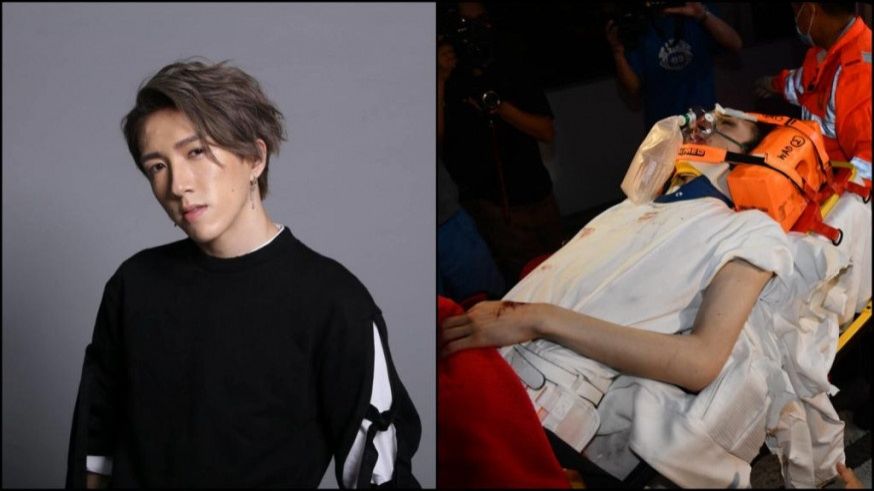
A Hong Kong dancer who was left permanently paralyzed after a massive LED panel crashed onto him during a Cantopop concert has secured significant financial compensation to cover the remainder of his life. On June 15, the District Court awarded Mo Li Kai-yin HK$6.29 million (RM3.32 million) in damages following the devastating accident that occurred at Hong Kong Coliseum on July 28, 2022, during a performance by boy band Mirror. The court ruling represents recognition of the severity of Mo's condition and the lifelong care requirements he now faces as a result of injuries sustained during what should have been a routine professional engagement.
The incident unfolded during the fourth show of Mirror's planned twelve-concert residency when a four-by-four-meter LED screen detached from the ceiling and struck the 31-year-old performer. The impact caused a cervical spine dislocation that left Mo paralyzed from the neck downward, requiring immediate emergency intervention at Queen Elizabeth Hospital. Medical teams performed urgent surgery and initiated intensive treatment, but the damage to his spinal cord proved irreversible. The extent of his injuries became apparent in the days and weeks following the accident as physicians assessed the full scope of neurological damage sustained in the collision.
The District Court's judgment found that Mo's employer, Studiodanz, bore responsibility for the accident and ordered the company to pay compensation across multiple categories that reflected the comprehensive nature of his needs. The compensation structure acknowledged permanent total incapacity, ongoing caregiving expenses, periodic payments for future requirements, and medical costs associated with his condition. Notably, the court awarded Mo the maximum compensation available within each category, signalling the severity of his circumstances and the permanence of his disabilities. The judgment also mandated that Studiodanz cover Mo's legal fees and pay interest on the awarded damages.
In its ruling, the court employed stark language to describe Mo's condition, characterizing his injuries as "catastrophic" and emphasizing that he would "require lifetime constant care and attention" while being "incapable of ever leading or appreciating an independent adult life." The judgment reflects the reality that Mo now requires three full-time caregivers to provide round-the-clock assistance with fundamental personal care tasks and daily living activities that most people manage independently. Prior to the accident, Mo had built a multifaceted career in dance, working simultaneously as a performer and instructor at four different studios while also appearing in concerts, television programs, and music videos.
The compensation award gains additional poignancy given Mo's family circumstances. His father, Reverend Derek Li Shing-lam, abandoned his pastoral work and relocated from Canada to become his son's primary caregiver following the accident. The reverend dedicated his remaining years to managing his son's rehabilitation and care needs until his death on April 25. This sacrifice underscores how catastrophic workplace injuries ripple through families, disrupting careers and life plans across multiple generations. The compensation granted by the court, while substantial, must be viewed partly as an attempt to provide financial security for Mo's care in the absence of his father's direct involvement.
Studiodanz, which declined to participate in the trial proceedings, has not contested the judgment. However, the company had already faced regulatory consequences for its role in the accident, having been fined HK$132,000 by authorities for violating occupational safety regulations. This earlier penalty indicated that investigations determined safety standards had not been properly maintained at the venue, contributing to the structural failure that injured Mo. The company's absence from the courtroom may reflect broader liability concerns or strategic legal considerations, but the court's decision proceeded without their direct input.
Since the accident, Mo has pursued aggressive rehabilitation using cutting-edge medical technologies designed to restore function to his severely damaged nervous system. His treatment regimen includes regenerative medicine approaches and an implantable microstimulator that aim to stimulate nerve regeneration and restore voluntary control over paralyzed muscles. These interventions have yielded modest but significant progress: Mo has regained some movement capability in his right arm and has recovered sensation in his bladder and bowel functions. While these gains remain limited compared to his pre-accident mobility, they represent tangible improvements that provide hope for continued recovery.
Visual documentation of Mo's rehabilitation journey, shared through his Instagram account, offers public evidence of his incremental progress. A video posted in March showed the dancer controlling an electric wheelchair using movements from his right arm, demonstrating the practical applications of his regained motor function. Such visible progress, while necessarily modest given the severity of his spinal cord injury, illustrates the demanding rehabilitation process he continues to undertake. Each small gain requires intensive physical therapy and medical intervention, processes that the compensation award will now fund comprehensively throughout his lifetime.
For Malaysia and the broader Southeast Asian region, Mo's case carries important implications regarding workplace safety standards in the entertainment industry. Large-scale productions involving elaborate staging, lighting arrays, and mechanical equipment require rigorous safety protocols to prevent catastrophic failures. The Mirror concert series tragedy highlights how entertainment venues across Asia must prioritize structural integrity and equipment maintenance, particularly when deploying heavy suspended elements above performer and audience spaces. Industry professionals and venue operators throughout Southeast Asia should regard this incident as a cautionary lesson about the human cost of inadequate safety oversight.
The compensation judgment also establishes legal precedent regarding the valuation of lifetime care requirements for individuals sustaining permanent, severe disabilities in workplace settings. The substantial award reflects recognition that individuals rendered permanently incapacitated deserve comprehensive financial support to secure quality care throughout their remaining years. For workers across Southeast Asia employed in entertainment, construction, manufacturing, and other industries involving physical risk, Mo's case demonstrates that serious workplace injuries can result in significant legal liability for employers and substantial compensation outcomes for affected workers. The ruling underscores that employers cannot simply ignore safety protocols or negligently maintain equipment without facing serious financial consequences when workers are harmed.
Mo's ongoing rehabilitation continues in specialized medical facilities in Hong Kong and internationally, where he receives specialized treatment unavailable in typical hospital settings. The cost of such advanced therapeutic interventions, combined with expenses for permanent caregiving assistance, would be financially impossible for most individuals without the compensation award secured through litigation. This reality highlights the critical importance of legal recourse for workers seriously injured through employer negligence, as such compensation often represents the only mechanism through which victims can access the specialized care their conditions demand.