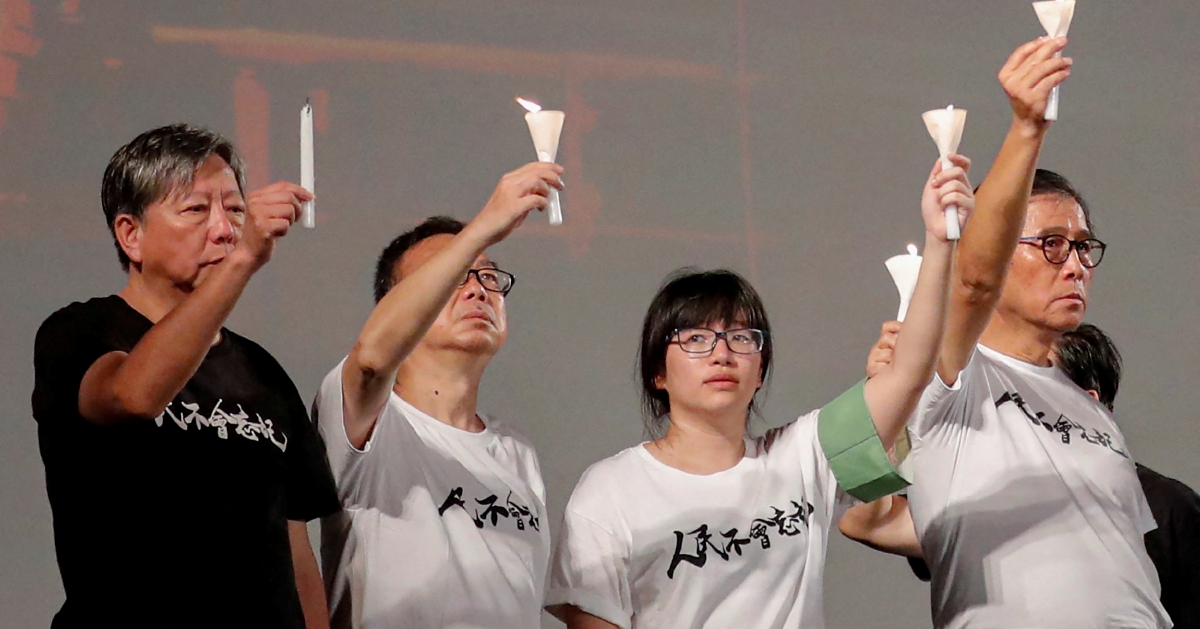
A Hong Kong court has found two prominent activists guilty of inciting subversion following their central role in organising annual vigils that commemorated the 1989 Tiananmen crackdown. The verdict, delivered on Friday, represents another significant development in Hong Kong's evolving legal and political environment, particularly concerning the space available for public expression on sensitive historical events.
The two activists had maintained a visible presence in organising the candlelit commemorations that drew thousands of participants each year to Hong Kong's Victoria Park. These gatherings had become a distinctive feature of the territory's civic calendar, serving as one of the few spaces in the Chinese-speaking world where the June 4 incident received open public acknowledgment. The annual events reflected Hong Kong's historical tradition of relative political openness and had been held continuously for decades.
The court's decision to convict on subversion charges carries profound implications for the nature of political and historical discourse in Hong Kong. The charge of incitement to subversion carries weight under laws that have undergone substantial reinterpretation in recent years. The ruling effectively narrows the boundaries of what constitutes acceptable commemoration and public expression, particularly regarding matters deemed sensitive by mainland authorities.
This conviction must be understood within the context of sweeping changes to Hong Kong's legal framework. The 2020 National Security Law introduced provisions that significantly expanded the definition and reach of subversion offences, fundamentally altering the legal landscape that activists and ordinary citizens navigate. What once constituted routine civic participation in remembrance activities now falls under heightened legal scrutiny, forcing a recalibration of what is politically feasible in the territory.
The impact on Hong Kong's international standing should not be underestimated. The territory has long positioned itself as a bridge between cultures and political systems, priding itself on maintaining standards of civil liberties that distinguished it from mainland China. These convictions reinforce perceptions among international observers that Hong Kong's distinctive legal and political character is undergoing transformation, with implications for how global institutions and governments view the territory's autonomy and freedoms.
For Malaysian observers, the Hong Kong developments warrant close attention. Southeast Asia's broader relationship with China and questions surrounding the protection of fundamental rights remain subjects of considerable debate across the region. Hong Kong's experience offers a cautionary illustration of how legal instruments can be deployed to progressively constrain civic space, even within ostensibly established democratic and legal frameworks. Malaysia's own ongoing conversations about the balance between security concerns and civil liberties find an unexpected reference point in Hong Kong's trajectory.
The conviction also reflects a shifting approach to how historical narrative is policed and controlled. The 1989 Tiananmen incident remains a carefully managed historical memory within mainland China, with official discourse treating public discussion with extreme caution. The extension of similar controls to Hong Kong through legal mechanisms suggests a comprehensive effort to align the territory's information environment with mainland standards. This represents a qualitative change from earlier periods when Hong Kong maintained distinct approaches to historical and political memory.
Civil society groups across Asia have expressed mounting concern about the pattern of convictions targeting activists engaged in peaceful commemoration. The precedent established by finding vigil organisers guilty of subversion creates potential templates for authorities elsewhere to constrain forms of expression previously considered protected. The case demonstrates how security-oriented legislation, once enacted, tends to expand in application beyond its original stated scope.
The activists involved have long been public figures, and their prominence meant their activities received international media coverage. The court proceedings have therefore served to amplify awareness of Hong Kong's changing political terrain among diaspora communities and international observers. For activists elsewhere in Asia considering similar commemorative activities, the Hong Kong verdict signals elevated legal risks for organising around sensitive historical topics.
The underlying historical event itself—the 1989 Tiananmen crackdown—remains contentious ground. Official figures within mainland China maintain strict parameters around public discussion of the incident. The Hong Kong convictions effectively extend these constraints to a territory that had previously maintained separate commemorative practices. This convergence of approaches across the Hong Kong border represents a significant shift in how historical memory operates within Chinese-administered territories.
For international observers monitoring civil liberties and freedoms of expression globally, the Hong Kong verdict joins a lengthening list of convictions that reshape what constitutes permissible public action. The characterisation of annual candlelit vigils as subversive activity reflects a particularly expansive interpretation of how commemorative assembly relates to political subversion. This conceptual stretching of legal categories concerns human rights monitors who view such applications as incompatible with international standards for protecting peaceful expression.
The conviction's ripple effects will likely influence how civil society organisations throughout Hong Kong approach historical commemoration, public gatherings, and educational discussions about sensitive periods. The legal uncertainty now surrounding such activities may prompt self-restraint even before official enforcement occurs. This chilling effect—where fear of prosecution leads citizens to avoid previously accepted behaviour—represents perhaps the conviction's most significant long-term consequence for Hong Kong's civic landscape.

