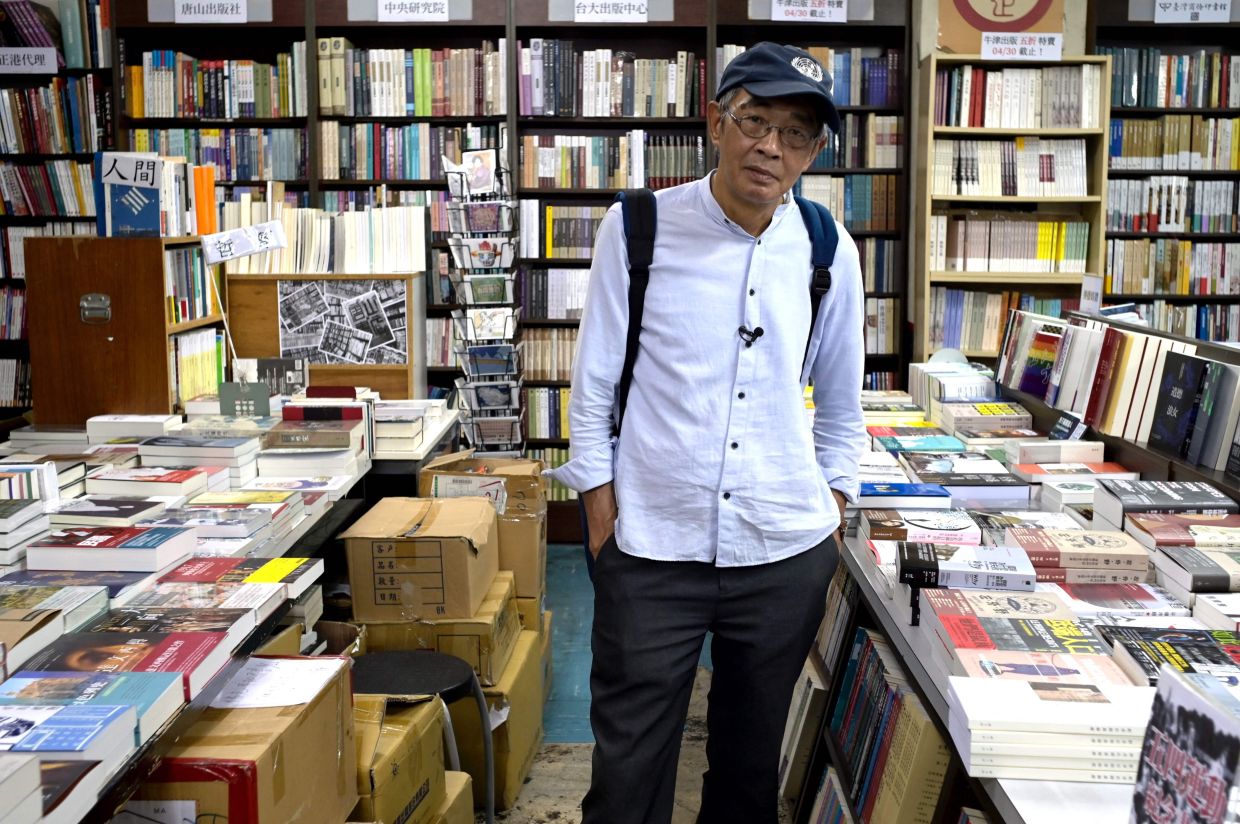
Lam Wing-kee, the former manager of Causeway Bay Books whose detention in late 2015 became emblematic of Beijing's tightening grip on Hong Kong's freedoms, has died in Taiwan at the age of 70. The Central News Agency reported his death on Thursday evening, following his admission to MacKay Memorial Hospital in Taipei earlier this week. According to the Taiwan news agency, Lam experienced a cancer recurrence in the preceding year, which ultimately led to his hospitalisation and subsequent passing after slipping into a coma.
The case of Lam and four colleagues vanishing from their bookstore in 2015 catalysed a dramatic shift in how the international community perceived Hong Kong's autonomy under Chinese rule. Causeway Bay Books operated in a unique position within the city's publishing landscape, stocking literature and periodicals prohibited on mainland China, including investigative works purporting to expose internal dynamics within the Communist Party leadership and exposés of high-ranking officials' personal misconduct. This specialised inventory, whilst legal under Hong Kong's independent regulatory framework, placed the operation directly at odds with Beijing's stringent publishing controls.
When Lam and his four associates disappeared, initial explanations from mainland authorities suggested voluntary cooperation with law enforcement investigations. However, Lam's explosive 2016 testimony at a Hong Kong press conference shattered this narrative entirely. He disclosed that he had been apprehended in October 2015 whilst crossing the border into Shenzhen, subsequently blindfolded and transported via a 13-hour train journey to Ningbo in eastern China. There, he endured five months of continuous confinement in a single room, monitored round-the-clock by rotating pairs of guards. Most troublingly, he revealed he had been coerced into appearing on state television to publicly confess to charges that he contested.
Lam's account represented a watershed moment in international scrutiny of Hong Kong's position within the Chinese state apparatus. His willingness to contradict official narratives and publicly describe the mechanics of his detention demonstrated remarkable personal courage, particularly given the vulnerability of those critical of Beijing's security apparatus. Taiwan's President Lai Ching-te subsequently acknowledged this dimension in his condolences, emphasising how Lam's testimony transcended mere personal narrative to become a statement about the existential importance of defending democratic freedoms across generations.
The broader context of the Causeway Bay Books disappearances remains deeply troubling for those monitoring human rights in Greater China. Gui Minhai, a co-owner and publisher with the bookstore, vanished from Thailand in circumstances suggesting coordinated cross-border operations. Chinese authorities eventually prosecuted him on espionage charges, sentencing him in 2020 to a decade of imprisonment for allegedly furnishing intelligence to foreign entities. This case exemplified what critics characterised as extraterritorial overreach by Beijing, reaching into neighbouring jurisdictions to neutralise figures perceived as threats to state narrative control.
Lam's decision to relocate to Taiwan in 2019 reflected his assessment that remaining in Hong Kong had become untenable, notwithstanding his prior release. He reopened Causeway Bay Books in Taipei in 2020, transplanting the bookstore's mission to a jurisdiction maintaining stronger legal protections for publication autonomy. However, his health deteriorated significantly, forcing him to suspend operations temporarily last month. He remained uncertain whether the enterprise could resume, a poignant conclusion to his efforts to preserve the bookstore's principles beyond Beijing's jurisdiction.
The symbolic weight of Lam's departure from Hong Kong and subsequent death in Taiwan encapsulates a broader tragedy unfolding across the city's civil society landscape. Since the massive pro-democracy demonstrations of 2019, Hong Kong authorities have systematically dismantled institutional spaces previously insulated from mainland control. The implementation of the 2024 national security legislation has precipitated an intensification of this process, with police operations expanding to encompass bookstores themselves. In June, authorities arrested two individuals operating a bookshop on suspicion of circulating seditious materials and receiving foreign funding, demonstrating that the regulatory environment Lam originally navigated has become exponentially more restrictive.
For Malaysian and Southeast Asian observers, Lam's trajectory illuminates fundamental questions about the sustainability of editorial independence in jurisdictions proximate to authoritarian state apparatus. Hong Kong's experience demonstrates how even established legal systems ostensibly guaranteeing autonomous regulatory frameworks remain vulnerable to political pressure from more powerful neighbouring authorities. The case also underscores how individuals who become symbols of resistance invariably face profound personal costs, a pattern evident across numerous contemporary Asian contexts where government authorities regard dissent as fundamentally threatening to state stability.
Lam's contribution to documenting Beijing's detention practices extended beyond his personal testimony to encompass a broader historical record of how state security operations functioned beyond public scrutiny. His disclosure of systematic surveillance, psychological isolation, and coerced confessions provided substantive evidence of enforcement mechanisms that Beijing preferred to maintain opaque. International human rights organisations subsequently drew upon his account when documenting patterns of enforced disappearance and custodial abuse.
The bookstore that Lam managed continues to represent far more than a commercial enterprise within the collective memory of those concerned about Hong Kong's transformation. Causeway Bay Books became a tangible manifestation of how individuals could exercise editorial judgment and curate knowledge dissemination in ways that challenged state orthodoxy. That this institution ultimately required relocation to Taiwan to sustain operations reflects the comprehensive nature of Beijing's determination to eliminate alternative information ecosystems from territories under its jurisdiction.
Taiwan's response to Lam's death, through official presidential condolences emphasising generational commitment to democratic defence, situated his legacy within a framework transcending individual biography. His passing arrives at a moment when Taiwan itself faces escalating pressure regarding its own maintenance of institutional autonomy. The island has increasingly become a sanctuary for individuals fleeing mainland and Hong Kong governance structures, a circumstance that renders Lam's choice of destination symbolically significant beyond its practical dimensions.
The closure or dormancy of Causeway Bay Books' Taipei iteration represents the final eclipse of an institution that symbolised Hong Kong's cosmopolitan openness. Lam's death concludes a narrative arc beginning with his defiant resistance to enforced silence and ending with his inability to sustain the physical infrastructure representing that resistance. For observers across Southeast Asia, his legacy remains instructive regarding both the fragility of institutional independence and the enduring necessity of individual advocacy for democratic principles.

