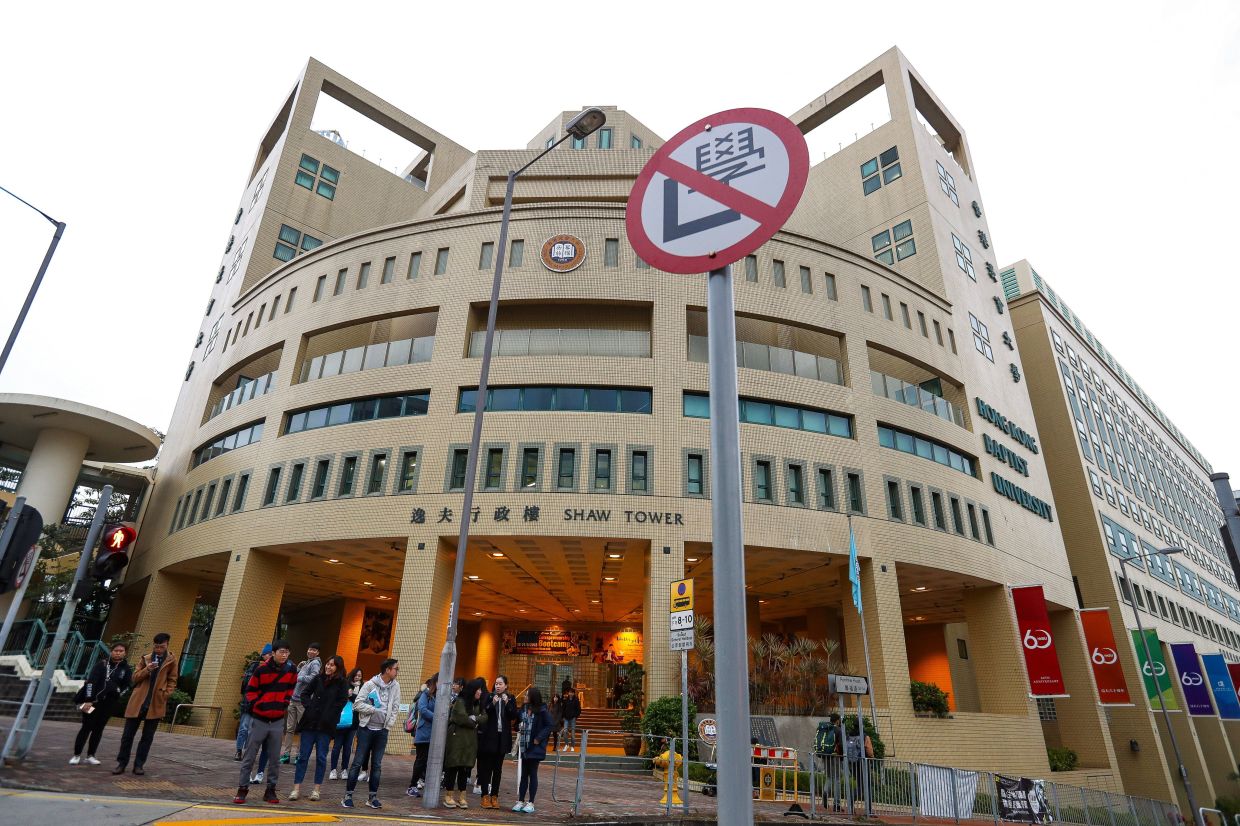
Hong Kong Baptist University has initiated a comprehensive review of its information technology infrastructure following public allegations from a sophisticated ransomware operation claiming unauthorised access to the institution's digital systems and sensitive data. The disclosure emerged this week when The Gentlemen, a well-known cybercriminal syndicate that gained prominence in mid-2023, posted claims online suggesting they had breached the university's networks.
The scale of the alleged compromise appears substantial. According to cybersecurity monitoring services tracking the situation, approximately 1,900 user credentials connected to the university may have been exposed. The purported credentials encompass roughly 130 staff accounts, approximately 1,770 additional user accounts—likely belonging to students and other institutional users—and 260 credentials associated with third-party service providers and contractors who maintain access to university systems.
The Gentlemen represents a particularly concerning threat profile within the ransomware ecosystem. Rather than operating as a traditional closed criminal cell, the group functions as a rental service, licensing its extortion and encryption software to other hackers for a percentage of proceeds. This franchise-style model has enabled the operation to proliferate across global networks at an accelerated pace, affecting institutions across multiple sectors and geographies. The group's expansion strategy mirrors legitimate software-as-a-service business models, but weaponised for illegal purposes.
The university's formal response came Tuesday evening when it acknowledged the breach allegations through an official statement. Baptist University confirmed it had identified a webpage making claims about unlawful system access and stated it was undertaking an urgent security assessment of its IT infrastructure and the personal information stored within it. The institution indicated it would follow established protocols and maintain active communication with Hong Kong's local regulatory bodies and law enforcement authorities.
Regulatory oversight has quickly engaged with the situation. The Office of the Privacy Commissioner for Personal Data, Hong Kong's principal data protection authority, clarified it had not yet received an official breach notification submission from the university. However, the office adopted a proactive posture by initiating contact with the institution to gather details about the incident's nature, scope and timeline.
Industry security experts have called for decisive institutional action. Francis Fong Po-kiu, honorary president of the Hong Kong Information Technology Federation, emphasised the urgency of immediate notification to privacy authorities. He stressed the critical importance of conducting thorough forensic investigation and technical system audits to establish precisely what information the attackers accessed and whether they leveraged compromised credentials to penetrate deeper into the university's most sensitive systems or exfiltrate protected data.
Fong's recommendations outline a comprehensive incident response framework tailored to educational institutions. Implementation of a universal password reset across all campus systems would neutralize credential-based access threats, while mandatory multi-factor authentication would substantially raise the technical barriers against future intrusions. Concurrent notification to both regulators and police creates documentary evidence of institutional diligence and activates official investigations that may identify broader criminal patterns.
Transparency with affected populations represents another critical dimension of effective crisis management. Fong advocated for sustained, honest communication with both staff members and students regarding the investigation's progress and preliminary findings. This transparency serves multiple protective functions: it enables individuals to monitor their personal accounts and financial instruments for fraudulent activity, maintains institutional credibility during a security incident, and reduces vulnerability to secondary social-engineering attacks that exploit uncertainty and confusion among users.
For Malaysian organisations and educational institutions, this incident underscores the evolving sophistication and commercialisation of ransomware operations targeting the Asia-Pacific region. The involvement of a ransomware-as-a-service platform like The Gentlemen demonstrates that institutions face not just lone actors but organised criminal enterprises with substantial technical capabilities and global reach. The rapid expansion of such operations across regional networks suggests Malaysian universities, hospitals, financial services companies and government agencies should urgently audit their cybersecurity postures and incident response capabilities.
The Baptist University case highlights particular vulnerabilities within educational institutions. Universities maintain extensive networks connecting thousands of users—students, staff, contractors—across multiple geographically distributed campuses and research facilities. This complexity creates numerous potential entry points. The compromise of 260 third-party credentials is particularly instructive, suggesting attackers exploited trusted external relationships to gain access. Malaysian institutions contracting with overseas vendors or supporting international research partnerships face similar third-party risk exposure.
The incident also illustrates the importance of having robust incident response frameworks before breaches occur. Baptist University's relatively swift public acknowledgment and regulatory engagement demonstrates that having established communication protocols with authorities and clear escalation procedures enables faster, more effective crisis management. Institutions that lack such pre-established relationships and procedures often experience longer response times, greater regulatory scrutiny, and amplified reputational damage.
As ransomware operations increasingly operate as scalable business franchises rather than isolated criminal ventures, the threat landscape becomes more persistent and professionalised. The democratisation of attack capabilities through rental models means smaller criminal actors can execute sophisticated breaches previously requiring substantial in-house technical expertise. This structural shift in the threat environment means defensive strategies must evolve beyond traditional perimeter security toward continuous monitoring, rapid threat detection, and resilient system architectures that limit the blast radius when inevitable breaches occur.

