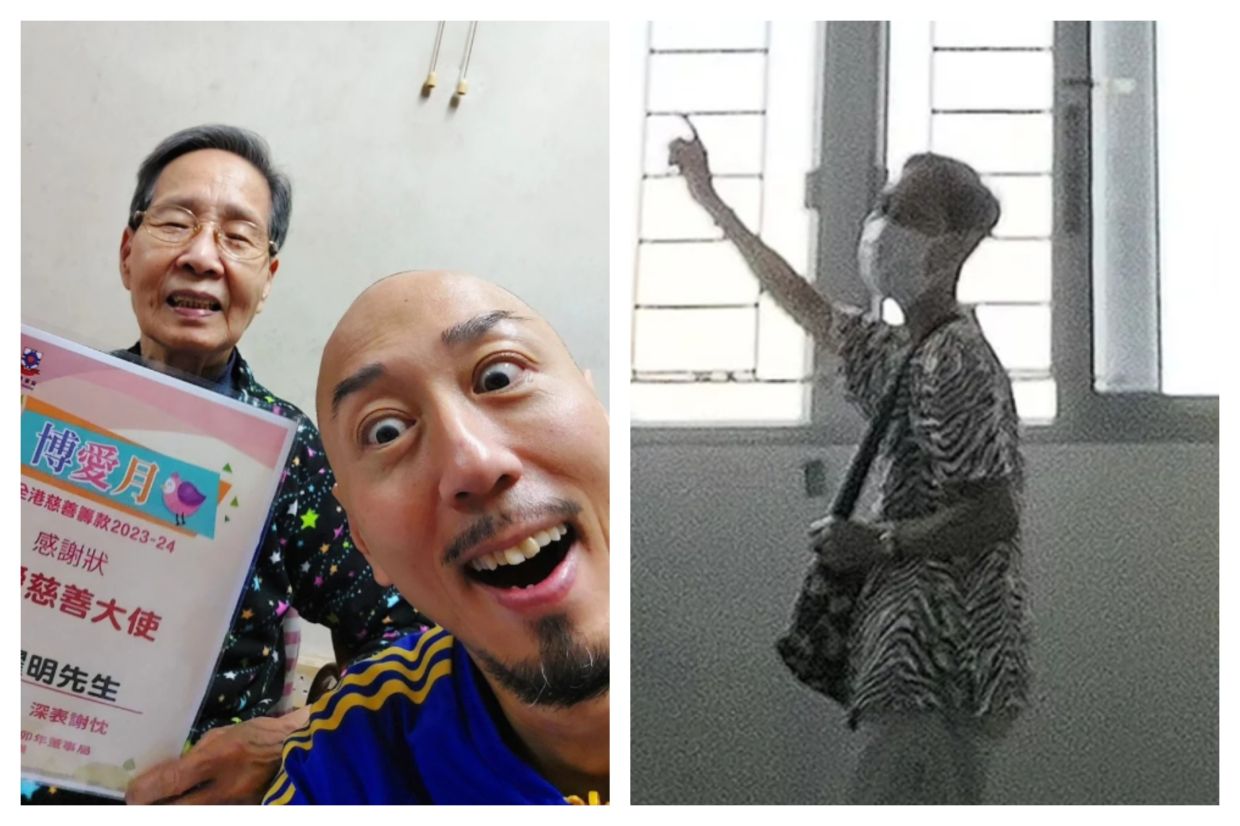
Hong Kong television actor Dai Yiu Ming has achieved what he describes as a deeply personal milestone by purchasing his first residential property specifically for his elderly mother, marking the culmination of decades spent saving carefully and working steadily throughout his career in the entertainment industry. The 54-year-old TVB performer recently announced the acquisition on Instagram, sharing images of the new residence alongside reflective commentary about family bonds and gratitude.
Acknowledging that the property transaction represented a substantial financial commitment, Dai expressed no hesitation about the purchase despite its considerable expense. His accompanying message to his mother conveyed the profound emotional significance of the gesture, emphasizing the irreplaceable nature of time spent together across a single lifetime. The actor's candid reflection on mortality and the uncertainty of future reincarnation resonated with many observers, touching on universal themes of filial responsibility and intergenerational care that resonate deeply across East Asian societies.
Dai's mother, now in her ninth decade, has lived a life marked by extraordinary hardship and resilience according to her son's account. She spent the majority of her years in humble accommodation, moving through a succession of makeshift shelters and government-subsidized public housing blocks that characterize Hong Kong's mid-century housing landscape. Her son recounted her harrowing experiences during wartime, when she survived in air-raid shelters sustained by foraged vegetation, including sweet potato leaves gathered during periods of severe scarcity. These biographical details underscore not merely personal family history but broader social context regarding Hong Kong's postwar development and the living conditions endured by an entire generation.
In his Instagram statement, Dai expressed self-awareness about the relative modesty of his professional earnings, framing his achievement not as exceptional success but rather as the product of strict financial discipline and careful resource management. He presented himself as someone of limited earning capacity who succeeded through deliberate frugality rather than dramatic financial breakthrough. This characterization offers a counternarrative to celebrity culture's usual emphasis on glamorous earnings and affluent lifestyles, instead celebrating quiet accumulation and delayed gratification as pathways to meaningful goals.
The actor's public declaration generated substantial supportive responses from social media followers, many of whom highlighted his evident devotion to his mother as exemplary of filial piety, a cultural value maintaining particular importance throughout Chinese and Southeast Asian communities. Commenters emphasized the importance of emotional reciprocity, encouraging Dai to prioritize quality time with his aging parent alongside the material provision of housing. The dialogue reflected broader societal discussions about aging populations, intergenerational support systems, and the balance between material security and relational presence in family life.
Dai's professional journey reveals patterns of career negotiation and personal priority-setting that illuminate contemporary entertainment industry dynamics in Hong Kong and the broader Chinese-speaking world. He entered the profession through ATV's formal artiste training scheme in 1991, making his television debut in 1993 with modest initial opportunities. However, after merely one year, he departed from the broadcaster, citing insufficient appreciation for his professional contributions—a decision reflecting either principled career management or early industry disappointment that shaped subsequent choices.
Following his departure from ATV, Dai undertook a complete career pivot, working as a computer repair technician for approximately six months before securing a contract with TVB in late 1994. This interlude in the technical sector demonstrates both the precariousness of early entertainment careers and the actor's willingness to pursue alternative employment when performance opportunities proved unsatisfactory. His subsequent lengthy tenure at TVB, Hong Kong's dominant broadcaster, established him as a reliable character actor appearing across numerous dramatic productions, building steady professional presence rather than seeking headline-dominating lead roles.
The actor's career trajectory took an intriguing turn in 2017 when he expanded his professional ambitions to mainland China, pursuing opportunities within that vastly larger entertainment market. This geographic expansion represented a calculated attempt to diversify income streams and access more substantial roles. However, his relocation proved temporary; Dai returned to Hong Kong relatively quickly, unable to sustain separation from his mother despite the potential financial advantages mainland work offered. This decision underscores the hierarchy of his personal values, placing filial obligation above career advancement—a choice that many Southeast Asian audiences, where family-centered values remain culturally dominant, would recognize as morally coherent.
Dai's father had passed away more than a decade prior to this recent property purchase, transforming the actor's relationship with his mother into one of mutual interdependence and sole emotional support. The absence of a paternal presence shifted responsibility entirely to Dai, eliminating alternative family structures that might distribute caregiving obligations. Throughout his professional ups and downs, employment transitions, and industry relocations, his mother remained a constant consideration shaping major life decisions, ultimately proving more influential than opportunities in mainland China's booming entertainment sector.
For Malaysian readers and broader Southeast Asian audiences, Dai's narrative carries particular resonance given the region's shared cultural frameworks emphasizing intergenerational obligation and the material expression of filial devotion. Housing affordability challenges affecting Hong Kong property markets parallel increasingly serious residential crises across major Southeast Asian urban centers including Kuala Lumpur, Bangkok, and Singapore, making Dai's achievement of property ownership symbolically significant beyond personal sentiment. His decades-long approach to wealth accumulation—through consistent employment, disciplined savings, and deferred gratification—contrasts sharply with contemporary narratives glorifying rapid entrepreneurial enrichment or investment-based wealth multiplication.
The actor's public sharing of this accomplishment, rather than keeping the transaction private, transforms personal achievement into social commentary about alternative success definitions within contemporary capitalist entertainment industries. By documenting and celebrating his mother's improved living circumstances, Dai implicitly critiques excessive materialism while simultaneously affirming that dignified housing represents legitimate life achievement worthy of acknowledgment. His message suggests that financial security enabling parental comfort constitutes genuine accomplishment, regardless of whether it brings fame, celebrity status, or public recognition beyond immediate communities.
As Hong Kong navigates evolving demographic challenges with rapidly aging populations and younger generations facing unprecedented housing affordability obstacles, stories like Dai's carry sociological significance transcending individual biography. They illustrate both the possibility of property acquisition through persistent effort and the emotional costs of achieving residential security—costs measured in decades of restricted consumption, limited career flexibility, and geographic compromise. The widespread supportive response to his announcement suggests public hunger for narratives celebrating family obligation, patient accumulation, and intergenerational care within societies increasingly preoccupied with youth-oriented achievement and rapid wealth generation.

