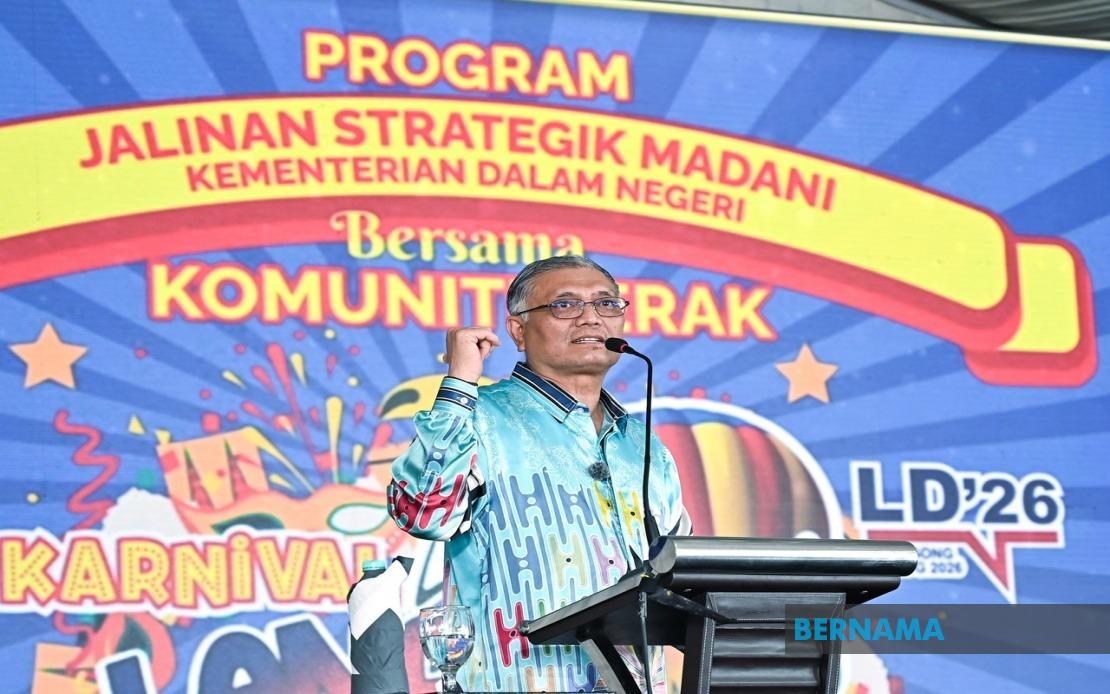
A strategic initiative by Malaysia's Home Ministry has brought government services directly to the doorstep of Lenggong residents, reflecting the administration's broader push toward decentralising access to essential public services. The MADANI Strategic Partnership Programme, which unfolded over two days at Dataran Lenggong, represents an evolving model of how federal agencies can strengthen bonds with communities beyond traditional bureaucratic channels. By positioning government representatives in public spaces alongside recreational activities and cultural engagement, the programme signals a shift toward more visible and approachable governance in the northern state of Perak.
Deputy Home Minister Datuk Seri Dr Shamsul Anuar Nasarah, who also serves as the Lenggong Member of Parliament, framed the initiative as a response to persistent demand for convenient access to government functions. Rather than requiring citizens to navigate centralised offices in distant towns, the programme stationed service counters operated by multiple Home Ministry agencies at a highly accessible community venue. This design choice reflects recognition that geographical distance and bureaucratic friction remain significant barriers to public engagement with government services, particularly in smaller towns and rural districts where populations may lack easy access to federal offices.
The Home Ministry deployed multiple agencies to the event, including the Royal Malaysia Police, the Immigration Department of Malaysia, and the National Anti-Drugs Agency. Each organisation maintained dedicated service counters where residents could update personal records, seek professional guidance, or submit formal complaints. The participatory response exceeded organisers' expectations, with substantial queues throughout the two-day event indicating genuine demand for face-to-face interaction with government personnel. This uptake suggests that convenience and visibility substantially influence public willingness to engage with administrative processes that many would otherwise defer indefinitely.
Beyond transactional services, the programme incorporated a deliberate community-building component designed to establish dialogue between security agencies and local residents on matters affecting neighbourhood safety and social cohesion. Dr Shamsul Anuar explicitly characterised the initiative as establishing a two-way channel for addressing crime, drug abuse, and grassroots security concerns. This framing positions the Home Ministry not merely as a service provider but as an institutional partner invested in community-identified priorities. For residents, such engagement mechanisms theoretically create pathways to escalate local security issues directly to authorised personnel rather than relying solely on conventional reporting structures.
The programme incorporated diverse activities reflecting different demographic interests within the community. Religious talks addressed spiritual and moral dimensions of community life, while colouring competitions and children's performances engaged younger populations and families. This multifaceted approach acknowledges that government legitimacy and public cooperation depend partly on visible institutional presence across multiple dimensions of community existence, not solely within security or administrative domains. By sponsoring cultural and recreational programming alongside bureaucratic functions, the Home Ministry positioned itself as invested in the broader wellbeing of Lenggong residents.
A substantial component involved recreational participation, with approximately 1,190 community members engaging in a Fun Ride and Fun Run organised jointly by the People's Volunteer Corps and the National Anti-Drugs Agency. These participants traversed villages surrounding Lenggong, traversing landscapes characteristic of the Lenggong Valley, a location designated as a UNESCO World Heritage Site. By structuring participation around physical activity and local environmental appreciation, the programme simultaneously promoted public health consciousness and highlighted the region's natural and cultural heritage. This bundling of government engagement with tourism promotion suggests recognition that community development initiatives can serve multiple policy objectives simultaneously.
The programme's geographic focus on Lenggong carries particular significance given the town's status as a heritage site with recognised tourism potential. By showcasing Lenggong's attractions whilst simultaneously delivering government services, the initiative subtly reinforced local pride in place and suggested federal government investment in regional development priorities. For Perak state, such visibility from federal agencies addressing security, immigration, and public health demonstrates concrete commitment to communities beyond the Klang Valley corridor, potentially addressing perceptions of governmental neglect in more peripheral regions.
The MADANI designation itself signals alignment with the broader Madani governance framework introduced by the current administration, emphasising participatory democracy and institutional reform. By brandishing this nomenclature, the Home Ministry connected a local engagement initiative to national governance philosophy, suggesting that community-facing service delivery represents not ad-hoc outreach but deliberate alignment with systemic administrative principles. This messaging reinforces the administration's narrative of institutional transformation toward greater public accessibility and responsiveness.
For Malaysian policy observers, the Lenggong programme illustrates emerging patterns in how federal agencies conceptualise community engagement beyond electoral cycles. Rather than positioning public interaction as episodic or transactional, the model suggests institutional commitment to sustained accessibility through periodic outreach events. If replicated across additional municipalities, such programming could incrementally reshape how citizens perceive government institutions, potentially reducing barriers associated with perceived distance or inaccessibility. However, programme sustainability depends on consistent resource allocation and institutional support beyond inaugural events.
The success metrics evident in visitor participation and service uptake suggest genuine community demand for such accessible engagement opportunities. For other government agencies and state administrations considering similar initiatives, the Lenggong experience provides practical validation that residents will actively utilise conveniently positioned government services when cultural and security barriers are minimised. This finding carries implications for broader digital government strategies, suggesting that digital-first approaches must be complemented by in-person accessibility, particularly in communities with variable digital infrastructure or lower digital literacy levels.
Looking forward, the programme raises questions about replicability and scalability within Malaysia's diverse geographic and demographic contexts. Urban centres face distinct challenges compared to rural regions, whilst communities with significant migrant or non-citizen populations present unique service demands particularly relevant for immigration agencies. Adapting the MADANI model to address location-specific needs whilst maintaining consistent service quality will require tailored implementation rather than standardised templates. The Lenggong initiative thus serves not merely as a successful event but as a prototype for investigating how decentralised government engagement can function effectively across Malaysia's varied communities.

