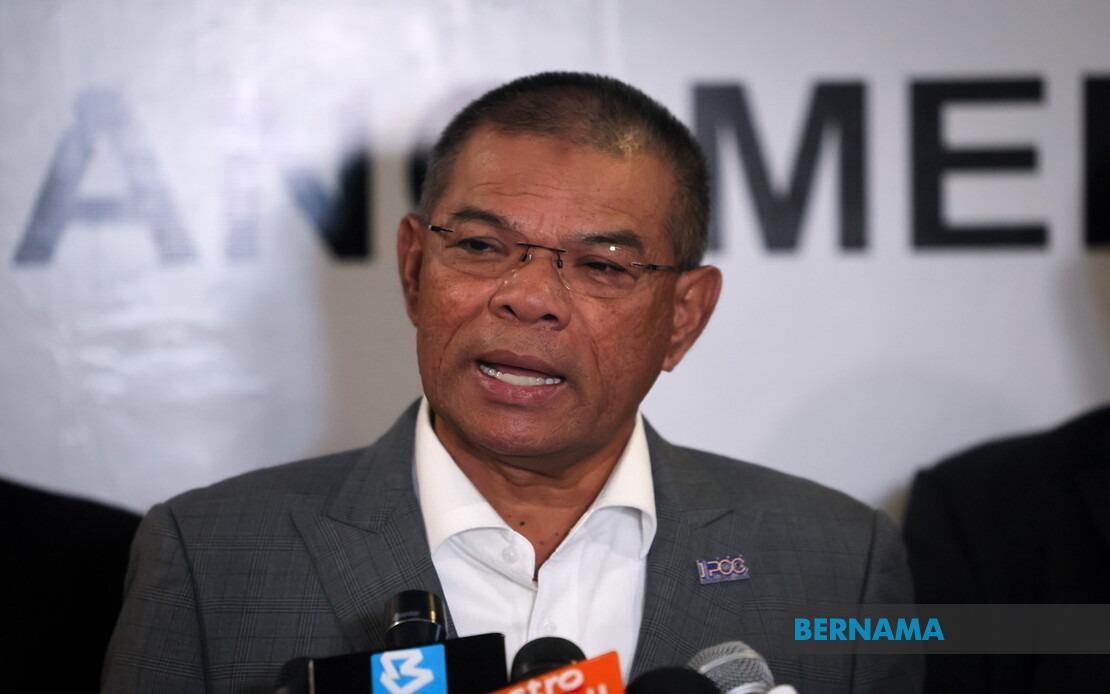
Home Minister Datuk Seri Saifuddin Nasution Ismail has issued a directive requiring the Malaysian Immigration Department to extend its full cooperation to investigating authorities probing the circumstances surrounding a fatal traffic incident that occurred in the early hours of August 19. The collision resulted in the deaths of three members of a family and left another person with severe injuries, prompting immediate action from the ministry's leadership to ensure transparency and accountability throughout the investigative process.
In a statement published on his Facebook account, Saifuddin Nasution emphasised that should the inquiry uncover evidence of negligence, misconduct, or violations of applicable legislation, decisive measures would be implemented against the implicated parties. This public declaration signals the government's commitment to holding accountable any officials found to have breached their duties, establishing a clear framework for potential administrative and legal consequences.
The incident unfolded on Jalan Sultan Ismail near Maju Junction at approximately 1 am when a black Immigration Department lorry, operationally designated as a Black Maria vehicle, collided with multiple road users. According to preliminary reports, the lorry was being deployed in its capacity to transport detainees and was en route to Chow Kit to conduct enforcement operations targeting undocumented migrants operating within Kuala Lumpur's jurisdiction.
The sequence of events that led to the collision involves contested traffic signals and vehicle movements. Investigators are examining whether the Immigration lorry proceeded through the Maju Junction intersection while its lane exhibited a red traffic light, despite having its emergency beacon and siren activated. Simultaneously, a Proton Saga motorist travelling in the perpendicular direction with a green light failed to avoid the lorry, resulting in a collision that set off a chain reaction of devastating consequences.
The impact of the initial collision generated sufficient force to propel the Immigration lorry across the roadway in an uncontrolled skid. During this uncontrolled trajectory, the vehicle struck four pedestrians who were lawfully traversing the intersection. An Inokom Matrix multi-purpose vehicle occupying the same vicinity also sustained damage from the lorry's erratic path. The collision sequence represents a complex traffic incident with multiple vehicles and pedestrians involved, complicating the investigative framework required to establish precise causation.
Investigators have initiated their inquiry under Section 41(1) of the Road Transport Act 1987, which addresses dangerous and inconsistent driving behaviour that results in death or bodily injury. This legislative provision allows authorities to examine whether vehicle operation contravened the standards expected of professional drivers operating government-designated emergency vehicles. The choice of charge carries significant implications for determining whether operational procedures, driver training, or enforcement practices require systemic review.
The tragedy underscores ongoing concerns regarding emergency vehicle operations in densely populated urban areas. Malaysia has witnessed periodic incidents involving authorised vehicles operated with emergency lights and sirens that have resulted in civilian casualties. This incident may prompt broader examination of whether current protocols governing activation of emergency signals, intersection traversal at red lights, and driver accountability adequately balance enforcement operations with public safety imperatives.
Saifuddin Nasution's expression of condolences extended to the affected family represents standard ministerial protocol, yet his simultaneous commitment to investigate departmental responsibility suggests recognition that government agencies carry heightened accountability when their operations result in civilian harm. The combination of sympathetic messaging alongside institutional accountability demonstrates the ministry's attempt to address both the human dimensions of the tragedy and the governance questions it raises.
The incident occurred within the context of immigration enforcement operations designed to address undocumented migration, a priority policy objective within Malaysia's broader immigration management strategy. However, the fatal collision demonstrates the potential human costs when enforcement activities proceed without appropriate safeguards. The investigation may consequently influence how immigration agencies balance operational urgency with public safety considerations during enforcement raids.
For Malaysian readers and Southeast Asian observers, this incident illustrates tensions inherent in maintaining public order whilst protecting civilian safety. Emergency vehicle privileges that permit red-light running and rapid transit rely upon driver competence and adherence to defensive driving principles. Should investigation reveal procedural lapses or inadequate training, institutional reforms may follow that affect how government agencies conduct time-sensitive operations throughout the region.
The investigation's eventual findings and any consequent administrative actions will likely establish precedents for how the public sector addresses accountability when its operations result in civilian casualties. With one injured party surviving the collision, witness testimony and potential civil litigation may provide additional information beyond the criminal investigation framework. The coming weeks will determine whether systemic deficiencies emerge or whether the incident represents an isolated occurrence resulting from specific operational failures.

