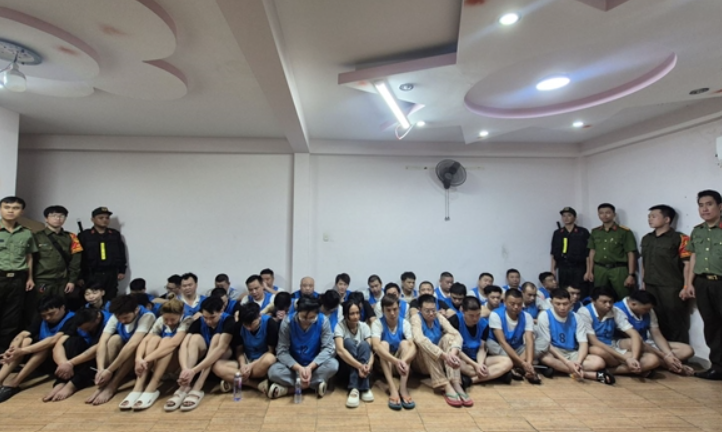
Coordinated enforcement action by Ho Chi Minh City's police force has successfully dismantled several organised networks engaged in smuggling foreign nationals into the city for the purpose of running sophisticated online fraud operations. The investigation, which involved 22 task forces working alongside specialist units and local precincts, has resulted in criminal charges against 26 suspects spread across eight separate cases, with authorities recovering hundreds of computers, laptops, and mobile phones that were being used in the illicit schemes.
The scale of the operation became apparent when authorities inspected 1,616 accommodation establishments throughout the city, focusing on premises known to house foreign nationals. During these inspections, police identified 160 facilities that were in breach of regulations governing the temporary residence registration of foreign workers and visitors. More significantly, investigators found evidence of 311 foreign nationals engaged in various violations ranging from immigration irregularities and unlawful employment to unauthorised residence and activities suggesting criminal intent. The systematic nature of these violations pointed to organised criminal activity rather than isolated cases of administrative non-compliance.
Investigations revealed a troubling pattern: foreign nationals, primarily Chinese citizens, were being deliberately smuggled into Vietnam with explicit instructions to establish the infrastructure for large-scale online fraud enterprises. Upon arrival, these individuals were tasked with scouting suitable locations, renting accommodation, installing network systems, and assembling the technological apparatus necessary to launch fraud operations targeting victims, predominantly other foreign nationals. The planning and co-ordination involved suggested involvement of criminal networks operating across borders, with clear chains of command and operational logistics.
A particularly significant discovery occurred on May 18, 2026, when authorities conducted an administrative inspection of an accommodation facility in Thuan Giao Ward. Police found 85 Chinese nationals residing at the premises without having completed the mandatory registration procedures. The scale of contraband discovered proved shocking: nearly 200 desktop computers, numerous laptops, and more than 550 mobile phones, alongside various other electronic equipment, were seized from the location. The quantity and specificity of the devices indicated preparation for immediate operational deployment rather than equipment for personal use.
As authorities expanded their investigation, a clearer picture of the criminal enterprise emerged. The operation relied on a sophisticated supply chain involving accommodation operators who deliberately circumvented legal requirements by accepting foreign residents without verifying identification documents or processing proper residency registration. In some cases, these operators knowingly facilitated the entry of individuals who had entered Vietnam unlawfully. This complicity by property owners and managers revealed how criminal networks exploit commercial operators' willingness to prioritise short-term profit over legal obligations and social responsibility.
Further operations yielded additional discoveries. On June 8, police discovered a cluster of 83 Chinese nationals gathered at a hotel in Binh Duong Ward where equipment and devices configured for online fraud operations had been assembled and prepared for deployment. Just over a week later, on June 17, authorities conducting residency checks at a residence in Hiep Binh Ward uncovered 42 foreign nationals again in violation of regulations. Electronic devices and data recovered from this location demonstrated clear involvement in online fraud activities. The repeated discovery of similar operational setups across different locations indicated the existence of multiple, coordinated cells operating within a larger organisational structure.
Police analysis determined that these groups operated according to a structured, compartmentalised model with clearly delineated responsibilities and roles. Individual members specialised in specific functions: some handled premises acquisition, others managed accommodation logistics, technical personnel oversaw network installation and systems administration, while leadership managed human resources and operational co-ordination. This hierarchical organisation is characteristic of transnational criminal enterprises capable of orchestrating complex, multi-stage operations spanning multiple jurisdictions.
Based on accumulated documentary and physical evidence, the Security Investigation Agency of Ho Chi Minh City Police initiated formal criminal proceedings across multiple cases. A total of 26 suspects, comprising both foreign nationals and Vietnamese accommodation operators and intermediaries, face prosecution. The primary charge levelled against defendants is "organising for others to remain illegally in Vietnam" under Article 348 of the Penal Code, a statute designed to prosecute human trafficking and immigration facilitation offences. Several suspects have been placed in pre-trial detention pending trial proceedings.
The investigation has highlighted the vulnerability of Vietnam's hospitality and accommodation sectors to exploitation by criminal networks. Police have emphasised that accommodation operators motivated purely by commercial gain have substantially lowered their screening standards and security protocols, thereby enabling criminal enterprises. Such conduct exposes operators themselves to serious criminal liability and substantial penalties under Vietnamese law. Authorities have issued formal guidance requiring accommodation establishments, hotels, guesthouses, and rental apartments to implement rigorous compliance measures including thorough identity document verification and completion of temporary residence registration procedures in all cases.
For regional security observers, this operation underscores the growing sophistication of transnational online fraud networks that leverage Southeast Asia's relatively liberal visa policies, developed digital infrastructure, and diverse foreign populations as operational bases. Vietnam's position as a hub for digital commerce and technology has inadvertently created opportunities for criminal elements seeking to exploit these same advantages. The incident also highlights vulnerabilities in immigration oversight and the exploitation of commercial landlords who, often through negligence or deliberate disregard, facilitate illegal residence arrangements that enable criminal activity.
Ho Chi Minh City Police have committed to sustaining elevated vigilance in screening and managing foreign nationals within the city, particularly those engaged in digital and technology-related activities. Authorities intend to develop earlier warning systems to identify potential crime risks involving foreign elements, with particular emphasis on high-technology crimes and transnational fraud schemes. Officials have also signalled that they will pursue stringent enforcement against any organisations or individuals attempting to exploit Vietnam's economic integration policies, investment incentives, or tourism sector to facilitate criminal enterprise, emphasising that such actions undermine the security environment essential for legitimate business and public welfare.
Recognising the evolving threat posed by online fraud networks operating under elaborate commercial disguises—including fraudulent "holiday ownership" schemes—HCM City Police have issued public warnings about increasingly sophisticated methodologies employed by these criminal enterprises. Authorities have appealed to individuals who have participated in or provided assistance to such criminal organisations to voluntarily surrender to investigators at the earliest opportunity, noting that cooperation with authorities may result in consideration for legal leniency in accordance with applicable provisions of Vietnamese law.