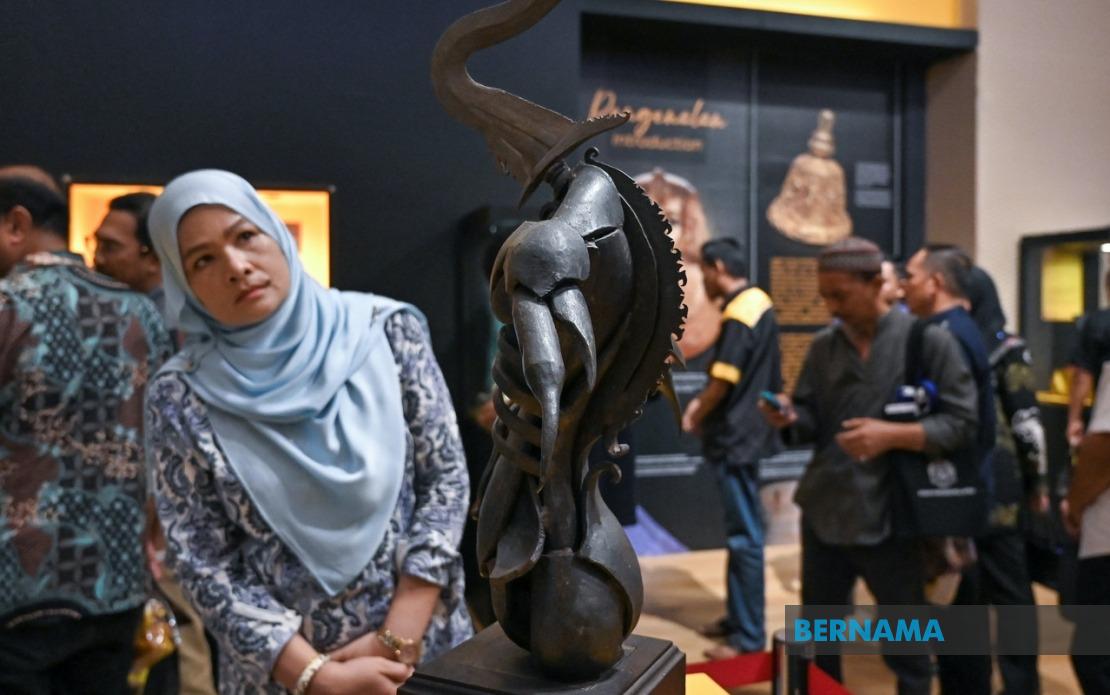
The Perak Museum in Taiping has opened a major exhibition dedicated to metal heritage, bringing together 140 artefacts of considerable historical, cultural and artistic importance. Titled 'Magic and Metal: Spirit, Power and Art,' the showcase will run from June 1 until December 31 at the institution, positioning itself as a comprehensive look at how metalwork functioned within traditional Malay society as a repository of spiritual meaning, symbolic authority and aesthetic achievement.
Museum director Mohd Nasrulamiazam Mohd Nasir highlighted the exhibition's three thematic pillars—spirit, power and art—which structure how visitors encounter the collection. Rather than presenting metal artefacts purely as historical objects, the curatorial approach emphasises how these pieces embodied mystical qualities, held ceremonial power and reflected artistic mastery. This interpretive framework reflects a growing recognition among Malaysian cultural institutions that heritage preservation must account for the worldviews and belief systems of the communities that created these objects, moving beyond Western museum conventions that treat artefacts as static aesthetic or functional items.
The exhibition's significance extends to its collaborative assembly. For the first time, the Perak Museum has drawn together its own early metal-based collections with loans from private collectors and cultural organisations. These partnerships include sculpture collections contributed by Raja Syahriman Raja Aziddin, silver ornaments provided through Yayasan Al-Amin, and a substantial Malay weaponry collection belonging to Nor Azahar Ibrahim. This pooling of resources demonstrates how regional institutions and private collectors are increasingly working together to mount exhibitions of sufficient scale and diversity to reflect the full breadth of Malaysian heritage.
Among the most notable pieces on display is a 19th-century Malay traditional weapon featuring a distinctive snail-shell hilt, which once belonged to Sultan Abdullah Muhammad Shah II, the 26th Sultan of Perak. This object carries particular weight given its royal provenance and the craftsmanship evident in its specialised hilt design. The exhibition also features an 18th-century suit of Bugis warrior armour, representing the martial heritage of the seafaring Bugis people who played a significant role in regional history. A spoon and fork set that belonged to Raja Laut Ibni Sultan Muhammad Shah, second son of the third Sultan of Selangor, illustrates how metalwork extended to domestic luxury items within aristocratic households.
The Department of Museums Malaysia's director-general, Datuk Kamarul Baharin A. Kasim, officiated the opening, signalling national-level institutional support for the project. This backing reflects a broader governmental commitment to strengthen museums as centres of knowledge production and cultural stewardship. Within Malaysia's context, where heritage preservation competes for public attention and funding with rapid modernisation, securing high-level endorsement helps elevate exhibitions beyond routine displays to nationally significant cultural events.
The museum is targeting 100,000 visitors throughout the exhibition's seven-month run, with nearly 20,000 already recorded in the early weeks following the opening. These visitor numbers suggest strong community interest in heritage programming, particularly when exhibitions offer fresh interpretive angles on familiar cultural traditions. The attendance trajectory also indicates healthy regional tourism engagement, as Taiping and the Perak Museum draw visitors from across Malaysia and internationally.
From a broader Southeast Asian perspective, this exhibition exemplifies how national museums are reconsidering their roles in an era of cultural globalisation. Rather than competing with international institutions by pursuing blockbuster exhibitions tied to Western art historical canons, regional museums increasingly invest in depth studies of local heritage. This shift positions museums as anchors of identity and knowledge within their communities while contributing to pan-regional conversations about how Southeast Asian societies preserve and interpret their material cultures.
The focus on metal as a medium carries particular resonance for Malaysia and the wider region. Metalworking represents one of Southeast Asia's most ancient and sophisticated craft traditions, with archaeological evidence suggesting metallurgical expertise spanning millennia. By structuring the exhibition around concepts of spirit and power rather than technical metallurgy alone, the Perak Museum invites visitors to understand how communities invested these functional objects with layers of meaning and purpose extending far beyond the utilitarian.
The exhibition's emphasis on symbolic and mystical dimensions of metalwork also speaks to ongoing efforts by Malaysian institutions to present indigenous knowledge systems and aesthetic values as intellectually coherent and culturally significant, rather than as historical curiosities or survivals. This representational shift matters because it shapes how younger generations, particularly in urban areas, understand and value their heritage. When museums present traditional metalwork as repositories of sophisticated philosophical and spiritual concepts rather than merely as antiquated crafts, they make that heritage intelligible and meaningful within contemporary contexts.
The Department of Museums Malaysia's broader agenda, as articulated through this exhibition, frames museums as active participants in heritage preservation and public education rather than passive repositories. The collaborative approach—partnering with private collectors, cultural foundations and regional patrons—models a more distributed, network-based approach to cultural stewardship that may be more sustainable than relying solely on government funding in an era of competing budgetary priorities. For Malaysian visitors, the exhibition offers a rare opportunity to encounter significant pieces of national heritage in one location, many of which may not be regularly accessible to the public.
Looking forward, the exhibition's success may influence how other regional museums approach heritage programming. If the Perak Museum achieves its visitor targets and generates positive cultural impact, the model of thematic exhibitions drawing on collaborative collections could become more widely adopted across Malaysian institutions. This would enhance the visibility and accessibility of heritage collections while creating networks of expertise and shared curatorial knowledge among institutions that might otherwise operate in relative isolation. For Malaysian heritage enthusiasts and those interested in Southeast Asian material culture, the exhibition represents a significant moment in how the region's institutions are choosing to interpret and present their historical treasures.

