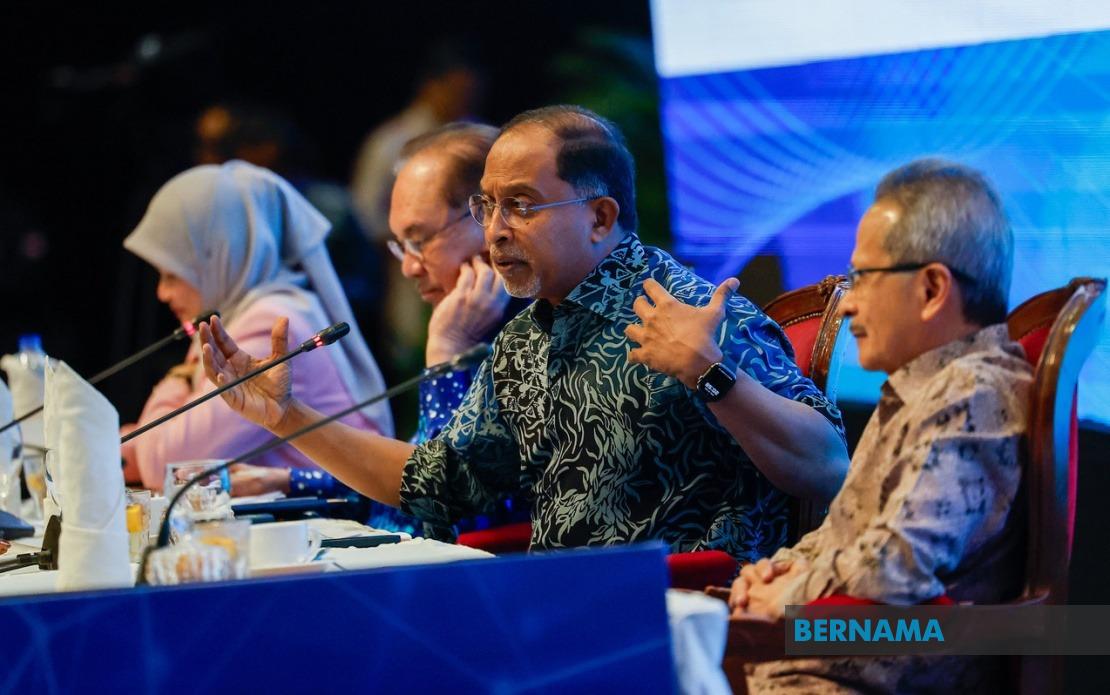
Malaysia's pathway toward a more dynamic and progressive higher education system hinges on modernizing the legal architecture that governs universities and academic institutions, Higher Education Minister Datuk Seri Dr Zambry Abd Kadir argued at a high-level policy forum in Kuala Lumpur on August 26. The remarks, delivered during the MADANI Malaysian Scholars Forum Series 13 at the University of Malaya, underscore growing recognition within government that outdated regulations risk constraining the sector's capacity to compete globally and respond to contemporary educational needs.
The Universities and University Colleges Act 1971 (AUKU)—a half-century-old statute that has defined the boundaries of university governance and student conduct—has become a focal point for reform discussions. Zambry acknowledged that the legislation, while foundational, contains structural limitations that impede the modernization agenda. The minister highlighted three critical areas demanding urgent attention: safeguarding genuine academic freedom, protecting freedom of expression within campus communities, and empowering students through expanded agency in institutional decision-making. These issues resonate strongly across Southeast Asia, where universities in countries like Thailand and Vietnam have similarly grappled with balancing institutional autonomy against state oversight.
The timing of this reform push reflects mounting pressure from multiple constituencies within Malaysia's academic sector. Scholars, student activists, and university administrators have increasingly articulated frustrations with provisions they view as overly restrictive, particularly regarding political participation and public commentary by academics. By positioning AUKU review as central to maintaining relevance, the government signals responsiveness to these longstanding concerns while attempting to reframe the debate around modernization rather than liberalization—a distinction that carries political weight in Malaysia's conservative policy environment.
Zambry revealed that the Ministry of Higher Education (KPT) is advancing an ambitious parallel initiative: drafting a consolidated One Higher Education Act designed to subsume existing fragmented legislation under a unified regulatory umbrella. This approach mirrors international best practice, where countries have periodically consolidated education statutes to reduce bureaucratic friction and create coherent policy frameworks. The envisaged act would theoretically eliminate contradictions between overlapping laws while enabling more nimble policy implementation as the sector evolves.
To ensure the reform process captures diverse stakeholder perspectives, an Independent Committee has been established to solicit and evaluate memorandums and submissions from academics, university leaders, and student representatives. This consultative mechanism represents a departure from previous policy-making approaches in Malaysia's higher education space, where top-down implementation has historically dominated. The committee's work will likely prove contentious, as different constituencies hold fundamentally divergent views on where boundaries should lie between institutional autonomy and regulatory oversight, particularly regarding student activism and academic speech on sensitive political topics.
Prime Minister Datuk Seri Anwar Ibrahim's presence at the forum—where he served as moderator rather than speaker—underscored the administration's investment in this portfolio. His participation signals that higher education reform ranks among the government's priority agendas, a message reinforced by the forum's institutional venue and the caliber of other participants. Education Minister Datuk Seri Fadhlina Sidek and Academy of Sciences Malaysia president Tengku Datuk Mohd Azzman Shariffadeen contributed perspectives from complementary vantage points, creating a forum for cross-sector dialogue.
Fadhlina complemented the higher education discussion by articulating the government's vision for education across the broader system. The Education Ministry, she explained, is committed to democratizing access through what she termed a "humane education" approach—prioritizing equitable opportunity over standardized metrics. This philosophy manifests concretely through initiatives targeting historically marginalized populations: Schools in Hospital programs serving chronically ill students, educational facilities within rehabilitation centers, and specialized K9 and K11 models designed for Orang Asli communities. Such initiatives acknowledge that educational access cannot be reduced to bricks-and-mortar provision; it must accommodate the varied circumstances and vulnerabilities students bring to schooling.
Expanded pre-school access stands as another government priority, with Fadhlina emphasizing universal free provision as an investment in early childhood development and household economic relief. This reflects international research consensus on early learning's outsized returns and signals a wholistic approach to education equity. For Malaysian families, particularly lower-income households, removing financial barriers to pre-school attendance translates directly into improved capacity to participate in the formal workforce—an economic multiplier effect that extends beyond individual learners.
Fadhlina's remarks further articulated a philosophical reorientation away from exam-centric education paradigms. By cautioning against reducing students to "numbers or grades," she acknowledged the psychological and social dimensions of schooling that standardized testing regimes frequently eclipse. Her emphasis on developing "balanced, visionary individuals" with "mental resilience and strong moral values" signals broader recognition that national competitiveness depends less on rote memorization than on cultivating adaptive, ethically grounded thinkers capable of navigating complex challenges. This framing resonates with ongoing international discussions around 21st-century skills and the limitations of purely academic achievement measures.
The recognition that students arrive at school "with intellect, emotions, ambitions, and some with anxieties or shortcomings" that institutions must address reframes teaching as fundamentally relational rather than transactional. This humanistic lens has gained traction in education policy circles globally, particularly as mental health challenges among young people have become more visible. For Malaysia, where student mental health concerns have increasingly surfaced in public discourse, Fadhlina's statement acknowledges institutional responsibility for holistic wellbeing alongside academic instruction.
The convergence of these two reform initiatives—AUKU modernization at the tertiary level and systemic reorientation at pre-tertiary stages—suggests a coordinated attempt to reshape Malaysia's education ecosystem around principles of access, freedom, and human development. However, significant implementation challenges loom. AUKU reform, particularly, will require navigating competing interests: university administrations seeking flexibility, student activists demanding expanded rights, government constituencies anxious about campus activism, and faculty members concerned about academic autonomy. The Independent Committee's work will indicate whether genuine consensus-building can occur or whether fundamental tensions will prove irresolvable within existing political constraints.
For Malaysia's higher education standing regionally and globally, this modernization moment carries high stakes. Universities across Southeast Asia increasingly compete for talent, research partnerships, and international rankings; restrictive regulatory frameworks can disadvantage institutions in that competition. Yet reform must also address legitimate governance concerns—balancing freedom with accountability, autonomy with public stewardship. The coming months will reveal whether the government's reform rhetoric translates into substantive legal change or remains aspirational repositioning. The sector's future relevance may well depend on that distinction.

