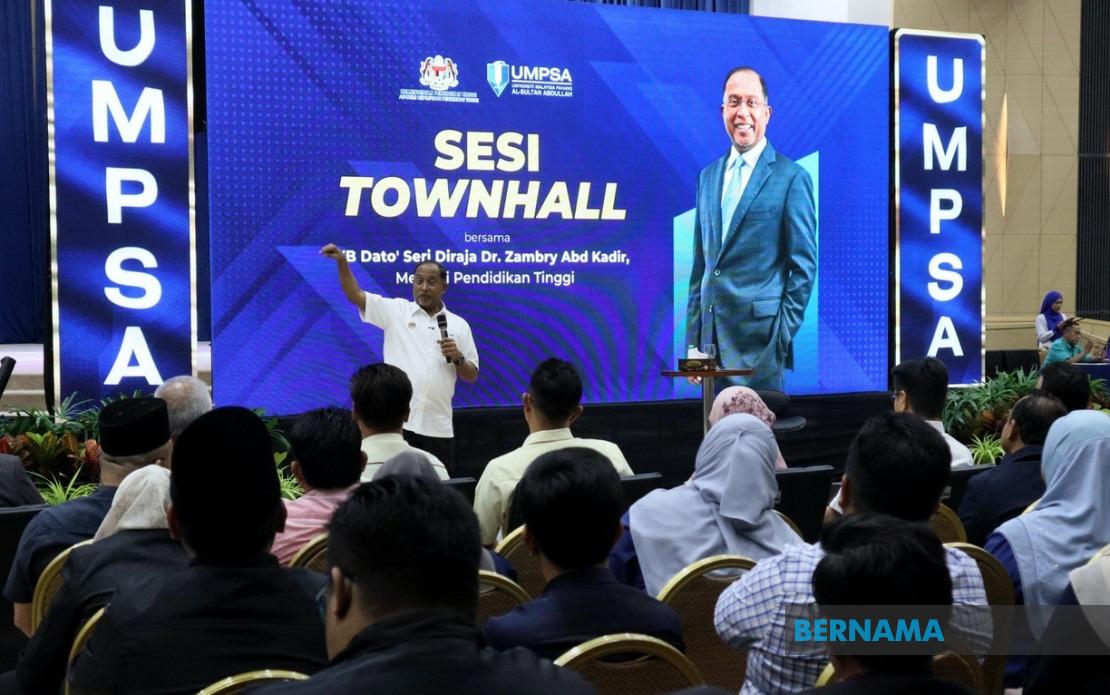
The Ministry of Higher Education (KPT) is proceeding with implementation steps following Prime Minister Datuk Seri Anwar Ibrahim's recent directive to reassess how public universities handle disciplinary matters involving students. Minister Datuk Seri Dr. Zambry Abd Kadir confirmed the ministry's commitment to the initiative during remarks at Universiti Malaysia Pahang Al-Sultan Abdullah (UMPSA) this week, emphasising that the approach reflects both the Prime Minister's policy vision and legislative considerations around student rights and institutional autonomy.
The directive represents a significant shift in how Malaysia's higher education sector manages student conduct, particularly in relation to free speech and political expression. Dr. Zambry outlined that the measure encompasses multiple facets of university administration, with particular focus on processes administered through Student Affairs Departments. The framework considers the delicate balance between maintaining institutional order and protecting student freedoms—a tension that has animated debate about university governance throughout Southeast Asia.
Coordination among Malaysia's public universities has accelerated, with all vice-chancellors convening alongside the Higher Education Ministry's director-general to formulate a unified response. Dr. Zambry indicated that a formal statement outlining the approach would be released following these consultations, suggesting the ministry intends to provide clear guidance to institutional leaders about implementation expectations and timelines. This centralised coordination reflects recognition that inconsistent application across campuses could undermine the policy's intended effect.
The Prime Minister's intervention follows his recent announcement regarding repeal of the Universities and University Colleges Act (AUKU) 1971, legislation that has long restricted student political activism and expression. At the Malaysia Madani Intellectual Forum Series 13, Anwar specifically addressed cases where students faced sanctions for criticising him personally or expressing political disagreement with government policies. His instruction directs that such students should be absolved of related disciplinary findings, operating as an interim measure while formal legislative amendments proceed through parliamentary channels.
Implementing the directive presents logistical and legal complexities. Dr. Zambry acknowledged that the approach must carefully distinguish between university-level disciplinary matters, which fall within institutional purview, and cases involving violations of criminal law overseen by the Royal Malaysia Police (PDRM). This separation proves crucial: the Prime Minister's absolution applies specifically to university disciplinary proceedings, not to criminal charges that might arise from the same underlying conduct. The distinction protects police independence while nonetheless extending clemency within the academic disciplinary sphere.
The question of whether private higher educational institutions should implement parallel changes introduces additional complications. Malaysia's private university sector operates under separate legal framework—specifically the Private Higher Educational Institutions Act 1996 (Act 555)—meaning they possess distinct regulatory autonomy from public universities. Dr. Zambry noted that private institutions require individual examination regarding how they might align with the policy direction, while expressing hope that state-owned and state-related private institutions would voluntarily adopt the same disciplinary review standards. This approach reflects pragmatic recognition that private institutions cannot be mandated through the same mechanisms as public universities, yet the ministry seeks consistency across the sector.
The timing of this initiative connects directly to broader Malaysia Madani reform agenda, the government's overarching policy framework emphasising democratic renewal and institutional reform. Student disciplinary matters have emerged as emblematic of concerns about excessive state control and restrictions on fundamental freedoms. By addressing this issue directly, the Prime Minister signals commitment to translating campaign rhetoric about democratic deepening into tangible policy changes affecting millions of tertiary students.
The initiative carries particular significance for Southeast Asian higher education more broadly, where several countries maintain legislation restricting student political participation and expression. Malaysia's recalibration, if successfully implemented, could influence debates in neighbouring jurisdictions about balancing institutional discipline with academic freedom. Regional observers will scrutinise both how effectively Malaysian universities execute the directive and whether the legislative reforms to AUKU ultimately reshape the legal terrain for student activism.
Dr. Zambry's remarks at the Kembara KARISMA Pemimpin Muda MADANI programme—an event convening 500 young lecturers and administrators under age 40 from higher education institutions across Pahang, Terengganu and Kelantan—indicated that generational renewal within university leadership ranks will contribute to implementing these changes. These younger administrators and faculty may prove more disposed toward the policy's democratic principles than entrenched institutional structures. Engaging this cohort directly supports the ministry's change management strategy.
The formal statement promised by the ministry will prove critical in determining implementation success. Clear communication addressing how institutions should retroactively review existing disciplinary cases, what criteria should guide assessments of whether students merit absolution, and what timeline universities face will shape whether the directive translates into substantive change or remains aspirational. Without detailed implementation guidelines, inconsistencies across campuses risk undermining the policy's legitimacy and effectiveness.
Looking forward, the student disciplinary review should be understood as preliminary to larger legal and regulatory reforms. The promised AUKU amendments will establish permanent structural change, whereas the current initiative represents interim relief pending those legislative processes. Malaysian universities thus find themselves in a transitional period where old legal frameworks nominally remain in force but are being actively constrained by executive policy direction. This interim architecture creates practical tensions administrators must navigate while awaiting clarification through formal legal change.

