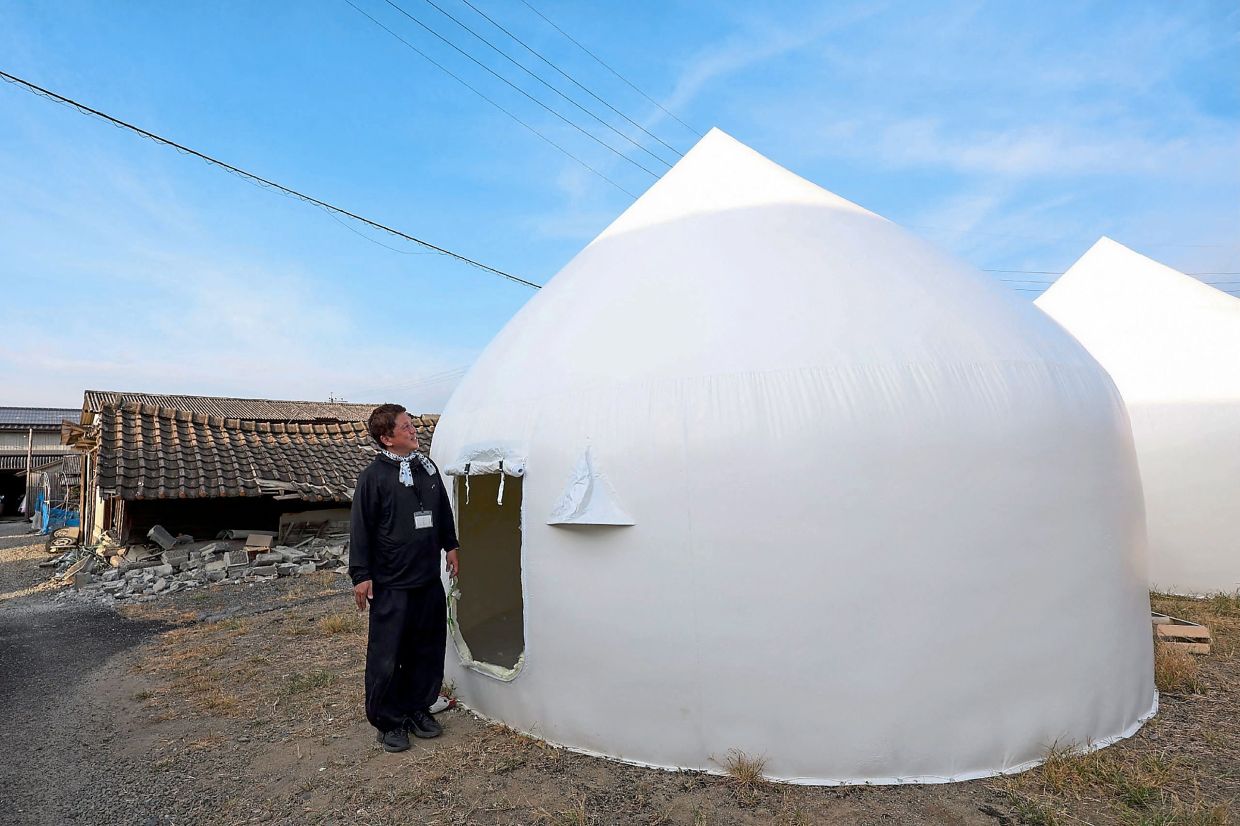
The death toll from last week's devastating earthquake in Kumamoto Prefecture has climbed to 36, with authorities now grappling with a secondary threat as the region swelters in record heat. An elderly woman in her 70s was discovered dead in a parked car on Thursday, having succumbed to heat stroke while seeking refuge from the powerful 7.1 magnitude quake that struck Kyushu's southwestern prefecture on Tuesday. The discovery underscores a grim reality that officials and public health experts had anticipated: as thousands of evacuees remain displaced and shelters overflow, the combination of earthquake damage and unseasonable heat is creating a compounding public health crisis.
The circumstances of the woman's death highlight the precarious situation many survivors face. According to Japan's public broadcaster NHK, the woman was found in a vehicle with no fuel, meaning the air conditioning could not run to provide relief from the oppressive heat. Kumamoto Governor Takashi Kimura responded with visible concern, characterizing the death as heartbreaking and urging evacuees sheltering in vehicles to maintain fuel supplies for cooling or consider relocating to air-conditioned evacuation centres. This plea represents an acknowledgment that the prefecture's disaster response infrastructure, already strained by the immediate aftermath of the earthquake, faces mounting pressure as environmental factors threaten additional lives.
Temperature readings across the region have reached dangerous levels, with the Japan Meteorological Agency recording 36.6 degrees Celsius in Kumamoto city on Saturday and forecasting further increases. These extreme heat conditions are particularly perilous for an aging Japanese population, where age-related vulnerabilities compound the stress of displacement and trauma. The prefecture itself remains in a deteriorated state, with nearly 47,000 homes still lacking access to fresh water and widespread fuel shortages persisting across the region. These infrastructure deficits mean many evacuees cannot access basic necessities while simultaneously facing physical threats from the heat.
Authorities have begun implementing emergency public health measures to prevent similar tragedies. Kumamoto officials are preparing to distribute leaflets to vehicle-sheltering evacuees, providing guidance on maintaining adequate hydration, seeking cooler environments, and engaging in regular movement to reduce the risk of thrombosis from prolonged immobility. The emphasis on exercise reflects emerging evidence that earthquake survivors confined to vehicles face not only thermal stress but also increased risk of blood clots during extended periods of inactivity. This multifaceted approach acknowledges that survival in the immediate post-disaster period involves navigating several interconnected health hazards simultaneously.
The broader shelter situation remains dire, with more than 9,000 people still housed in crowded emergency facilities including converted community centres, school gymnasiums, and classroom spaces. Many of these makeshift shelters lack adequate air-conditioning systems, leaving vulnerable populations exposed to the same heat-related risks that claimed the elderly woman's life. Beyond the crowded conditions, public health experts have long criticized Japan's emergency shelter protocols, arguing that inadequate sanitation, insufficient privacy, and psychosocial stress combine to create environments where illness and complications flourish. The current crisis is validating these longstanding concerns as disaster management systems struggle to adapt to simultaneous challenges.
At the highest levels of government, acknowledgment of these cascading problems has prompted resource mobilization. Prime Minister Sanae Takaichi convened a government task force on Saturday to address shelter conditions, announcing deployment of water, food supplies, portable sanitation facilities, air conditioning units, and privacy partitions to evacuation centres. This intervention suggests recognition that immediate life-saving measures must address not merely rescue operations but the conditions under which evacuees survive the days and weeks following catastrophe. The investment in comfort infrastructure—particularly air conditioning and privacy screens—indicates understanding that environmental dignity contributes meaningfully to survival rates and recovery prospects.
Search and rescue operations have themselves been complicated by the same heat conditions threatening evacuees. On Saturday, authorities concluded a massive multi-day operation at Aeon Mall in Kashima, one of the earthquake's most severely damaged sites, following an explosion believed to have been triggered by a gas leak. The rescue effort successfully extracted five survivors but also recovered seven bodies from the collapsed structure, which suffered catastrophic damage when its walls and floors gave way. These extraction numbers, alongside ongoing search operations involving thousands of Self Defence Force personnel, police, rescue workers, and detection dogs, reflect the scale of structural devastation but also the deteriorating conditions under which rescue operations must proceed as heat rises.
The physical destruction across Kumamoto Prefecture remains staggering. Official assessments document 105 people injured by the earthquake, with an additional two deaths under investigation to determine causality. Over 180 homes have been completely destroyed, while more than 3,800 buildings sustained varying degrees of damage. However, these statistics may not capture the full scale of the disaster, as the total number of missing persons across the prefecture remains officially undetermined. This informational gap itself creates anxiety both for affected families and for emergency management authorities attempting to allocate resources based on incomplete damage assessments.
For Malaysian and broader Southeast Asian readers, the Kumamoto crisis carries instructive lessons regarding disaster preparedness and climate vulnerability. Japan, despite possessing sophisticated earthquake engineering and extensive emergency management experience, remains vulnerable to compound crises where natural disasters intersect with environmental stressors. The heat-related deaths emerging in Kumamoto's aftermath suggest that climate change may be fundamentally altering the post-disaster risk landscape across the Asia-Pacific region. Nations throughout Southeast Asia, where heat and humidity already approach dangerous levels during monsoon seasons, face potentially amplified risks if earthquakes, typhoons, or other disasters occur during peak temperature periods.
The situation also highlights infrastructure fragility in disaster scenarios. Water shortages affecting 47,000 homes demonstrate how earthquake damage to distribution networks creates cascading vulnerabilities beyond structural collapse. Fuel shortages preventing vehicle operation for cooling further illustrate how interconnected supply chains, once disrupted, create compound threats to survival. For Malaysia's own disaster preparedness frameworks, particularly given the country's vulnerability to flooding and potential seismic activity in certain regions, the Kumamoto experience underscores the necessity of building redundancy into essential services and considering environmental factors when planning evacuation shelter capacity and specifications.
Longer-term implications extend beyond immediate humanitarian concerns. The death toll continuing to climb days after the initial quake—now including heat-related fatalities—suggests that post-disaster mortality curves may be shifting in regions experiencing climate change. Recovery timelines may extend as surviving populations face health complications from heat exposure during shelter phases. Insurance, public health, and urban planning systems across the region may require recalibration to account for these emerging patterns.

