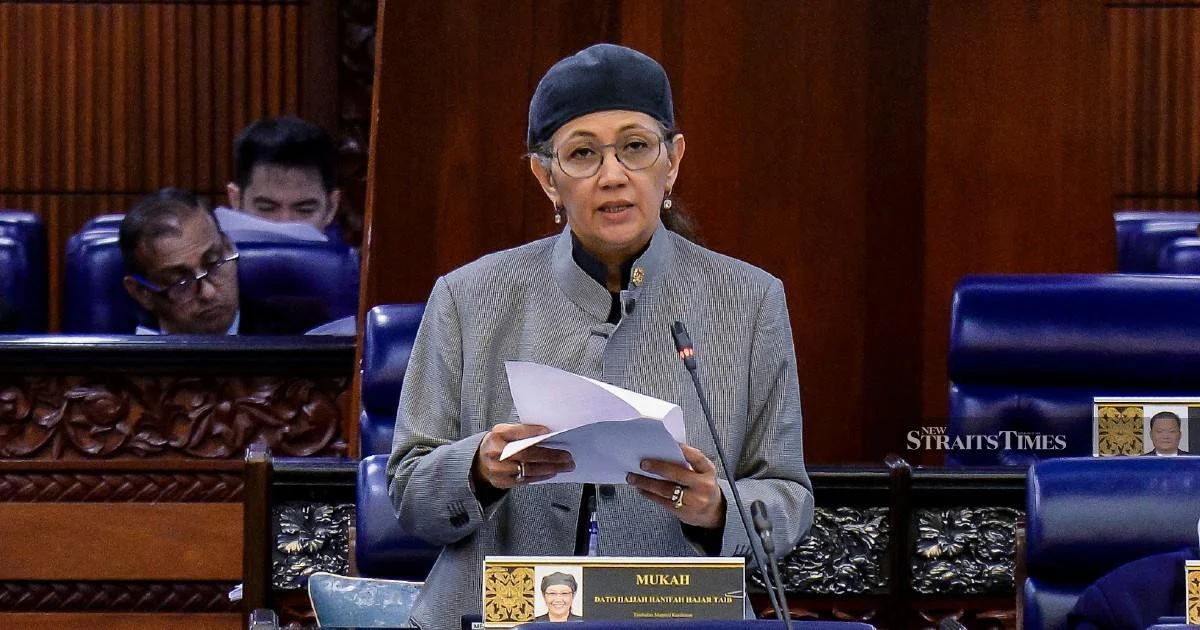
The Health Ministry has moved to establish a specialised investigative panel tasked with examining claims of improper conduct by ministry medical personnel in relation to disturbances at Taiping Prison during January of last year. This formal institutional response signals official recognition that questions have been raised about the role and actions of health sector employees connected to the incident, prompting a structured review mechanism to assess whether professional standards were breached.
The formation of such a committee represents standard governance practice when allegations of misconduct arise within Malaysia's public health system. By designating a dedicated probe, the ministry acknowledges the seriousness of the claims whilst establishing a formal investigative architecture separate from day-to-day operational management. This separation is intended to ensure impartial assessment of evidence and findings.
Taiping Prison, located in Perak state, has historically been a significant facility within Malaysia's correctional infrastructure. The January incident drew considerable public and official attention, with various stakeholders expressing concern about the circumstances surrounding the disturbance and the response mechanisms deployed. The involvement of health ministry personnel in prison operations, whether as medical staff, emergency responders, or consultants, places them within a complex institutional landscape where security, medical ethics, and custodial procedures intersect.
Allegations of misconduct in the correctional setting carry particular weight given the vulnerable position of incarcerated individuals and the duty of care owed by medical professionals. Health personnel working within or responding to incidents at detention facilities operate under heightened scrutiny regarding their adherence to medical standards and ethical obligations, particularly when circumstances involve physical incidents, use of force, or emergency medical intervention.
For Malaysian readers, this development underscores ongoing debates about accountability mechanisms within public institutions and the intersection of healthcare delivery with law enforcement and correctional functions. The establishment of investigative committees reflects broader governance trends emphasising transparency and professional oversight, though their effectiveness depends substantially on their operational independence, resourcing, and commitment to thorough fact-finding.
The timing of this formal committee creation—months after the January incident—suggests a deliberate institutional process. Whether this reflects the time required for initial complaints to be processed, escalated through management channels, and finally deemed serious enough to warrant formal committee investigation remains unclear from the available information. In Malaysian administrative contexts, such timelines are not unusual, though they may also raise questions about procedural efficiency.
The Health Ministry's role in this matter extends beyond simple personnel discipline. Medical practitioners within or affiliated with correctional facilities operate at the intersection of public health and state security apparatus. Their professional judgements—regarding inmate health assessments, emergency medical response, or clinical evaluations following incidents—carry consequential implications for the individuals affected and the credibility of Malaysia's correctional health systems.
This investigative initiative also reflects Southeast Asian patterns concerning prison health services generally. Across the region, medical care within correctional settings frequently faces criticism regarding adequacy, cultural sensitivity, and independence from security hierarchies. Malaysia's decision to formally investigate such allegations positions the country within broader regional conversations about detention facility standards and the protection of incarcerated persons' fundamental rights.
The committee's scope, membership, mandated reporting timelines, and investigative powers—details not yet publicly elaborated—will substantially determine its credibility and effectiveness. Critical observers will likely scrutinise whether the panel includes independent medical professionals not operationally connected to the ministry, whether it has access to relevant prison security records and inmate testimonies, and whether its findings will be publicly disclosed or restricted to internal ministry channels.
For Malaysia's healthcare system, this investigation carries broader institutional implications. Public trust in the medical profession depends partly on visible willingness to address professional misconduct allegations transparently. Cases involving healthcare workers and correctional facilities necessarily attract heightened public interest given the vulnerability of detainees and the power asymmetries inherent in such settings.
The investigation also occurs within Malaysia's evolving human rights and accountability landscape. Legislative and institutional frameworks governing detention facility operations, prisoner welfare, and professional responsibility in the public sector have received increasing parliamentary and civil society attention. This committee formation sits within those broader policy conversations about institutional reform and standards enforcement.
Completion and publication of the committee's findings will prove significant not only for the individuals named in allegations but also for the ministry's credibility in managing internal accountability. The investigation's transparency, rigour, and adherence to professional standards in health service delivery will communicate important signals about institutional commitment to ethical practice and accountability within Malaysia's healthcare system.

