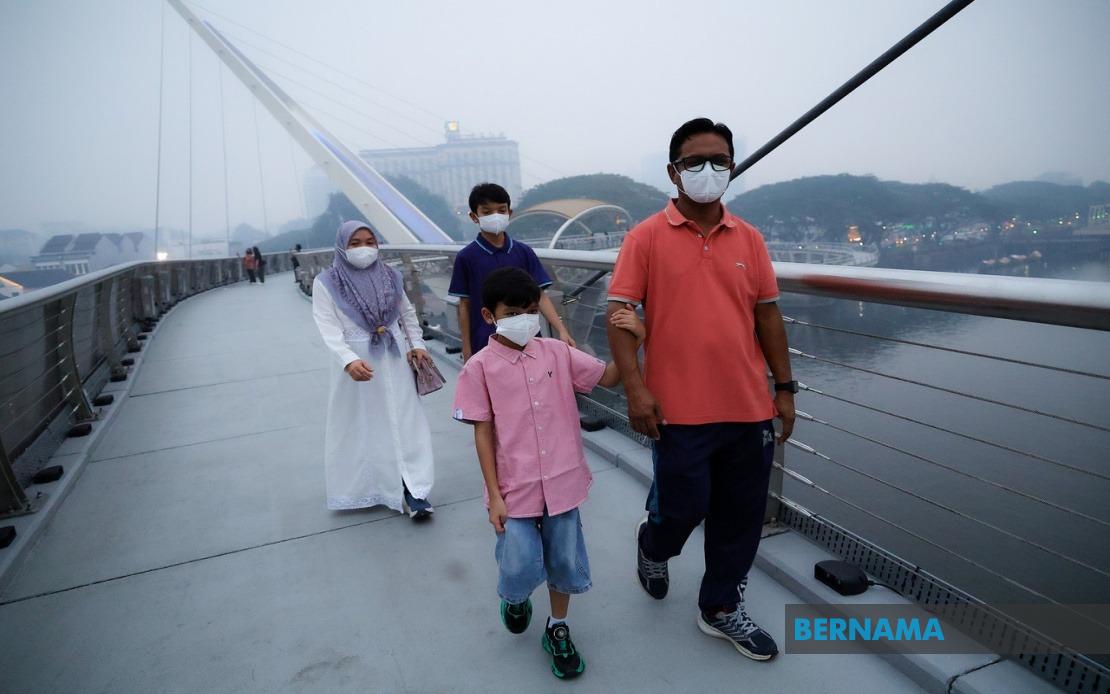
As haze conditions continue to affect Malaysia, health specialists are emphasising the critical importance of vigilance and preventive action among the general public. Checking daily Air Pollutant Index readings from the Department of Environment has become essential, particularly before undertaking any outdoor activities, according to medical professionals monitoring the current air quality crisis. This proactive approach stands in sharp contrast to the typical Malaysian response of waiting until air pollution reaches severe levels before taking defensive measures.
Dr Anas Ahmad Jamhari, a lecturer at Universiti Sultan Zainal Abidin's Faculty of Health Sciences, stresses that the threshold of 100 API marks a critical juncture for behaviour modification. Beyond this point, residents should be substantially restricting their time in outdoor environments. For those whose employment or essential responsibilities demand outdoor exposure, the correct application of an N95 mask becomes non-negotiable. However, Dr Anas emphasises that effectiveness depends entirely on proper technique—the mask must fit snugly against the face, creating an airtight seal that actually filters the dangerous microscopic PM2.5 particles that constitute the primary health threat during haze episodes.
The distinction between correct and incorrect mask usage cannot be overstated. A loosely worn mask, one that is frequently adjusted or removed, or equipment that has become damp or damaged provides minimal protection and may create a false sense of security. Facial hair fundamentally compromises seal integrity, rendering even premium masks substantially less effective. For children, the challenge intensifies because commercially available masks rarely achieve proper fit across different age groups and facial sizes, leaving young people particularly vulnerable despite wearing protective equipment. This reality means that parents and guardians must make difficult decisions about whether their children should avoid outdoor activities altogether during severe haze.
Beyond mask usage, Dr Anas advocates for eliminating strenuous outdoor exercise during haze episodes. Running, cycling, and competitive sports dramatically increase breathing rates, causing individuals to inhale substantially larger volumes of contaminated air and allowing fine particles to penetrate deeper into the respiratory tract. His observations indicate that many Malaysians continue their normal recreational routines even when the API clearly signals unhealthy conditions, thereby exposing themselves to accumulating acute and chronic health consequences. This behavioural disconnect between knowledge and action represents a significant public health challenge requiring sustained educational intervention.
Indoor air management proves equally important during haze events. Keeping windows and doors sealed reduces infiltration of external pollutants, while simultaneously eliminating domestic sources of contamination becomes essential. Cigarette and vape smoke, incense and candle burning, and cooking activities that generate substantial smoke all compound indoor pollution levels during haze episodes. Vehicle users should ensure their air-conditioning systems recirculate interior air rather than drawing contaminated outside air into the cabin—a simple but frequently overlooked adjustment that meaningfully reduces exposure during commutes.
From a toxicological standpoint, haze represents far more than simple smoke reducing visibility. Dr Anas explains that haze constitutes a complex mixture of particles and chemical compounds. The particular danger lies in PM2.5 particles, whose microscopic size permits deep penetration into the alveoli—the lung's gas exchange regions. Once deposited in these sensitive areas, these particles initiate oxidative stress reactions that trigger inflammation, damage cellular structures, and impair the respiratory system's normal functioning. This mechanism explains why haze exposure can trigger both immediate symptoms and longer-term respiratory compromise even in previously healthy individuals.
Complicating the situation further, public health medicine specialist Datuk Dr Zainal Ariffin Omar notes that temperature and humidity must factor into haze risk assessment alongside API readings. Malaysia's tropical climate means that haze episodes frequently coincide with periods of intense heat. This combination creates a compounding health threat: the haze damages respiratory capacity while high temperatures and humidity increase dehydration risk and elevate heat-related illness danger. During El Niño phenomena, which concentrate these conditions simultaneously, the population faces what Dr Zainal describes as a dual crisis requiring comprehensive preventive strategies addressing both atmospheric and thermal hazards simultaneously.
Water consumption becomes particularly critical during haze events overlapping with hot weather. Adequate hydration supports the body's capacity to manage both the physiological stress of compromised air quality and elevated environmental temperatures. The public health approach currently emphasised by specialists focuses too narrowly on API readings alone, thereby neglecting this important hydration component and other environmental factors that magnify health risks. Dr Zainal contends that treating haze as an inevitable seasonal phenomenon inadvertently encourages complacency—many Malaysians postpone protective measures until air quality reaches crisis levels rather than implementing preparedness strategies before episodes intensify.
Strengthening sustained public awareness constitutes a foundational requirement. The information disseminated must be straightforward and easily comprehensible, enabling ordinary residents to understand not just what precautions to take but why each measure matters. This educational emphasis differs substantially from crisis communication that emerges only when air quality deteriorates acutely. Early intervention and continuous awareness campaigns could shift population behaviour toward proactive protection rather than reactive response.
The Health Ministry's recent data underscores the acute impact of current haze conditions. During Epidemiological Week 34, asthma cases at sentinel health facilities surged to 1,811, representing more than an eightfold increase compared to the preceding week's 219 cases. Conjunctivitis cases similarly escalated sharply, rising from 146 to 720 during the same seven-day period. These dramatic increases in respiratory and ocular complaints directly correlate with deteriorating air quality and reflect the substantial health burden that haze episodes impose across the population. The case numbers underscore why expert guidance around API monitoring and protective measures extends beyond theoretical advice—it represents pragmatic response to documented medical consequences unfolding throughout Malaysian healthcare facilities.

