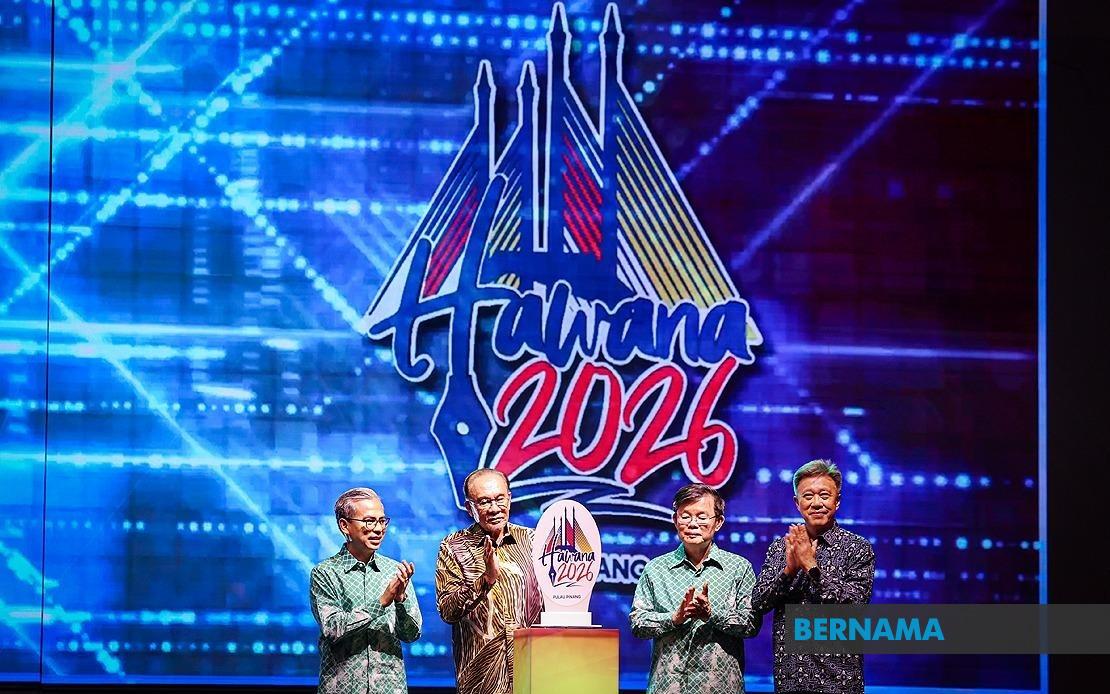
Nearly 1,000 journalists and media professionals from Malaysia and across ASEAN converged on Penang last weekend to mark the conclusion of National Journalists' Day (HAWANA) 2026, drawing participants from Indonesia, Cambodia and Timor-Leste to celebrate the profession and reinforce regional media cooperation. The three-day gathering at PICCA@Arena Butterworth Convention Centre demonstrated the continued importance Malaysia places on journalism's role in democratic society, even as the industry navigates profound technological and economic disruption.
The centrepiece of the celebration occurred when Prime Minister Datuk Seri Anwar Ibrahim officiated the main event, where he unveiled an additional RM1 million allocation for the Tabung Kasih@HAWANA welfare fund, signalling intensified government commitment to supporting media practitioners facing financial hardship. This top-up reflects broader recognition that journalism in Malaysia—as elsewhere in Southeast Asia—faces mounting pressures, with newsrooms shrinking, revenue sources fragmenting and journalists often working under conditions of economic precarity. The fund, introduced in 2023, has already assisted 773 media professionals nationwide with RM2.26 million in total support, addressing a gap that market forces alone have failed to fill.
Anwar simultaneously reaffirmed government backing for the Media Innovation Fund, designed to help local news organisations accelerate their shift to digital platforms and new business models. This dual commitment—supporting individual journalists while investing in organisational transformation—acknowledges that the sector cannot modernise without both institutional investment and recognition of workers' welfare. For Malaysian editors and publishers, the signal from the Prime Minister's Office matters: it suggests policy-makers understand that a healthy media ecosystem requires deliberate intervention beyond simple deregulation or market mechanisms.
Communications Minister Datuk Fahmi Fadzil announced that Telekom Malaysia has joined as a strategic partner, contributing RM500,000 to the welfare fund. This corporate involvement extends beyond ceremonial patronage, enlisting telecommunications infrastructure as stakeholders in media sustainability—a model potentially applicable across other sectors. The announcement underscores how private sector resources, when directed strategically, can supplement public funding and distribute responsibility for supporting journalism across society's institutions rather than concentrating it solely on government.
Beyond financial measures, the event formally deepened Malaysia's media relationships within Southeast Asia. Bernama, the national news agency, and Timor-Leste's Agência Noticiosa de Timor-Leste (TATOLI) exchanged a memorandum of understanding, formalised by both countries' communications officials and witnessed by Prime Minister Anwar. Such bilateral agreements strengthen news-sharing infrastructure and professional standards across the region, building resilience against disinformation and creating pathways for smaller nations' voices to reach broader audiences. For Malaysian journalists covering Southeast Asian developments, such institutional ties can improve access to information and story leads.
The professional dimension of HAWANA 2026 extended beyond networking and fellowship. The Malaysian Federation of Media Clubs organised the Malaysia Media Retreat 2.0, while the Malaysian Press Institute hosted a town hall titled "2035: Will Journalists Still Exist?"—a deliberately provocative framing that forced participants to contemplate the profession's future amid automation, artificial intelligence and ongoing audience fragmentation. These forums addressed structural challenges that no welfare fund or innovation grant can fully resolve, creating space for candid industry conversation about sustainability and relevance.
Recognition of excellence accompanied the celebration through the presentation of the HAWANA Award to former Broadcasting director-general Datuk Suhaimi Sulaiman for his contributions to journalism and broadcasting. More emotionally resonant was the posthumous Special HAWANA Award presented to Azlan Idris, the late former head of Bernama Radio, who died in January at age 57. His widow, Wan Syahrina Wan Abdul Rahman, received the honour on his behalf, with images of Azlan displayed as she accepted—a moment that reminded attendees of journalism's human stakes and the personal sacrifices practitioners make for the profession.
Penang's hosting of the event carried strategic significance beyond ceremonial protocol. The state demonstrated capacity to manage a large-scale national gathering involving nearly 1,000 delegates and simultaneous programming, generating economic activity through accommodation, dining and transportation while showcasing infrastructure to media leadership. For Penang's competitive positioning within Malaysia, successful delivery of flagship national events translates to tangible credibility and experience that attracts future conferences and gatherings. Governor Tun Ramli Ngah Talib's pre-summit dinner for regional and international journalists signalled state-level commitment to media relations.
The festival dimension of HAWANA 2026 should not be overlooked. The RIUH Pi HAWANA Carnival ran concurrently, featuring performances by Malaysian bands and musicians, creative industry vendors, and food establishments, reaching beyond the professional journalism community to engage broader public audiences. This programming architecture—combining serious professional forums with cultural celebration and public engagement—reflects evolving thinking about conferences as community events rather than purely sectarian gatherings. For Malaysian media professionals, such multi-layered programming creates networking opportunities across journalism and creative industries, potentially sparking collaborations.
Bernama's role as lead organiser merits particular attention. The national news agency produced the first-ever live television broadcast of HAWANA, demonstrating technical capability and cementing Bernama's position as infrastructure provider for the journalism profession. This operational leadership distinguishes Malaysia's approach from some neighbouring countries where media associations retain weaker institutional capacity. Bernama's demonstrated ability to execute large-scale events using in-house expertise—from planning through broadcasting—signals organisational maturity and justifies its position as the journalism industry's institutional anchor.
The thematic focus on "Media Integrity Strengthens Credibility" resonates particularly given contemporary challenges to journalism's standing across Southeast Asia. Public trust in news media has eroded amid concerns about disinformation, political partisanship and declining journalistic standards. By explicitly centring integrity as both theme and operational principle, HAWANA 2026 positioned journalism as a profession grounded in ethical standards rather than merely commercial or political interest. For Malaysian journalists working in a fragmented media landscape, such affirmation of professional values provides ideological reinforcement.
Looking forward, the financial commitments announced at HAWANA 2026—combined with institutional partnerships, regional cooperation frameworks and cultural celebration—sketch a vision of journalism as a profession requiring sustained multi-stakeholder support. Neither government funding nor market mechanisms alone suffice to maintain journalistic standards and practitioners' wellbeing. The gathering suggested that Malaysia's approach, at least rhetorically, embraces this complexity, enlisting government, corporations, professional associations and cultural institutions in supporting journalism's viability. Whether these commitments translate into meaningful long-term transformation remains the critical question facing Malaysia's media industry.