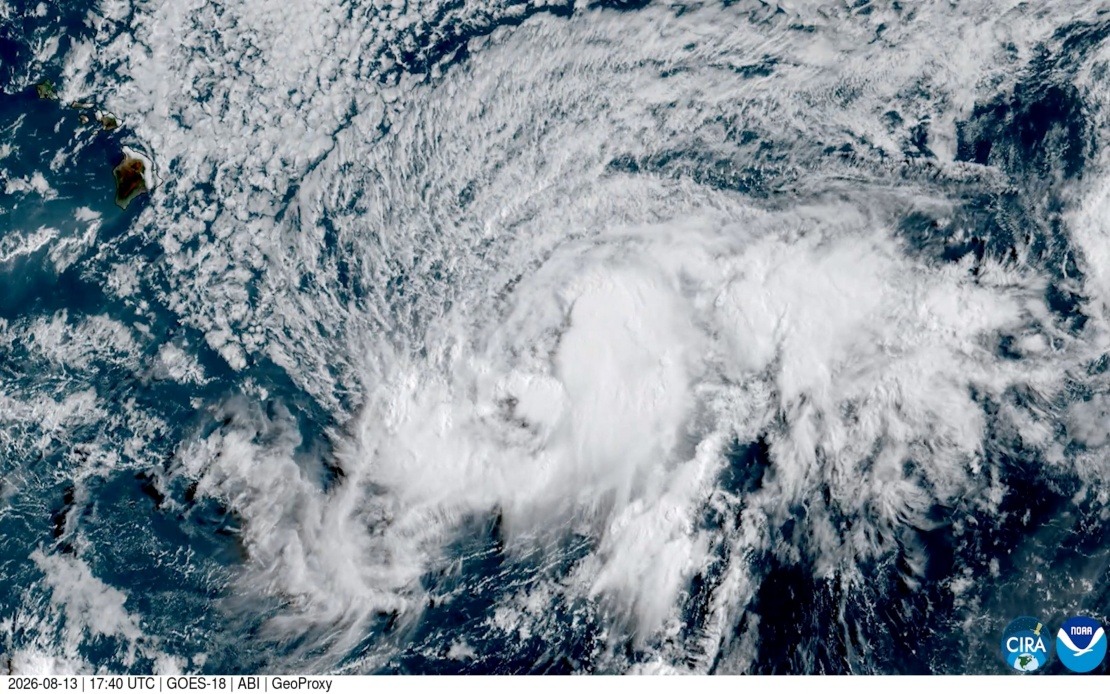
Residents and officials across Hawaii are preparing for an extraordinary weather event this weekend as Tropical Storm Lala accelerates toward the Big Island with expectations of reaching hurricane strength before making landfall. The National Hurricane Centre's latest projections indicate that the system will transition from tropical storm status to a dangerous hurricane in the approaching days, creating conditions that emergency managers have not encountered in the modern era on the Big Island itself. The timing of this development is particularly significant given the region's historical vulnerability to such phenomena and the dense population centres that now exist on the islands compared to previous centuries.
Meteorologists at the National Weather Service in Honolulu have issued formal warnings covering both the Big Island and surrounding regions. A full hurricane warning has been declared for the Big Island specifically, while a tropical storm warning extends to Maui County, encompassing the islands of Maui, Molokai, Lanai and Kahoolawe. These escalated alert levels reflect the serious threat posed by Lala's intensification and the wide geographic area that may experience severe weather impacts during the coming days. The dual-warning system allows residents and emergency services to calibrate their response strategies based on proximity to the storm's projected centre.
What makes this approaching weather system particularly notable is its rarity in the contemporary record. Should Lala make landfall on the Big Island as currently forecast, it would represent the first hurricane to directly strike the island since 1871, a gap of more than 150 years. This extended period without a direct hit means that most infrastructure, building codes, and emergency response protocols have been developed without experience of a direct hurricane impact on the Big Island. Vanessa Almanza, a meteorologist with the National Weather Service in Honolulu, emphasised the historic nature of the potential event, noting that within the satellite era—the period of modern meteorological monitoring—no hurricane has approached so close to the Big Island in the way Lala is currently tracked.
Historical records, albeit limited, do provide some context for understanding what Hawaii's largest island has experienced in the distant past. A University of Hawaii atmospheric scientist conducted detailed research into newspaper accounts from the nineteenth century, uncovering evidence that a Category 3 hurricane struck the northeast corner of the Big Island during that 1871 event. The reliance on newspaper records rather than scientific instrumentation or satellite data underscores how distant and poorly documented these historical impacts truly are. The northeastern location of that historical strike differs from the current forecast track, which models indicate may bring Lala toward the southern tip of the Big Island, potentially exposing different population and infrastructure areas to the storm's most severe impacts.
The dual hazards posed by Lala extend beyond the obvious dangers of hurricane-force winds. Heavy rainfall associated with the system presents a serious flooding threat across the islands, with water accumulation potentially causing destructive inundation in vulnerable lowlands and along drainage courses. Simultaneously, the strong winds that will accompany hurricane conditions could create ideal circumstances for wildfires to ignite and spread rapidly across vegetation. This combination of water and fire hazards presents an unusually complex emergency management scenario, as typical severe weather preparedness often emphasises one primary threat. Forecasters are particularly concerned about the potential for wind-driven wildfires to develop during the immediate aftermath of the hurricane's passage, when vegetation may be dried by strong winds yet remains abundant throughout the landscape.
For Malaysian and Southeast Asian observers, this Hawaiian situation offers instructive parallels to tropical cyclone threats in the region. Many Southeast Asian nations have experienced intensifying and increasingly erratic tropical storm patterns, with systems sometimes unexpectedly accelerating or changing track. The preparedness measures being implemented across Hawaii—including formal warnings, evacuation planning, and infrastructure hardening—reflect best practices that regional governments continue to develop and refine. The specific concern about compound hazards like flooding plus wildfires also mirrors challenges faced in nations like Indonesia and the Philippines, where seasonal typhoons routinely generate multiple simultaneous threats to population centres.
The Big Island's experience with this rare weather event will likely generate significant data and operational lessons for meteorologists and emergency managers throughout the Pacific region. The storm's approach provides an opportunity to test warning systems, communication protocols, and community preparedness mechanisms that have been developed but not yet fully exercised in an actual hurricane scenario. This real-world test occurs across a relatively well-documented and monitored jurisdiction, ensuring that the full impact and progression of the event will be carefully recorded and analysed. Such operational experience proves invaluable for refining approaches that benefit not only Hawaii but neighbouring Pacific island territories and more distant regions subject to tropical cyclone threats.
Residents on the Big Island are being urged to complete all preparations immediately, as the weekend window during which Lala is expected to reach hurricane strength leaves limited time for final protective measures. Standard hurricane precautions—securing outdoor objects, stocking supplies, clearing drainage systems, and ensuring emergency communication devices are functioning—are being broadly recommended. The fact that an extended generation of residents has no personal memory of a Big Island hurricane makes public information campaigns and official guidance particularly important in ensuring that communities understand both the specific dangers they face and the appropriate response measures. The meteorological community's confidence in the intensification forecast has translated into decisive official action that aims to minimise surprise and confusion as conditions deteriorate.

