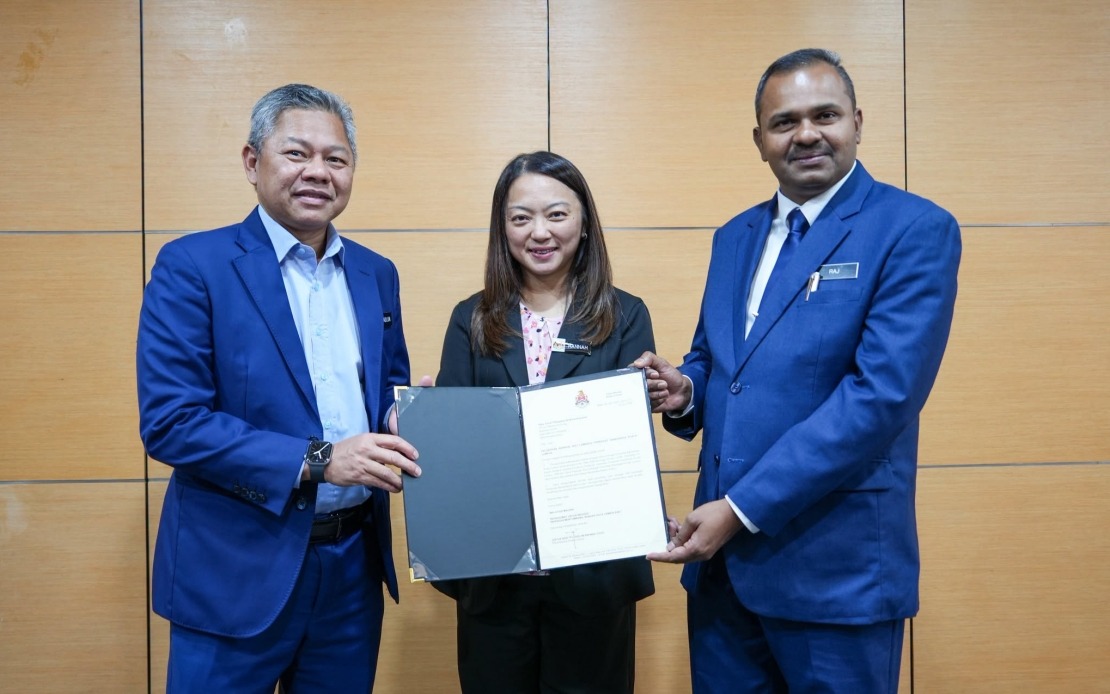
Federal Territories Minister Hannah Yeoh has lauded the appointment of S. Thiyagaraj, a retired prison officer, to the Kuala Lumpur City Advisory Board, underscoring the importance of drawing talent from diverse professional backgrounds to strengthen municipal governance. Speaking at a ceremony where Kuala Lumpur Mayor Datuk Seri Fadlun Mak Ujud formally presented Thiyagaraj with his appointment letter, Hannah expressed optimism that the former penitentiary administrator would bring rigour and accountability to his new role advising the city's chief administrator.
Thiyagaraj's transition into civic governance represents a significant career shift after nearly two decades in the Prisons Department. From 2005 to 2023, he served as Assistant Superintendent of Prisons within the Technical Intelligence and Investigation Unit, a position requiring strong analytical skills, operational expertise, and the ability to manage complex institutional challenges. His background in law enforcement and institutional management positions him to contribute meaningfully to discussions around urban security, public safety, and administrative efficiency—dimensions increasingly vital to a metropolis grappling with rapid urbanisation and evolving citizen expectations.
The Federal Territories Minister emphasised that board members shoulder considerable responsibility for elevating standards of city administration. According to Hannah, the advisory board functions as a critical institutional mechanism through which expert viewpoints and recommendations flow to the Mayor, informing decisions that shape Kuala Lumpur's trajectory. She stressed that effectiveness hinges on board members demonstrating integrity, professional conduct, and genuine commitment to the municipality's welfare—qualities she suggested Thiyagaraj possesses.
Kuala Lumpur's governance landscape has undergone substantial change in recent years, with the city facing pressures ranging from infrastructure maintenance to traffic congestion, flood management, and livelihood concerns among lower-income residents. The advisory board provides a formal channel for non-elected stakeholders to participate in dialogue around these pressing urban issues. By incorporating individuals with specialised expertise and track records of institutional leadership, the city can theoretically access perspectives that complement technical expertise within the municipal administration itself.
Thiyagaraj's appointment reflects a broader pattern across Malaysian governance structures whereby experienced professionals from security and administrative sectors transition into advisory and governance roles. The Prisons Department experience, in particular, exposes officers to challenges of large-scale resource management, inter-departmental coordination, and policy implementation under resource constraints—skills transferable to urban administration. His two decades of service suggest reliability and institutional knowledge that could prove valuable in mentoring younger administrators and contributing to long-term policy development.
Hannah's remarks underscore the government's commitment to professionalising municipal governance and ensuring that advisory bodies genuinely function as forums for substantive input rather than ceremonial appointments. The emphasis on transparency, efficiency, and responsiveness to public needs aligns with broader governance reform agendas across Southeast Asia, where citizens increasingly demand that local authorities demonstrate tangible improvements in service delivery and accountability. The inclusion of board members with law enforcement backgrounds may also signal a municipal administration intent on addressing safety and security dimensions of urban planning.
The Kuala Lumpur City Advisory Board, despite its formal status, operates in a context where the Mayor himself is appointed rather than elected, limiting democratic accountability through conventional channels. In this structural setting, the advisory board assumes added significance as a mechanism through which diverse stakeholder perspectives can be formalised and documented in municipal decision-making processes. Thiyagaraj's participation, therefore, contributes to institutional legitimacy by broadening the representation of interests and expertise informing the Mayor's office.
For the incoming board member, the appointment carries expectations of substantive engagement with municipal challenges. Beyond ceremonial participation, board members are typically expected to attend meetings regularly, review municipal reports and initiatives, provide written recommendations on policy matters, and occasionally represent the board in public forums. Thiyagaraj's law enforcement background suggests he may gravitate toward discussions around public safety infrastructure, crowd management at public events, and the interface between municipal services and policing—areas where his departmental experience provides direct relevance.
The timing of this appointment also reflects ongoing efforts to ensure continuity in institutional knowledge and administrative coherence as various municipal officials complete their tenures. By bringing in experienced professionals from related sectors, the city can mitigate the institutional learning loss that often accompanies personnel transitions. Thiyagaraj's familiarity with bureaucratic processes, documentation standards, and inter-agency coordination from his prison service experience positions him to navigate the administrative aspects of board participation effectively.
Looking forward, the effectiveness of Thiyagaraj's tenure will likely be measured by his willingness to engage critically with municipal challenges, his ability to bridge the perspectives of institutional administration and community concerns, and his contribution to elevating public discourse around urban governance. For Malaysian readers and particularly residents of the Federal Territories, the appointment exemplifies how governance structures attempt to incorporate professional expertise and institutional experience into advisory mechanisms—a model relevant as cities across the region grapple with delivering quality services to increasingly diverse and demanding populations.

