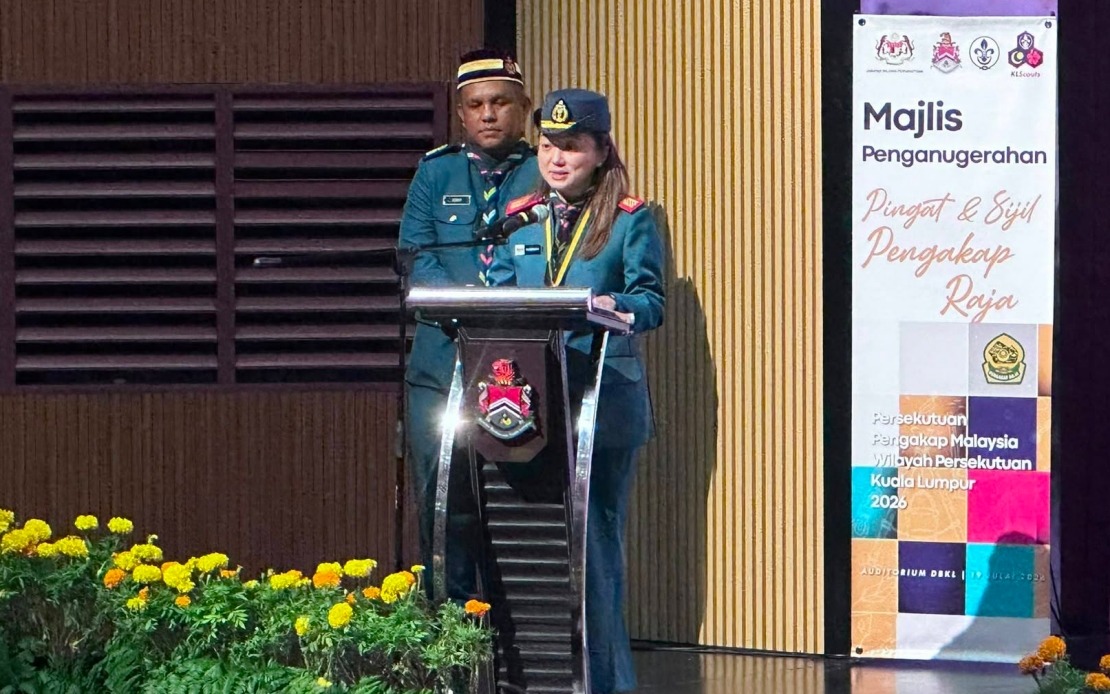
Minister in the Prime Minister's Department (Federal Territories) Hannah Yeoh has assumed the presidency of the Federal Territories State Scouts Council following a proclamation ceremony held at City Hall Auditorium in Kuala Lumpur on July 19. The appointment underscores the government's continued investment in youth development through established institutional structures such as the Malaysian Scouting Movement, which has maintained its significance in shaping disciplined young citizens with strong community values.
Yeoh's appointment carries particular resonance given the scouting movement's longstanding role in fostering leadership qualities among Malaysia's youth. By taking on this voluntary position while serving as a federal territories minister, she signals the government's commitment to grassroots youth engagement beyond conventional policy implementation. The timing of her proclamation alongside the 2026 Kuala Lumpur Federal Territory King's Scout Medal and Certificate Presentation Ceremony demonstrated deliberate coordination between ministerial responsibilities and scouting advancement objectives.
In a tangible expression of governmental support, Yeoh announced an immediate financial contribution of RM20,000 directed towards expanding scouting activities throughout the federal territories. The allocation was structured strategically: RM10,000 was designated for the Kuala Lumpur Federal Territory branch of the Scouts Association of Malaysia to develop school holiday programmes targeting young people, while the additional RM10,000 was earmarked specifically for training initiatives intended to reach socioeconomically disadvantaged youth who might otherwise face barriers to participation.
This dual-funding approach reflects sophisticated understanding of scouting's social function. By explicitly directing resources toward inclusivity, the ministry acknowledged that quality youth development programmes require targeted intervention to reach populations beyond the reach of standard offerings. The distinction between holiday programming and subsidised training suggests policy makers recognise disparities in youth access to extracurricular development, a concern particularly relevant in urban federal territories where income inequality remains pronounced.
Kuala Lumpur City Hall Executive Director Rosli Nordin received simultaneous proclamation as chairman of the Kuala Lumpur Federal Territory State Scouts Council, reinforcing alignment between local governance structures and scouting administration. This institutional arrangement ensures continuity between municipal development priorities and youth advancement strategies, permitting integrated planning across administrative levels.
The ceremony itself functioned as recognition mechanism for scout achievement at multiple levels. Fifty-eight recipients received King's Scout Certificates, acknowledged as the pinnacle of Malaysian scouting attainment. This recognition demands demonstrable competency across leadership capability, technical skills, resilience, community engagement, and fundamental understanding of Scout principles. Such rigorous standards maintain scouting's credibility as a character-development institution, distinguishing legitimate achievement from ceremonial honours.
Beyond the elite tier, an additional 183 individuals received recognition through Chief Scout's Commendation Certificates awarded to 75 recipients and Federal Territories Scouts Wangsa Certificates distributed to 108 scout leaders. These tiered recognition systems affirm that scouting organisations value consistent contribution across hierarchical levels, ensuring scout leaders themselves receive institutional acknowledgment for their volunteer stewardship.
The presence of senior national figures underscored scouting's institutional importance within Malaysia's governance framework. Chief Scout of Malaysia Major General Datuk Prof Dr Mohd Zin Bidin and National Scout Council member Tan Sri Johari Abdul, who simultaneously serves as Dewan Rakyat Speaker, demonstrated that scouting commands respect across military, parliamentary, and executive spheres. Such cross-institutional participation legitimises youth development investments as matters of genuine national concern rather than peripheral charitable activity.
For Malaysian readers and Southeast Asian observers, this development signals continued governmental prioritisation of structured youth engagement during a period characterised by competing demands on public resources. The scouting movement, which spans nearly a century of Malaysian history, remains positioned as a trusted channel through which state institutions promote citizenship values, leadership development, and community service orientation among emerging generations. The specific allocation toward disadvantaged youth participation suggests policy makers increasingly recognise that equitable development requires targeted rather than universal interventions, a principle extending beyond scouting into broader social policy considerations.

