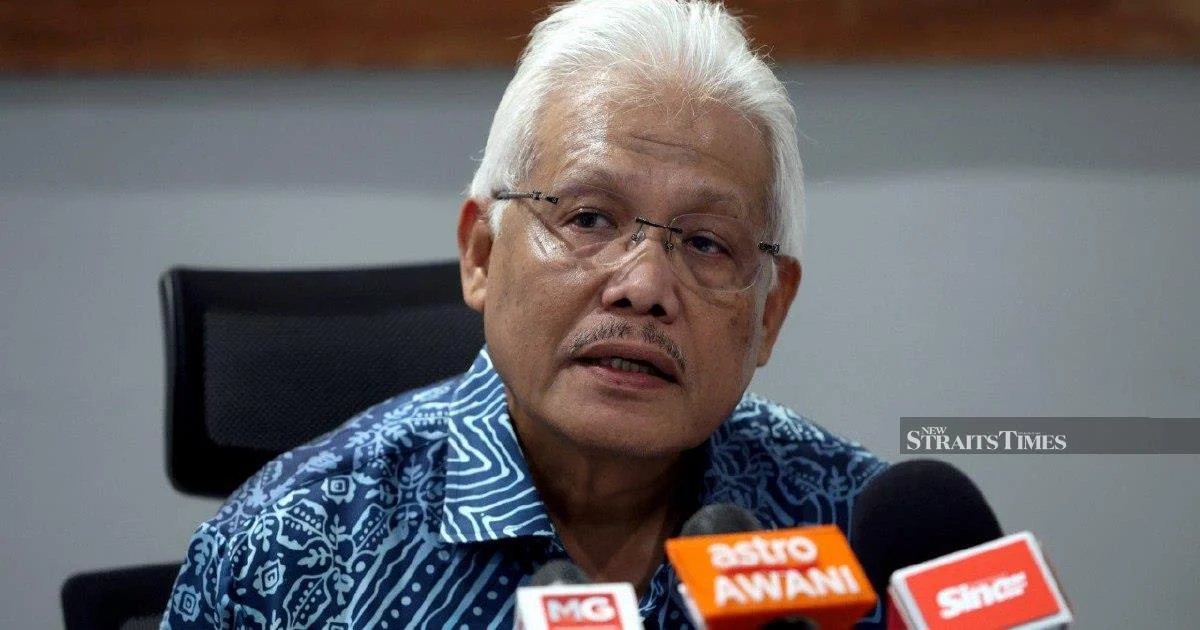
Hamzah Zainudin's freshly rebranded Parti Wawasan Negara—formerly known as Parti Cinta Malaysia—has signalled an ambitious diplomatic mission to mend fractured relations between PAS and UMNO, Malaysia's two dominant Malay-Muslim political formations. The repositioning represents a calculated effort to occupy middle ground in a political landscape increasingly characterised by rivalry and ideological tension between the Islamic party and the veteran Umno establishment.
The timing of this move reflects the deteriorating state of Malay-Muslim coalition politics. Since the 2022 general election, the relationship between PAS and UMNO has been strained despite their nominal partnership within the Perikatan Nasional framework under Prime Minister Anwar Ibrahim's unity government. Tensions have periodically surfaced over state-level political manoeuvres, policy directions, and competing claims to represent authentic Malay-Muslim interests. PAS has consolidated support in rural and conservative heartlands, whilst UMNO maintains organisational depth and traditional establishment networks. This bipolar dynamic has created space for a third actor claiming to prioritise national cohesion over factional advantage.
Parti Wawasan Negara's rebranding signals Hamzah's intent to project a national outlook rather than a narrowly communal one. The new name, with its emphasis on "national vision," suggests an aspiration to transcend the specific theological and organisational identity associated with the previous Parti Cinta Malaysia nomenclature. Such reframing is designed to appeal to voters concerned about political gridlock and to position the party as custodian of broader Malaysian interests rather than partisan sectarian agendas. For Hamzah, establishing credibility as a mediator could enhance his political stature and provide leverage within coalition negotiations.
The bridging function the party proposes to undertake carries significant implications for Malaysia's governance architecture. If successful in moderating PAS-UMNO tensions, Parti Wawasan Negara could facilitate smoother cooperation on critical legislation and policy initiatives. Conversely, if the party is perceived as merely pursuing tactical advantage or advancing covert factional interests, its mediation efforts may prove counterproductive and deepen distrust. The success of this strategy depends heavily on demonstrated independence and credibility with both PAS and UMNO leadership.
For PAS, accepting Parti Wawasan Negara as an honest broker may prove difficult. The Islamic party has consolidated its political identity through ideological differentiation and grassroots mobilisation, particularly in northern and east coast states. A mediating force might be viewed as diluting PAS's distinctive brand and constraining its political autonomy. PAS leaders may worry that brokering by a third party could limit their ability to advance specifically Islamic policy objectives or challenge UMNO's economic and patronage networks.
UMNO's receptiveness to such mediation remains equally uncertain. The ruling party has traditionally viewed itself as the natural governing force and primary custodian of Malay-Muslim affairs. Accepting Parti Wawasan Negara as intermediary implicitly acknowledges that UMNO's internal divisions and strategic weaknesses require external correction. Senior UMNO figures may resist any arrangement that suggests parity with PAS or that elevates a newer, smaller political formation to arbiter status.
Beyond elite factional dynamics, Parti Wawasan Negara's intermediary ambitions must contend with broader structural challenges facing Malay political unity. The fragmentation reflects genuine policy disagreements over Islamic governance, economic distribution, and secular versus religious legal frameworks. These differences cannot be papered over through clever rebranding or diplomatic gestures alone. Any sustainable bridge-building effort requires addressing substantive ideological and material interests dividing the two parties.
The regional context adds another layer of complexity. Southeast Asian democracies increasingly struggle with polarisation and coalition instability. Malaysia's experience with managing diverse Malay-Muslim political currents within democratic institutions is watched closely by neighbouring countries. Successful mediation by Parti Wawasan Negara could offer a model for managing ideological diversity within dominant ethnic-religious blocs. Conversely, failure might reinforce regional trends toward political fragmentation and gridlock.
For ordinary Malaysians, particularly those in Malay-majority constituencies dependent on cooperative governance, Hamzah's initiative carries practical significance. Political cooperation between PAS and UMNO affects resource allocation, development priorities, and implementation of federal and state-level programmes. Sustained internal conflict between these parties can slow decision-making, distort policy choices, and undermine administrative effectiveness. A genuine commitment to bridging these divisions could yield tangible benefits in service delivery and economic management.
Parti Wawasan Negara's success will ultimately depend on whether it can establish genuine credibility as an independent actor rather than a proxy for particular interests. Hamzah must demonstrate that the party possesses sufficient political capital and strategic insight to offer mediation that both PAS and UMNO would value. This requires cultivating relationships across traditional factional lines, positioning the party as custodian of broader national interests, and avoiding perceptions of hidden agendas.
The rebranding and repositioning also reflect Hamzah's personal political trajectory. Having previously served in various UMNO-led administrations, he brings establishment credentials that might facilitate dialogue with UMNO leadership. Yet establishing independent credibility distinct from his UMNO past will be essential for credibility with PAS, which has often defined itself oppositionally to UMNO dominance. The success of this bridging strategy will reveal much about contemporary Malaysian politics and whether competing Malay political factions can cooperate constructively despite genuine differences.

