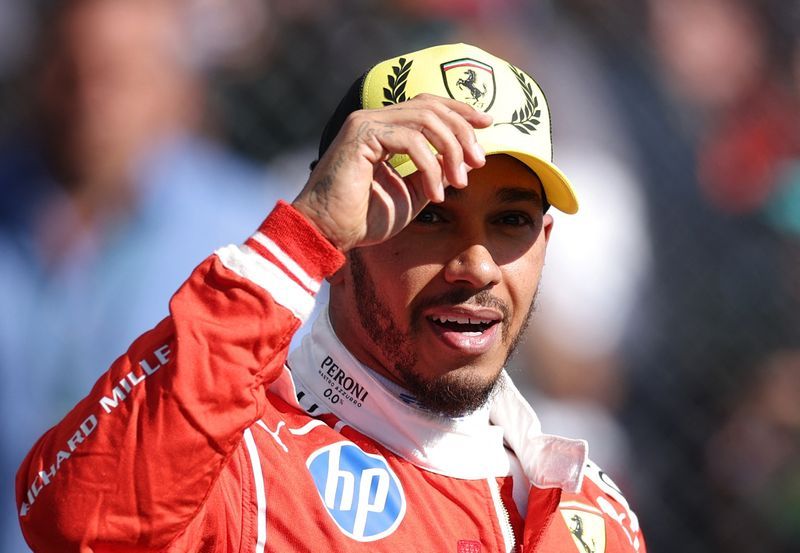
Lewis Hamilton will arrive at the Hungaroring this weekend seeking to extend his remarkable record at one of Formula One's most iconic circuits, potentially breathing new life into Ferrari's championship challenge during the sport's traditional August break reset. The seven-time world champion's move to the Maranello team has already begun bearing fruit in Hungary's tight, technical layout, where he holds an unmatched eight victories and can edge closer to his all-time record of nine wins at Silverstone.
Ferry's optimism, however, remains tempered by the knowledge that this weekend represents a significant departure from the high-speed straights where their current car package struggles most prominently. While the Hungaroring's predominantly low-speed corners and energy-management demands offer a more level playing field, team principal Fred Vasseur has refused to assume an easy path forward. The Frenchman emphasised that setup complexity and tyre strategy will prove decisive, insisting Ferrari cannot afford complacency regardless of circuit characteristics that theoretically minimise their engine deficit relative to competitors.
Mercedes enters the weekend in genuine distress over George Russell's deteriorating form. The British driver, who began the season as championship favourite with his reputation for consistency, has now accumulated 50 championship points of damage in recent weeks. His third scoring failure of 2024 came last Sunday in Belgium when he spun into gravel, a costly mistake for someone whose nickname once denoted reliability. Russell's persistent struggles with straightline speed losses have become the primary conversation topic throughout the paddock, leaving Mercedes' engineering departments with precious little time to diagnose and remedy the underlying problems before Hungary.
The contrast with Russell's 19-year-old Italian teammate Kimi Antonelli provides uncomfortable reading for Mercedes strategists. Antonelli has collected six victories in his opening ten rounds, demonstrating a mastery of the current car package that Russell appears unable to match. This performance gap has created an unexpected championship dynamic, with Antonelli now holding a commanding 50-point advantage over the struggling Russell, while Hamilton's runner-up position sits 45 points in arrears. The narrative of a once-dominant team spiralling into internal dysfunction has reshaped expectations heading into the campaign's second half.
Hamilton's historical dominance at the Hungaroring cannot be overstated. His eight victories at Budapest represent an unparalleled achievement at the circuit, and Saturday's race offers realistic opportunity to inch nearer his benchmark across a single venue. Beyond pure statistics, Hungary holds particular significance as the location of Hamilton's most recent pole position, achieved during his final Mercedes campaign in 2023. The track suits his driving style, and Ferrari's competitive position in this environment provides genuine championship momentum heading into the traditional summer shutdown.
Charles Leclerc has emerged as Ferrari's form driver in recent weeks, securing victory at Silverstone and runner-up finishes in Belgium, while Hamilton claimed success in Barcelona but registered fourth place in Belgium and third at Silverstone. This comparative consistency gives the Prancing Horse management grounds for measured optimism, though Leclerc himself has acknowledged that breakthrough performances must be converted into points-scoring consistency rather than sporadic heroics.
Antonelli's assessment that Hungary could become a four-team battle reflects the genuine unpredictability surrounding circuits that reward precision and penalise raw engine power differentials. Max Verstappen's Red Bull and McLaren's championship-leading combination cannot be discounted at a track resembling Monaco's technical demands more closely than recent power-dependent layouts. Antonelli emphasised the importance of coordinating multiple setup variables simultaneously, noting that driver technique becomes paramount when aerodynamic advantage margins shrink dramatically. The Italian's composed maturity suggests a driver capable of executing complex strategic decisions under championship pressure.
McLaren's preparation for Hungary involves substantial aerodynamic investment, with engineers bringing new floor specifications, revised aerodynamic components, and continued evaluation of experimental rear-wing designs. The team remains in the midst of an upgrade cycle aimed at consolidating their championship position, while reserve driver Leonardo Fornaroli, last year's Formula Two champion, will participate in Friday's opening practice session in Piastri's place. This measured approach balances championship pressure with the necessity of systematic development work.
Aston Martin's delayed progress represents a cautionary tale of competitive struggle. The team's long-awaited chassis upgrade reaches Hungary, but they must wait until the final August round at the Dutch Grand Prix for their latest Honda engine installation. This staggered development timeline means Aston Martin cannot fully integrate new components simultaneously, a disadvantage in an era where aerodynamic and power unit synergy proves decisive.
Hungary's return to traditional F1 rhythms after the series' most intense recent sequence offers an opportunity for teams to reassess performance baselines and implement corrective measures before the championship resumes in late August. For Hamilton and Ferrari, this weekend provides a chance to seize momentum at a venue perfectly suited to their current strengths. For Mercedes, it represents an uncomfortable interrogation of their engineering decisions and competitive direction that cannot be postponed beyond Monday morning's debrief sessions. The stakes surrounding this Hungarian Grand Prix extend far beyond historical records or single-weekend victories; they encompass the fundamental question of whether the established order can recover from midseason turbulence.

