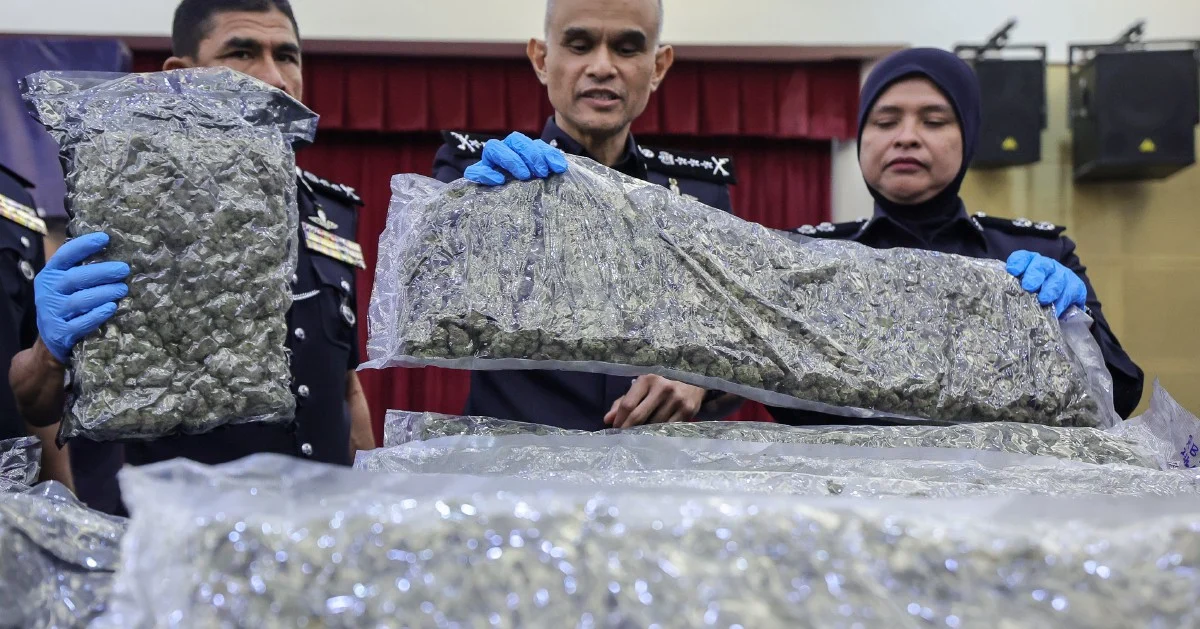
In a major enforcement operation targeting international drug smuggling networks, Malaysian police have confiscated more than 650 kilogrammes of cannabis buds at Kuala Lumpur International Airport (KLIA) over the past several months, resulting in the arrest of 38 individuals suspected of involvement in large-scale trafficking operations. The seizure underscores the persistent threat posed by transnational drug syndicates attempting to use Malaysia's primary international hub as a transit point for moving contraband across regional borders.
The sheer volume of the confiscated cannabis—enough to constitute a significant commercial shipment—reveals the scale of trafficking attempts flowing through KLIA. Rather than small-scale personal consumption quantities, the seizure represents the kind of bulk consignment typically associated with organised criminal networks supplying downstream distribution networks across Southeast Asia. This scale of operation suggests that Malaysian airport authorities are encountering increasingly sophisticated smuggling attempts designed to exploit gaps in detection protocols.
Among the 38 arrests are both Malaysian nationals and foreign suspects, indicating that the trafficking operation draws on international criminal partnerships. Such cross-border collaboration is characteristic of modern drug syndicates, which typically recruit operatives from multiple nations to reduce individual culpability and spread operational risk. The presence of foreign nationals in the network suggests connections to larger international supply chains, potentially sourcing drugs from cultivation regions in the Golden Triangle or other production areas before routing them through Malaysia toward consumer markets in Australia, New Zealand, or beyond.
The period since January has proven particularly significant for interdiction efforts. During these months, airport screening systems have apparently intensified their focus on detecting narcotics concealed within passenger luggage, cargo shipments, and parcel systems. The timing of these seizures may reflect seasonal variations in smuggling patterns, as international trafficking organisations often adjust their operations based on law enforcement deployment and travel volume fluctuations throughout the year.
KLIA's status as Southeast Asia's busiest international airport makes it an attractive target for smuggling operations despite—or perhaps because of—the heightened security presence. The sheer volume of passenger and cargo traffic creates both challenges and opportunities for interdiction; while more flights increase the likelihood that contraband will be detected, they also provide cover for smugglers attempting to move drugs unnoticed within legitimate travel flows. The airport handles millions of passengers annually, making comprehensive screening of all movements logistically complex.
The nature of cannabis as the seized substance reflects broader trends in regional drug trafficking. Unlike heroin or methamphetamine, which have established trafficking routes and established consumer bases throughout Asia, cannabis represents a growing market segment as attitudes toward the drug shift globally and decriminalisation spreads in countries like Canada and parts of the United States. Malaysian smugglers may be capitalising on this expanding international market while Thailand's recent decriminalisation of cannabis has altered regional dynamics, potentially making Thailand a new staging point for cannabis operations targeting Southeast Asian markets.
The arrest of 38 individuals suggests that police investigation has extended beyond airport interception to identifying the broader network facilitating the operation. Rather than simply confiscating drugs at the point of entry, authorities appear to have traced supply chains backward and forward to dismantle operational networks. This approach requires coordination between border security agencies, air cargo handlers, financial intelligence units tracking suspicious transactions, and conventional police detective work investigating communication networks and meeting points.
From Malaysia's perspective, the seizure demonstrates the continued vulnerability of its transportation infrastructure to international organised crime. Despite significant investment in airport security technology and personnel training, the volume of drugs passing through KLIA annually remains substantial. The fact that 650 kilogrammes was intercepted does not indicate that all drugs were stopped—this represents only those detected, suggesting that successful smuggling operations may also transit the airport undetected.
For Southeast Asian governments more broadly, the KLIA seizures illustrate how drug trafficking has evolved into a genuinely international enterprise requiring multinational law enforcement cooperation. A single large shipment intercepted at one airport represents a lost investment of potentially millions of dollars for trafficking organisations, creating pressure for them to diversify routes and methods. This diversification in turn necessitates coordinated intelligence-sharing and operational cooperation among regional police forces, customs agencies, and border authorities.
The ongoing investigation into the 38 arrested individuals will likely yield intelligence regarding the larger networks operating behind the scenes—the financiers, logistics coordinators, and source suppliers who orchestrate these operations but remain insulated from direct contact with contraband or street-level dealers. Understanding these networks becomes increasingly important as authorities recognise that seizing drugs without understanding their operational context provides only temporary disruption rather than permanent damage to smuggling organisations.
Looking forward, the scale of attempted cannabis trafficking through KLIA suggests that law enforcement agencies will need to maintain elevated alert levels and continued resource deployment to the airport. As trafficking organisations respond to successful interceptions by modifying their methods—through more sophisticated concealment techniques, different entry points, or alternative routes—border authorities must evolve their detection and investigation capabilities in parallel.